
Last updated September 20, 2026
Full 25-point door and opener safety check with every visit - springs, cables, rollers, tracks, and your LiftMaster or Chamberlain opener included
You get a price before we start. It does not change when the truck arrives.
 Before
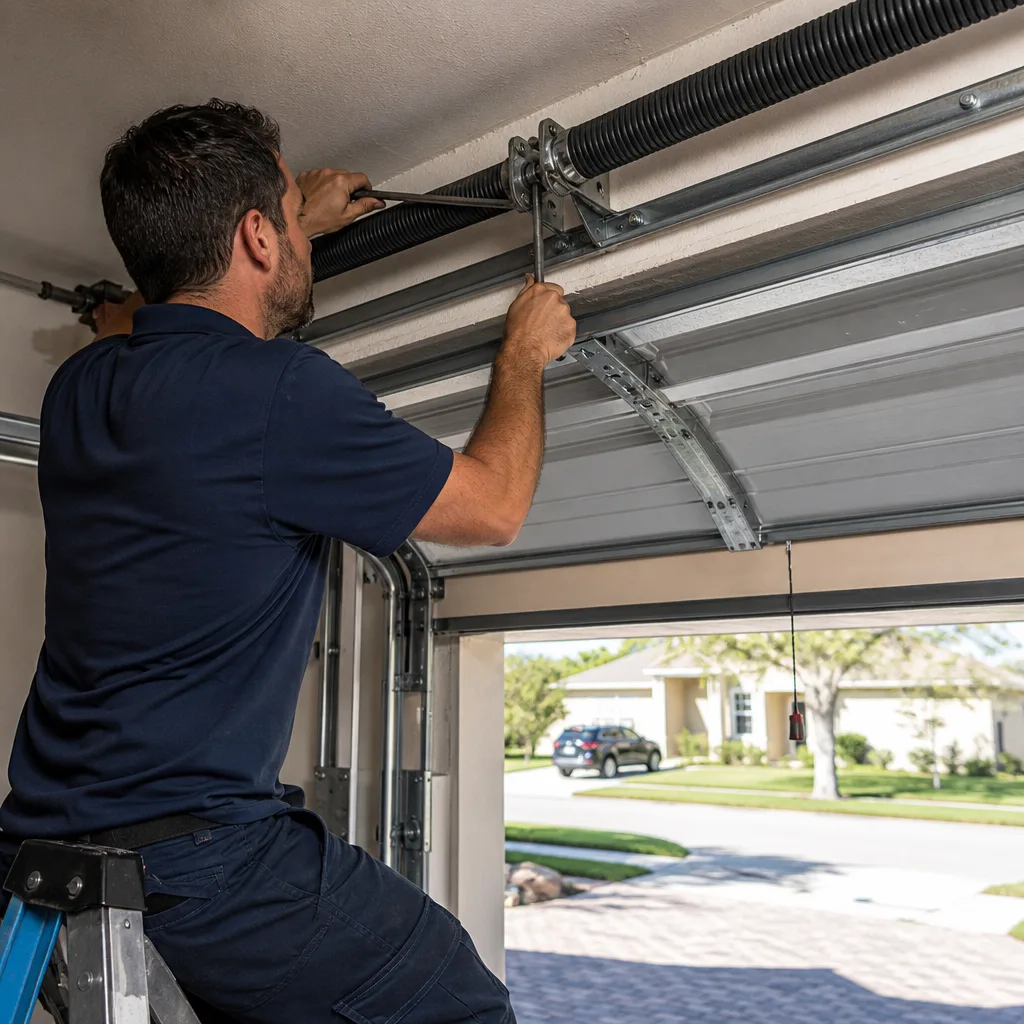 After
After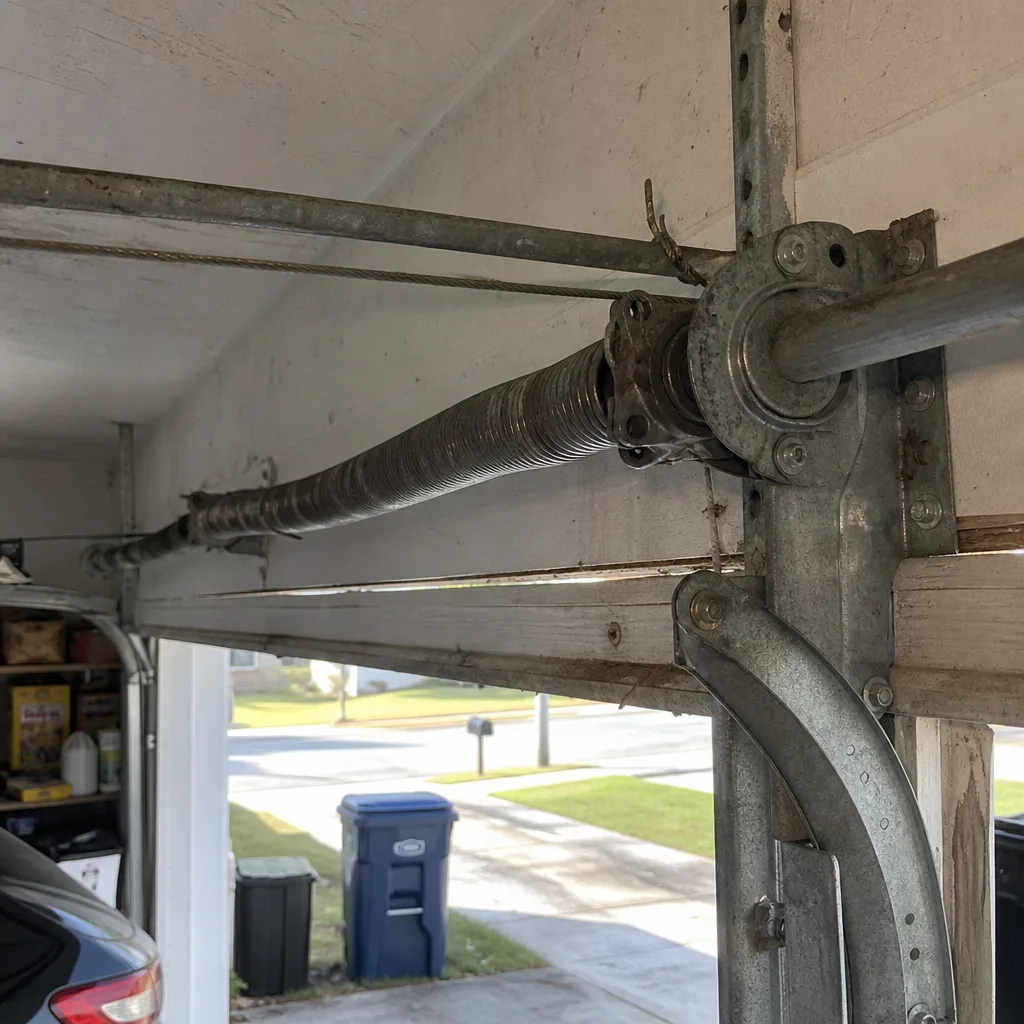 Before
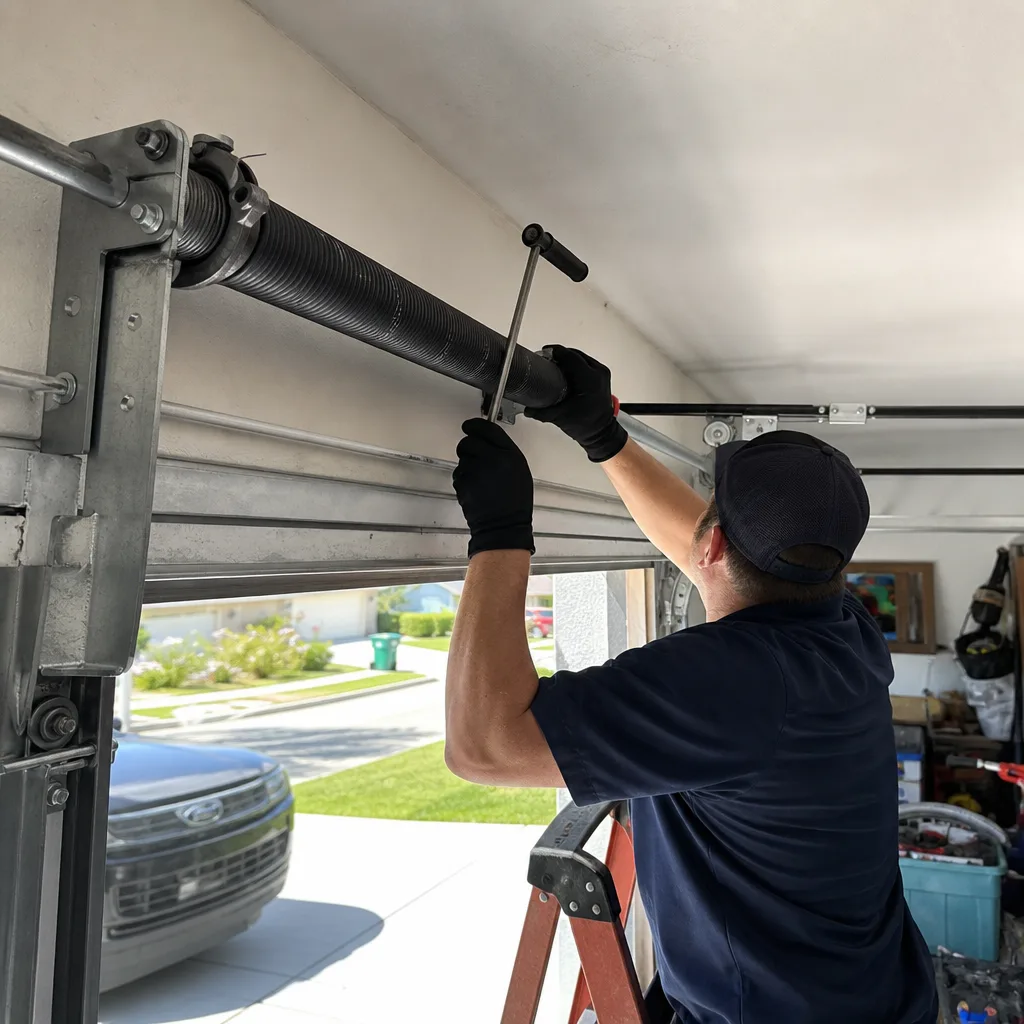 After
After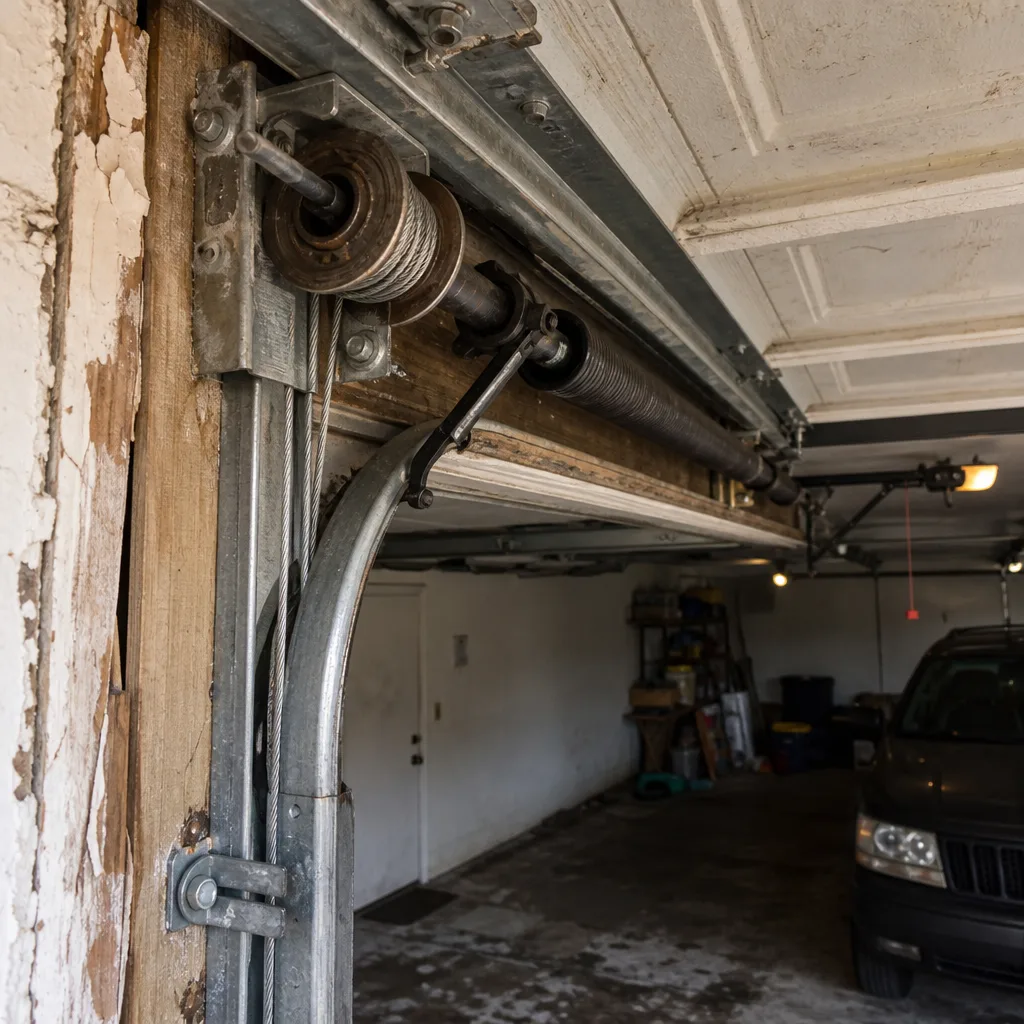 Before
 After
AfterGarage Door Permits, Codes & Inspections in FL: What You Need to Know
A garage door replaced without a permit in Osceola County is not “just paperwork.” It is a wind-load compliance gap that an insurance adjuster can use to deny a hurricane-damage claim on the grounds that the structure was not code-compliant at the time of loss. In Kissimmee, where homes sit 35 miles inland but still inside the state’s wind-borne debris region, the permit is the only document that proves your door was installed to resist the wind speeds Florida code demands. This guide explains what triggers a permit, what a garage door inspection actually checks, what an unpermitted installation costs you later, and how to verify the paperwork before you pay the final invoice. For related guidance, see our Garage Door Repair Maintenance Checklist for Kissimmee Homeowners. We’ll walk you through the Florida Building Code section that governs garage doors, the Osceola County permitting process, and the insurance and resale consequences that most contractors never mention.
Quick Answer
In Florida, replacing a garage door requires a building permit when the door is part of the building envelope and the replacement involves structural changes, including new track, new fasteners, or a door with different wind-load characteristics than the original. In Osceola County, like-for-like repairs such as replacing a broken spring, a panel, or a garage door opener repair do not require a permit, but a full door replacement almost always does. The permit exists to verify wind-load compliance, and skipping it creates an unpermitted structure that affects insurance claims and resale disclosure obligations under Florida Statute 689.261.
Table of Contents
- When Does a Garage Door Replacement Require a Permit in Florida?
- The Florida Building Code Section That Governs Garage Doors
- What a Florida Garage Door Inspection Actually Checks
- The Osceola County Permitting Process, Step by Step
- What an Unpermitted Garage Door Costs You Later
- How an Unpermitted Door Appears on a 4-Point Insurance Inspection
- Florida Statute 689.261: Your Legal Disclosure Obligation
- How to Verify a Contractor Actually Pulled the Permit
BeforeAfterWhen Does a Garage Door Replacement Require a Permit in Florida?
Florida requires a building permit for any garage door replacement that involves changing the door, the track system, or the connection to the building structure. The trigger is not the cost of the door or whether it “looks the same” as the old one. The trigger is whether the work affects the building envelope and its wind-load resistance. A garage door is classified as an exterior wall component under Florida Building Code Section 105.1 and Section 1609, which means it is subject to the same permitting requirements as a window replacement or a roof deck attachment. The logic is simple: in a hurricane, a garage door that blows inward pressurizes the entire structure, and that pressurization is what lifts roofs off homes. The permit is the mechanism that forces a wind-load calculation.
Here is the practical breakdown for a homeowner in Kissimmee:
- A full door replacement requires a permit. Any time the door slab, the tracks, the hinges, or the mounting brackets are removed and replaced, the structure is being altered. The new door must meet the wind speed rating for your specific location. Kissimmee sits in a wind speed zone that requires doors rated between 140 and 160 mph, depending on the exact parcel and its exposure category.
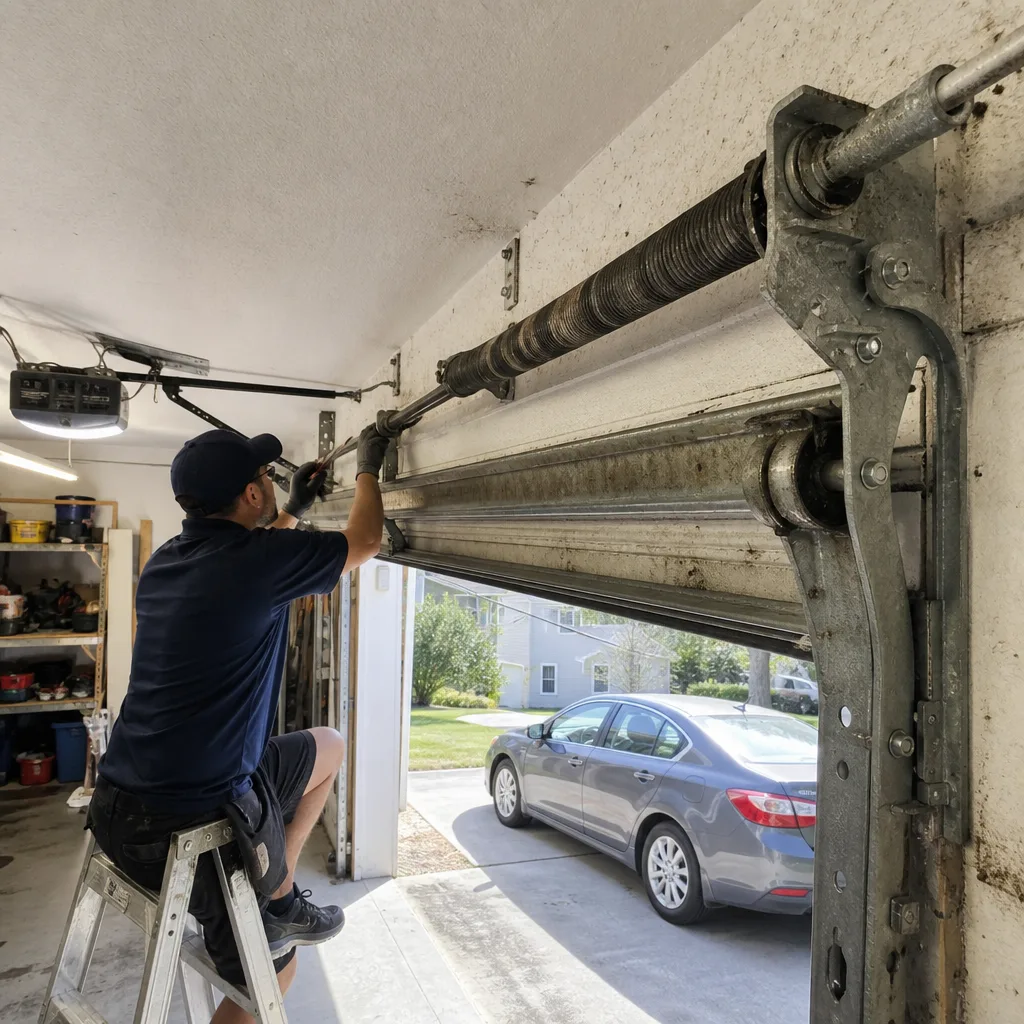
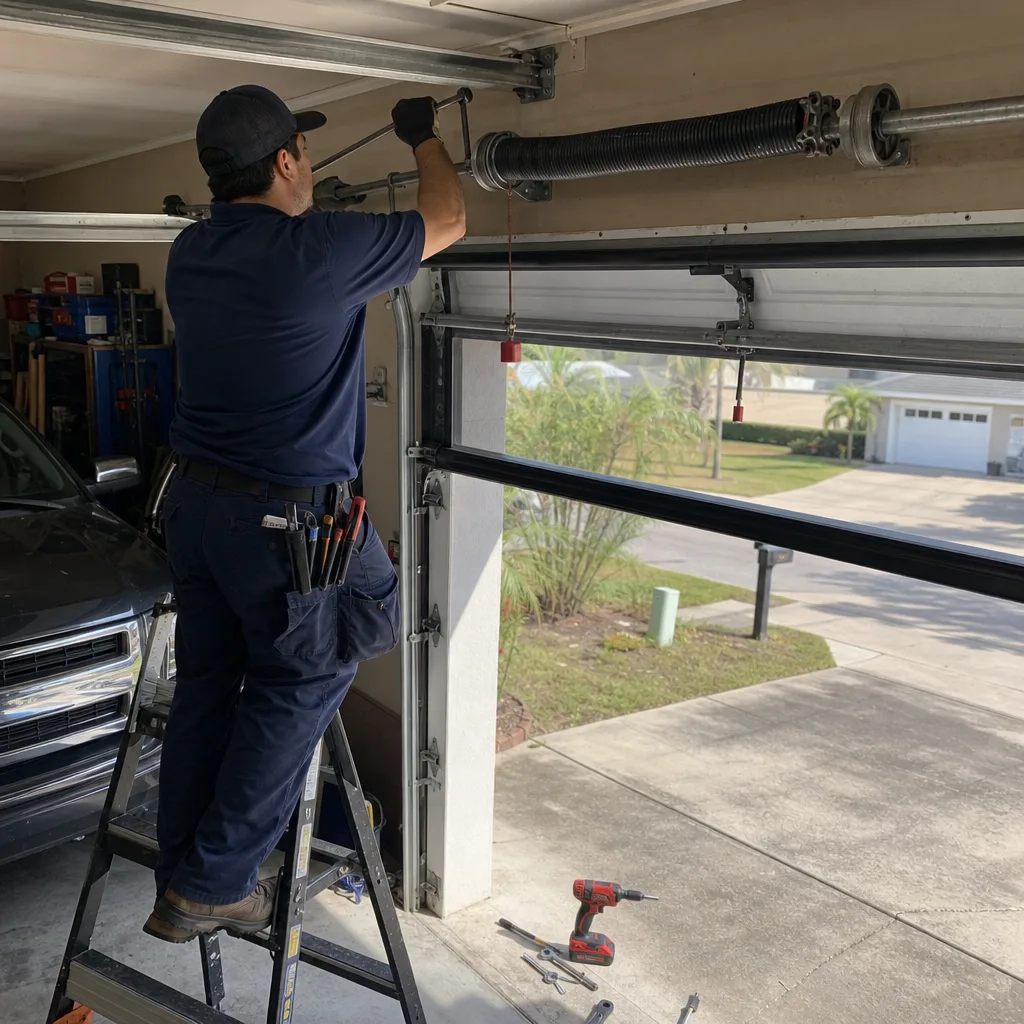
- A garage door opener replacement does not require a permit. Installing a new LiftMaster or Chamberlain opener, replacing a logic board, or swapping a trolley carriage is an appliance-level repair, not a structural change. Garage door opener repair and installation is generally exempt from permitting in Osceola County.
- A spring replacement does not require a permit. Torsion springs and extension springs are wearable parts, not structural components. Replacing them is maintenance.
- A panel replacement is a gray area. Replacing a single damaged door section without touching the track or the mounting hardware typically does not require a permit. Replacing all sections effectively means a new door, which does.
- Adding reinforcement struts to an existing door requires engineering review but not always a full permit. This depends on whether the struts change the door’s weight and track loading.
The easiest way to determine whether your specific job requires a permit is to ask the contractor to state it in writing on the estimate. If the contractor says no permit is needed for a full replacement, that is a red flag. A full door replacement in Kissimmee that skips the permit is, by definition, an unpermitted structural alteration. We have seen homeowners learn this only when an insurance adjuster or a title company flagged it, and the remediation at that point costs more than the permit would have. Watch for these issues early by reviewing our Garage Door Warning Signs: A Kissimmee Homeowner’s Reference Guide.
The Florida Building Code Section That Governs Garage Doors
The governing code section for garage doors in Florida is Chapter 16 of the Florida Building Code, Building Volume, specifically Section 1609 (Wind Loads) and Section 1613 (Wind-Borne Debris Protection), with product approval requirements in Rule 61G20-3 of the Florida Administrative Code. Here is what these sections mean in plain language.
Section 1609 requires that every exterior wall component, including garage doors, be designed to resist the wind pressures calculated for the building’s location, height, and exposure. Florida is divided into wind speed zones, and Kissimmee falls within a range that requires garage doors to resist wind speeds between 140 and 160 mph. The exact figure depends on the parcel’s distance from open water, the surrounding terrain, and the structure’s roof height. A garage door manufacturer cannot simply sell any door in Florida; the door must carry a Florida Product Approval number that certifies it was tested to resist the relevant wind pressures.
Section 1613 applies to homes in the wind-borne debris region, which includes Osceola County. The requirement is that glazed openings and garage doors in this region either be impact-resistant or be protected by an impact-rated covering. What many Kissimmee homeowners do not know is that this requirement applies to the garage door itself. If you build a new home or replace a garage door in Osceola County, the door must be listed as wind-borne debris approved, meaning it passed a large-missile impact test with a 9-pound 2×4 fired at 34 mph, followed by 9,000 positive and negative wind pressure cycles. That test result is what the product approval number represents.
Rule 61G20-3 is the administrative rule that establishes the Florida Product Approval system. Every garage door sold for installation in Florida must carry a Florida Product Approval number, which is printed on a label affixed to the door. The label shows the manufacturer’s name, the approval number, the maximum design pressure rating, and the impact rating. When an inspector checks a garage door installation in Kissimmee, that label is one of the first things they look for. Brands like Amarr, Wayne Dalton, and Raynor all carry Florida product approvals for doors in the 140-160 mph wind speed range, but the specific model must match the approval listing. A door that is approved for 130 mph cannot legally be installed in a 150 mph zone, and the inspector will check this against the OSI (or “One Stop Inspection”) permit documentation.
The permit requirement is not a tax, and not a revenue mechanism for the county. It is the enforcement arm of these code sections. Without a permit, no one verifies that the door you installed meets the wind-load requirements for your specific parcel, and that unverified condition is exactly what an insurance adjuster looks for after a storm.
What a Florida Garage Door Inspection Actually Checks
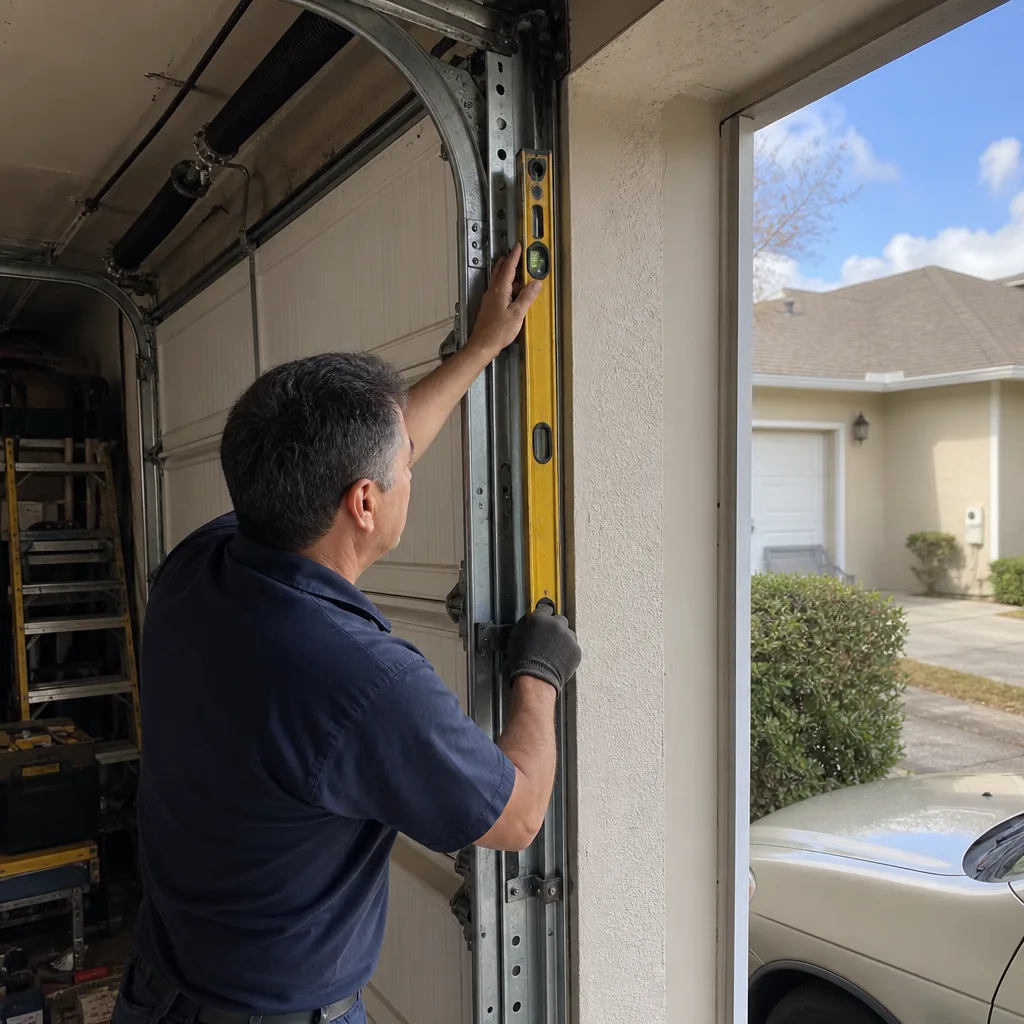
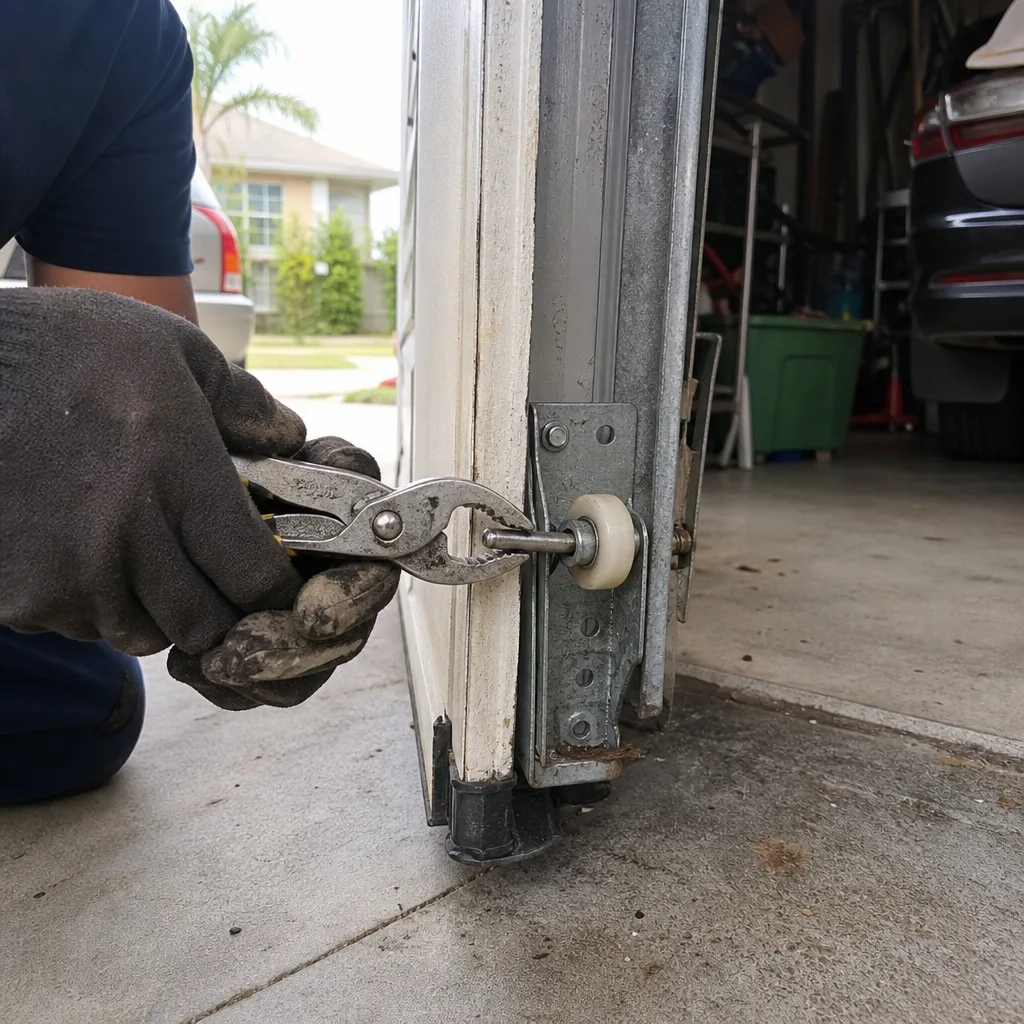
A garage door inspection in Osceola County is not a visual pass/fail. The inspector arrives with the permit documents in hand and checks three things that most homeowners never see: the product approval label, the anchor bolt spacing, and the track gauge and mounting. Here is what each one means.
1. The Florida Product Approval number on the door label. Every approved door carries a metal or durable plastic label on the door edge or the bottom panel. The inspector verifies that the label’s approval number matches the door specified on the permit application. If the contractor installed a different model than what was permitted, the inspection fails on the spot. If the label is missing, the door cannot be verified as code-compliant, and the inspection fails. This is why the label matters more than the brand name. A Wayne Dalton door with a valid Florida approval label passes; the same door with the label removed fails.
2. Anchor bolt spacing and embedment. The track assembly attaches to the wall with anchor bolts or concrete screws at specified intervals, typically 18 to 24 inches on center depending on the door size and wind load. The inspector checks the spacing, the fastener type, and whether the fasteners are seated into the structural framing rather than drywall or trim. In Kissimmee, where many homes are concrete block construction, the fasteners must anchor into the block or the wood frame behind the stucco, not into the stucco itself. Missed anchors or spacing that exceeds the approved engineering is a failed inspection.
3. Track gauge and mounting hardware. The vertical and horizontal track must be the gauge specified for the door’s weight and wind rating. A standard residential door uses 2-inch commercial-grade track or 3-inch track depending on the door height and weight. The inspector checks that the track brackets are installed at the correct intervals, that the flag brackets at the top of the vertical track are secured with the correct fasteners, and that the horizontal track angle supports tie back into the ceiling structure adequately. Undersized track or missing support angle is a structural failure, not a cosmetic one.
In our experience doing garage door installation in Kissimmee, the most common inspection failures are not the door itself; they are the anchors. A contractor uses fasteners that are too short, spaces them too far apart, or anchors into a stucco skim coat instead of the structural wall. These failures come to light only because the inspector checks them, which is the entire point of the permit.
The Osceola County Permitting Process, Step by Step
Osceola County issues building permits through its online permitting portal and through the Building Department office at the county administration building in Kissimmee. The process for a garage door replacement is straightforward but has specific documentation requirements. Here is the sequence.
- The contractor or homeowner applies for the permit. A licensed contractor can pull the permit on your behalf, which is the standard practice. The application requires the property address, the parcel ID, the scope of work (garage door replacement), the door manufacturer and model, and the Florida Product Approval number for that specific door. The contractor must hold an active license with Osceola County. If you pull the permit as a homeowner, you are certifying that you will perform the work yourself, which is legal in Florida but creates liability if you install the door incorrectly.
- The permit is reviewed and issued. For a straight replacement with an approved product, this is often a same-day or next-day issuance. The permit fee for a garage door replacement in Osceola County typically ranges from $75 to $150 depending on the valuation of the work. The permit document includes a permit number, which is the number you need to verify.
- The installation occurs after the permit is issued. This is a non-negotiable sequence: the permit must be issued before the work begins. Installing first and permitting later is illegal and the county can issue a stop-work order and a penalty.
- The inspection is scheduled after installation. The contractor calls in the inspection through the county portal or phone system. The inspection occurs while the door is open, so the inspector can access the label, the track, and the anchors.
- The inspector passes or fails the installation. If the inspection passes, the permit is closed. If it fails, the contractor corrects the deficiencies and calls for a reinspection, which carries a small additional fee.
- The final documentation is delivered to the homeowner. A closed permit is a public record that you can verify on the Osceola County permit portal. You should receive the closed permit number, the inspection date, and the inspector’s sign-off. This is the paper trail that proves your door is code-compliant.
The timeline from application to closed permit is typically five to ten business days for a straightforward garage door replacement in Kissimmee. A reputable contractor includes the permit pull and inspection scheduling in their quoted price, and the written scope of work states that the permit is covered. If the quote says nothing about permits, ask the question in writing. The answer should be unambiguous: yes, the permit is included, and yes, the permit number will be available before installation starts.
What an Unpermitted Garage Door Costs You Later
The cost of pulling a garage door permit in Kissimmee is $75 to $150. The cost of not pulling one is measured in the thousands and shows up in three specific places: insurance claims, resale, and county enforcement. Here is the breakdown.
Insurance claims. If a hurricane damages a garage door that was replaced without a permit, the insurance adjuster will verify whether a permit was pulled for the replacement. If no permit exists, the door is an unpermitted structure, which means it was never verified as code-compliant. The insurer can then deny coverage for the door itself and, in some cases, for damage to the interior of the home that resulted from the door failing. Adjusters in Florida have become systematic about checking the permit history on any storm-damage claim. An unpermitted door is a documented reason to deny a claim, and the denial is difficult to appeal because the permit absence is a matter of public record.
Resale. When you sell a home in Florida, the buyer’s title company and home inspector will review the permit history on the property. An unpermitted garage door replacement shows up as a discrepancy: the house has a garage door that is newer than the last permit on record for that component. The buyer can demand that the seller pull a retroactive permit (which is not always possible), replace the door with a permitted installation, or reduce the sale price by the cost of remediation. The remediation cost for an unpermitted door in Kissimmee typically includes the permit fee, double permit fees as a penalty, disassembly and reassembly if the county requires an inspection of anchors that are now covered, and the cost of any corrections the inspection finds. We have heard of total remediation costs between $1,500 and $4,000 for doors that would have cost $75 to permit at the time of installation.
County enforcement. Osceola County can issue a notice of unpermitted work if it learns of the installation, typically through a neighbor complaint, an insurance inspection, or a utility inspection. The county will require a permit application after the fact, which carries a penalty of double the permit fee at minimum, and may require opening up the wall to inspect the anchors if the installation cannot be verified any other way. This is not a theoretical risk; it happens in Kissimmee neighborhoods where HOA board members or observant neighbors notice a new door and check the permit portal.
The economic argument for the permit is not a close call. The permit costs less than a single service call for garage door repair in Kissimmee, while the liability of not having it can be thousands.
How an Unpermitted Door Appears on a 4-Point Insurance Inspection
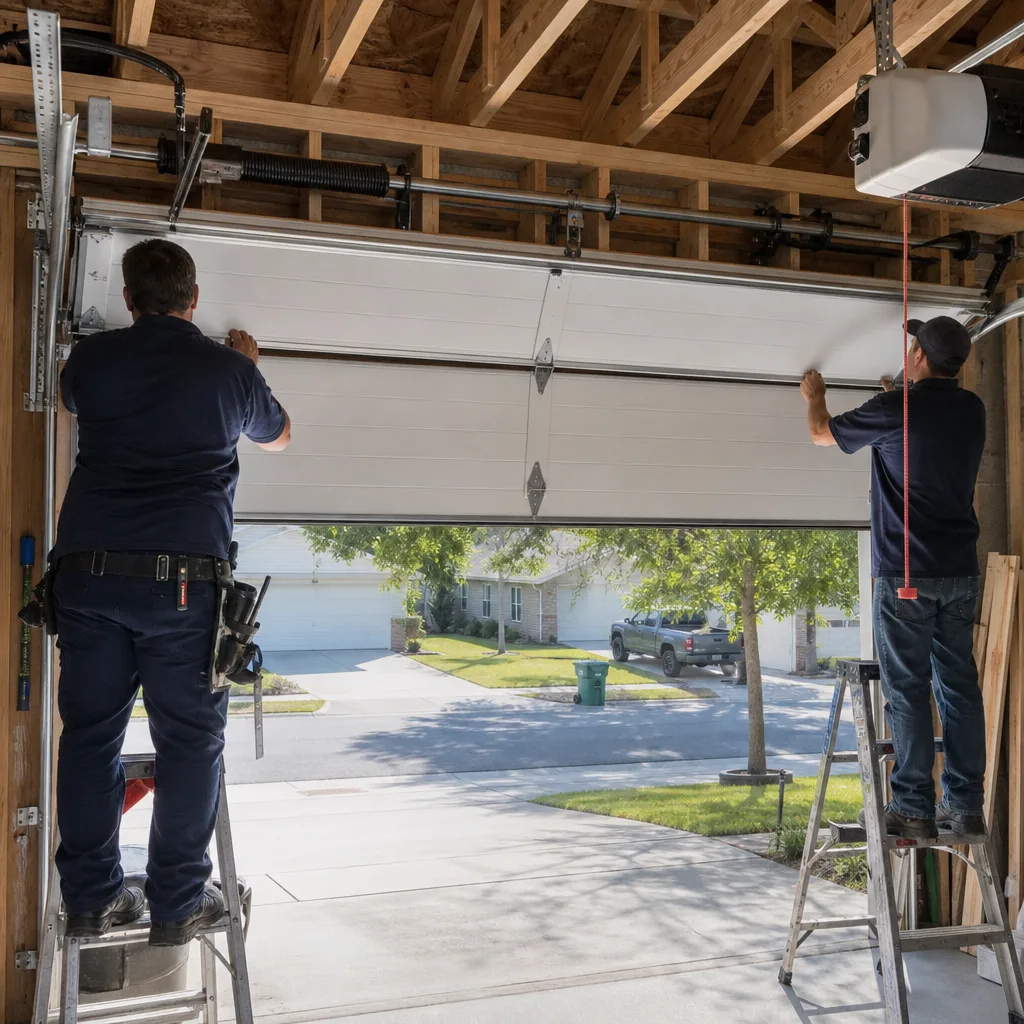
A 4-point inspection is the standard underwriting document for homeowners insurance in Florida. It evaluates four systems: roofing, electrical, plumbing, and HVAC. A garage door is not one of the four points, but a new garage door appears in the inspection report in two ways that matter to your policy.
First, the inspector will photograph the garage door and note its approximate age, condition, and whether it has wind-rated features such as reinforcement struts or impact-rated construction. If the door is clearly new and the permit history on the property shows no corresponding garage door permit, the inspector will flag this as a “structural improvement not reflected in permit records.” That single line can trigger an underwriting review, which can result in a higher premium, an exclusion for garage door coverage, or a policy non-renewal.
Second, many insurers in Florida now require a wind mitigation inspection in addition to the 4-point. The wind mitigation form includes a section for “opening protection,” which asks whether the garage door is impact-rated or has a wind-rated rating. If the answer is “no” or “unable to verify,” the insurer applies the conservative assumption: the door does not meet code, which means the home does not qualify for wind mitigation credits, which means the premium goes up. A permitted, inspected garage door with a Florida Product Approval label allows the inspector to mark “yes” with confidence, and that answer lowers your premium. A door that was installed without a permit makes the answer “unable to verify” because no code official ever verified it, and the homeowner pays higher premiums for the life of the policy.
In Kissimmee, where virtually every home insurance policy has a hurricane deductible and a windstorm component, the difference between a verifiable wind-rated door and an unverifiable one can be several hundred dollars per year. The permit is not just a one-time cost; it is the document that keeps your insurance affordable.
Florida Statute 689.261: Your Legal Disclosure Obligation
Florida Statute 689.261 requires sellers of residential property to disclose all facts that materially affect the value of the property and that are not readily observable to a buyer. An unpermitted garage door installation falls squarely under this statute. The seller cannot claim ignorance if they ordered the door or paid for the installation; the permit status of a component is a material fact, and the failure to disclose it is a statutory violation that can support a post-closing lawsuit for damages.
The practical sequence is this. You replace your garage door without a permit in 2021. In 2026, you sell the house. The buyer’s inspector notices the door is newer than the permits on record. The buyer’s title company requests a permit search and finds nothing. The buyer asks in a written disclosure questionnaire: “Have you performed any improvements to the property for which no permit was obtained?” You now face a choice: disclose the unpermitted door, which gives the buyer leverage to demand a credit or a remediation, or fail to disclose, which violates 689.261. If you fail to disclose and the buyer discovers the unpermitted door after closing, the buyer can pursue you for misrepresentation, and the damages include the cost of replacing the door with a permitted installation plus attorney fees.
The statute has a six-year statute of limitations for most actions, but the disclosure obligation attaches at the time of sale, not at the time of installation. This means a door installed without a permit in 2020 is still a disclosure problem in 2030 if the property sells then. The permit is not just a construction document; it is the piece of paper that prevents a future legal problem. When we complete a Garage Door Installation in Kissimmee, the closed permit is part of the documentation package the customer keeps with the home’s papers, specifically so that a future sale is clean.
How to Verify a Contractor Actually Pulled the Permit
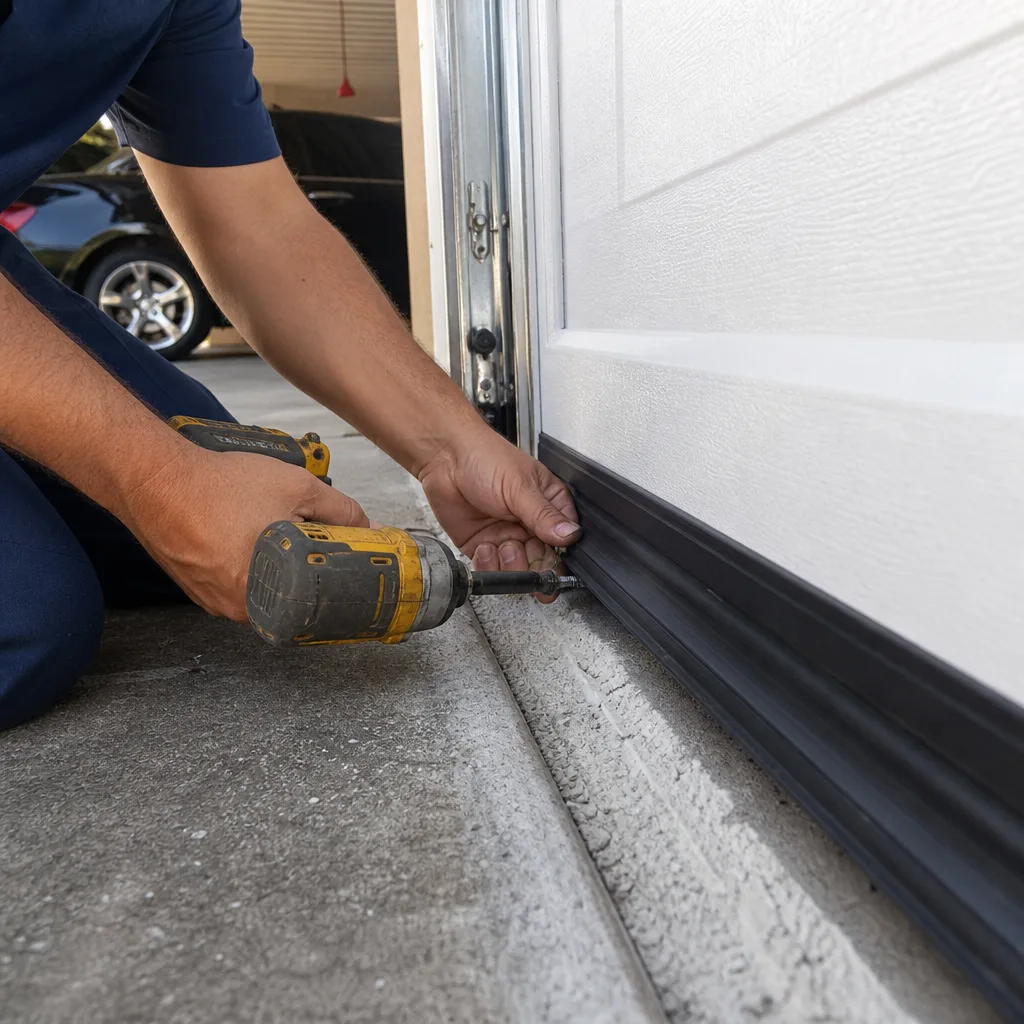
A contractor who says “we’ll take care of the permits” has not verified anything until you can see the permit number in the Osceola County system. Fortunately, Osceola County maintains a public permit portal that any homeowner can search by address or parcel number. Here is exactly how to verify that the permit exists before the work begins.
- Ask for the permit number in writing before installation day. The contractor should be able to give you the permit application number or the issued permit number. If the answer is “we’ll pull it after the job” or “it’s in process,” that is not a permit, that is an intention. The permit must be issued before any work begins. At Servo, the written scope of work includes the permit status, and we provide the permit number before the technician arrives for the installation. This is Clause 1 of The Haven Standard, the standard we work to: a written price and written scope before any work starts, and that scope includes the permit.
- Go to the Osceola County permit portal and search the address. Enter the property address or parcel ID. The search returns all permits on record for that parcel, including open permits and closed permits. Look for the permit number the contractor gave you. If you do not find it, call the contractor and ask why. Do not let the installation proceed until you see the permit in the county system.
- Confirm that the permit scope matches the work. A valid permit for “minor electrical repair” is not a permit for a garage door replacement. The permit must state “garage door” in the scope description. A permit number that does not match the work is not verification.
- After installation, verify the inspection was scheduled and passed. The permit portal will show the inspection date and the result. A permit that is issued but never inspected is not a closed permit, and an open permit at resale is nearly as problematic as no permit at all. The contractor should deliver the closed permit documentation to you as part of the job file, along with the photo record of the work.
This verification process takes five minutes on the county website, and it is the difference between a paper trail and a promise. We photograph nothing more important than the permit status because we know the customer’s future insurance renewal depends on it. A contractor who resists verification is telling you something about what the paperwork would show.
One clarification on permits and repairs: a garage door repair in Kissimmee that replaces wearable parts, such as springs, cables, rollers, or hinges, does not require a permit and does not appear in the permit portal. The same is true for garage door opener repair and installation. The permit requirement triggers when the door slab or the structural mounting system changes. If you are uncertain whether your specific job requires a permit, ask the contractor to state the permit requirement in writing on the quote. The answer should be specific: “Permit required, included in this price” or “No permit required under FBC 105.1, repair exemption.” Vague language is a signal to ask again.
Common Mistakes to Avoid
- Assuming a like-for-like replacement does not need a permit. Even if the new door is the same size and style as the old one, it is still a structural component replacement subject to wind-load verification. The Florida Building Code does not exempt same-size replacements the way it exempts some other component swaps. If the door panel, track, or mounting hardware is being replaced, get the permit.
- Letting the contractor install first and permit later. The permit must be issued before the work begins. An after-the-fact permit in Osceola County carries a penalty and may require invasive inspection of anchors that are already covered. Never accept “we’ll pull it after” as a response.
- Buying a door online without checking its Florida Product Approval number. A door that is approved for sale in Texas or Ohio may not be approved for installation in a 150 mph wind zone in Osceola County. The Florida approval number must be printed on the door label, and the door model must match the number on the permit application. A door without a Florida label cannot be permitted, period.
- Not verifying the permit number on the county portal before installation. Saying the permit is pulled is not the same as pulling it. Five minutes on the Osceola County permit portal tells you the truth. We have seen homeowners in Kissimmee accept a verbal “it’s taken care of” only to discover at the insurance renewal that no permit existed.
- Ignoring the inspection result. An open permit is almost as bad as no permit at resale. Verify that the inspection was scheduled, conducted, and passed, and get the closed permit documentation. Your file should include the permit number, the inspection date, and the inspector’s sign-off.
- Hiring an unlicensed installer to save a few hundred dollars. In Florida, a contractor without a state or county license cannot legally pull a permit. That means an unlicensed installer, by definition, is installing an unpermitted door. The savings disappear the first time an insurance adjuster or a title company asks for the permit record.
- Not retaining the permit documentation with the home records. The closed permit is a document you will need when you sell the house, when you renew insurance, or when you apply for a wind mitigation credit. Keep it with the deed, not in a drawer that gets thrown away during a move.
When to Call a Professional
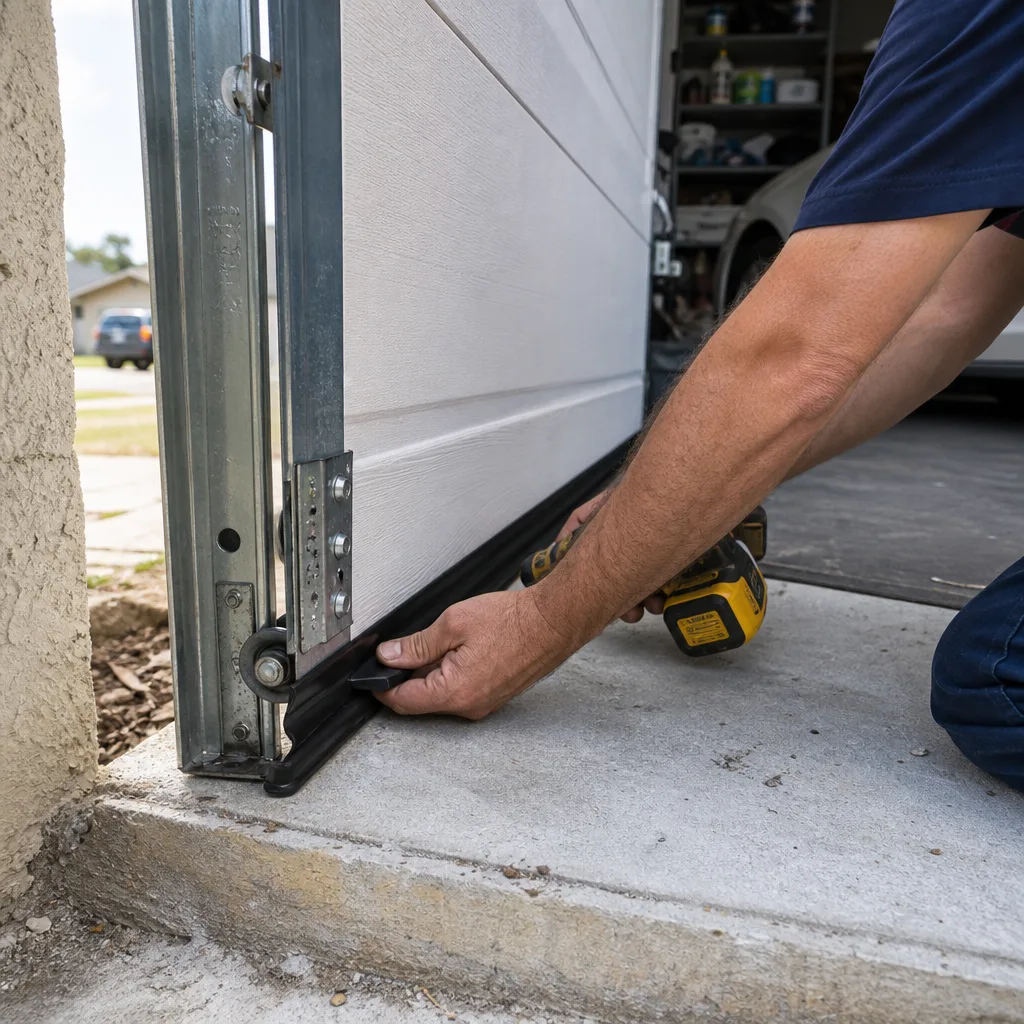
A garage door replacement is not a DIY project in Florida, and the reasons are structural, not cosmetic. The wind-load calculations, the anchor specifications, and the tension in the torsion spring assembly all require a trained installer who carries a valid license and pulls the permit before any work begins. If your door is sagging, binding, or showing rust on the track, call before the damage spreads to the mounting points. If you have bought a home in Kissimmee and cannot find a permit for the existing garage door, call to have the installation inspected and, if necessary, brought into compliance. If you are selling, address the permit status before listing, not during escrow. Servo Garage Doors Kissimmee offers free estimates in Kissimmee, and every quote includes the permit status in writing, before any work starts. For more guides & resources on garage door care and compliance, visit our blog. Call (689) 210-6506.
Frequently Asked Questions
Yes, a full garage door replacement in Osceola County requires a building permit because the door is a structural component of the building envelope subject to wind-load verification under Florida Building Code Section 1609. A like-for-like repair of wearable parts such as springs, cables, or rollers does not require a permit, but any job that replaces the door slab, the track system, or the mounting hardware does. Call (689) 210-6506 and we will confirm the permit requirement in writing before any work starts.
A garage door permit in Osceola County typically costs $75 to $150 depending on the valuation of the work. This is the county fee only; the contractor’s installation quote should include the permit pull and inspection scheduling as part of the written scope. The permit costs less than a single service call, and the liability of not having one can run into the thousands.
In Florida, a homeowner can pull a permit and perform their own work, but the work is still subject to inspection and you assume full liability for wind-load compliance. The danger is not just the inspection failure; it is that a self-installed door with an unverified anchor pattern is a structural risk in a hurricane, and installing a torsion spring without training is a genuine safety hazard that has caused serious injuries. We recommend a licensed installer, a pulled permit, and a documented inspection, every time.
An unpermitted garage door does not prevent a sale, but it gives the buyer leverage and creates a legal exposure under Florida Statute 689.261, which requires sellers to disclose material facts not readily observable to the buyer. The typical outcome is a price reduction or a demand that the seller remediate the permit before closing. Disclose it, fix it, and get the permit before you list. Call (689) 210-6506 for a no-cost assessment of your current door’s permit status and what it would take to bring it into compliance.
An Osceola County garage door inspector checks the Florida Product Approval label on the door, the anchor bolt spacing and embedment into the structural wall, and the track gauge and mounting hardware against the approved engineering. The inspection is a verification of wind-load compliance, not a visual once-over. The inspector will fail the installation if the door model does not match the permit, the label is missing, the anchors are undersized or improperly spaced, or the track is undersized for the door weight.
Search the Osceola County permit portal by your property address or parcel number. The portal returns all permits for the parcel, including open permits and closed permits, and will show whether a garage door permit was issued and whether the inspection passed. If you do not find a permit and you believe the door was replaced, contact a licensed contractor to assess the installation and advise you on remediation. Servo Garage Doors Kissimmee can run the verification and give you a written finding. Call (689) 210-6506.
The Bottom Line
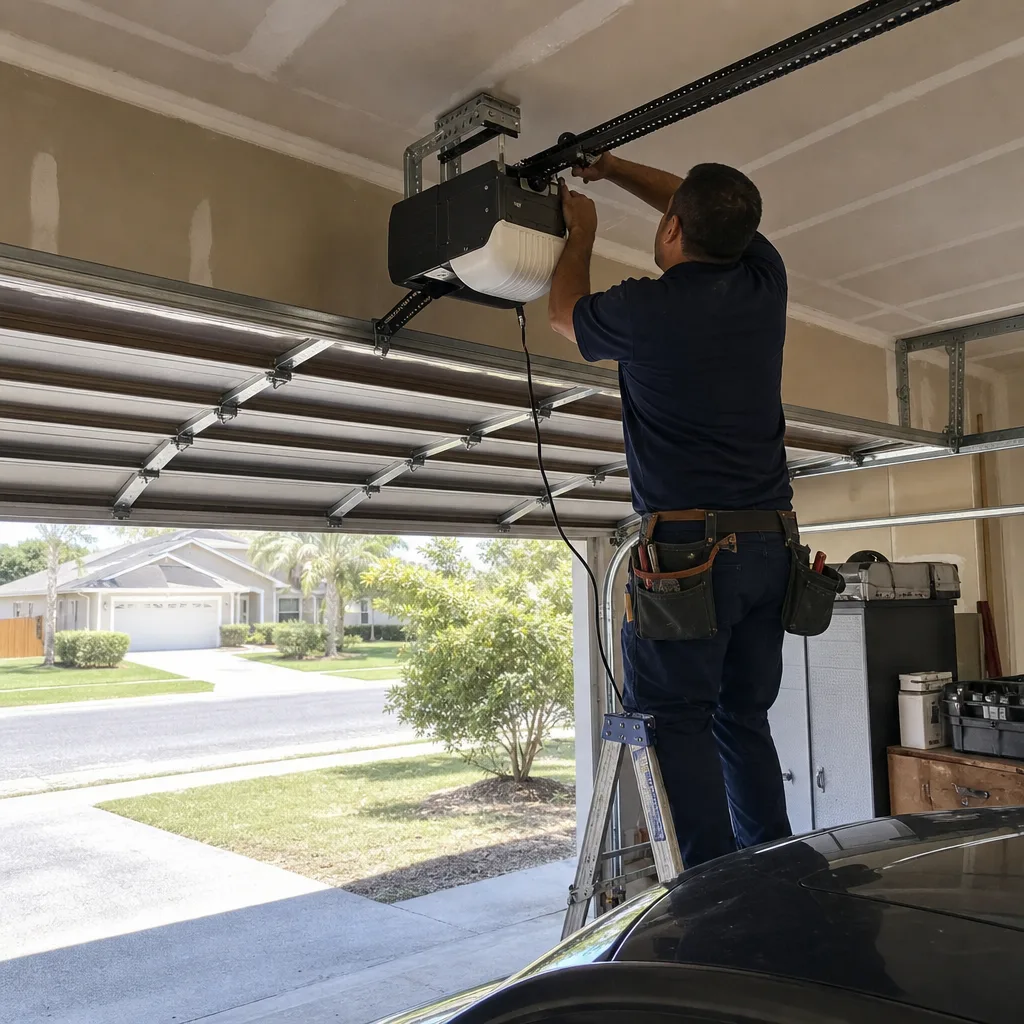
A garage door permit in Florida is not a bureaucratic formality. It is the mechanism that enforces the wind-load compliance the code requires, and its absence is a specific, documented liability that follows the property through insurance renewals and resale. In Kissimmee, a full door replacement triggers a permit under Florida Building Code Section 1609. The permit costs $75 to $150, takes five to ten business days to close, and gives you a paper trail that proves the anchors, the track, and the door itself meet the wind ratings for your parcel. Skipping it saves almost nothing and risks thousands. If you are planning a garage door replacement, a Servo Garage Doors Kissimmee home guide to permits and inspections is the right place to start. For a written price that includes permit status, a documented photo record of the work, and a closed permit at the end, call (689) 210-6506. Our Garage Door Repair in Kissimmee service includes permit verification on every full replacement, and our Garage Door Opener Repair & Installation in Kissimmee work is clearly separated from structural replacements so you always know what requires a permit and what does not.
Written by Marcus Deller, Owner at Servo Garage Doors Kissimmee, serving Kissimmee since 2015.