
Last updated September 20, 2026
Full 25-point door and opener safety check with every visit - springs, cables, rollers, tracks, and your LiftMaster or Chamberlain opener included
You get a price before we start. It does not change when the truck arrives.
 Before
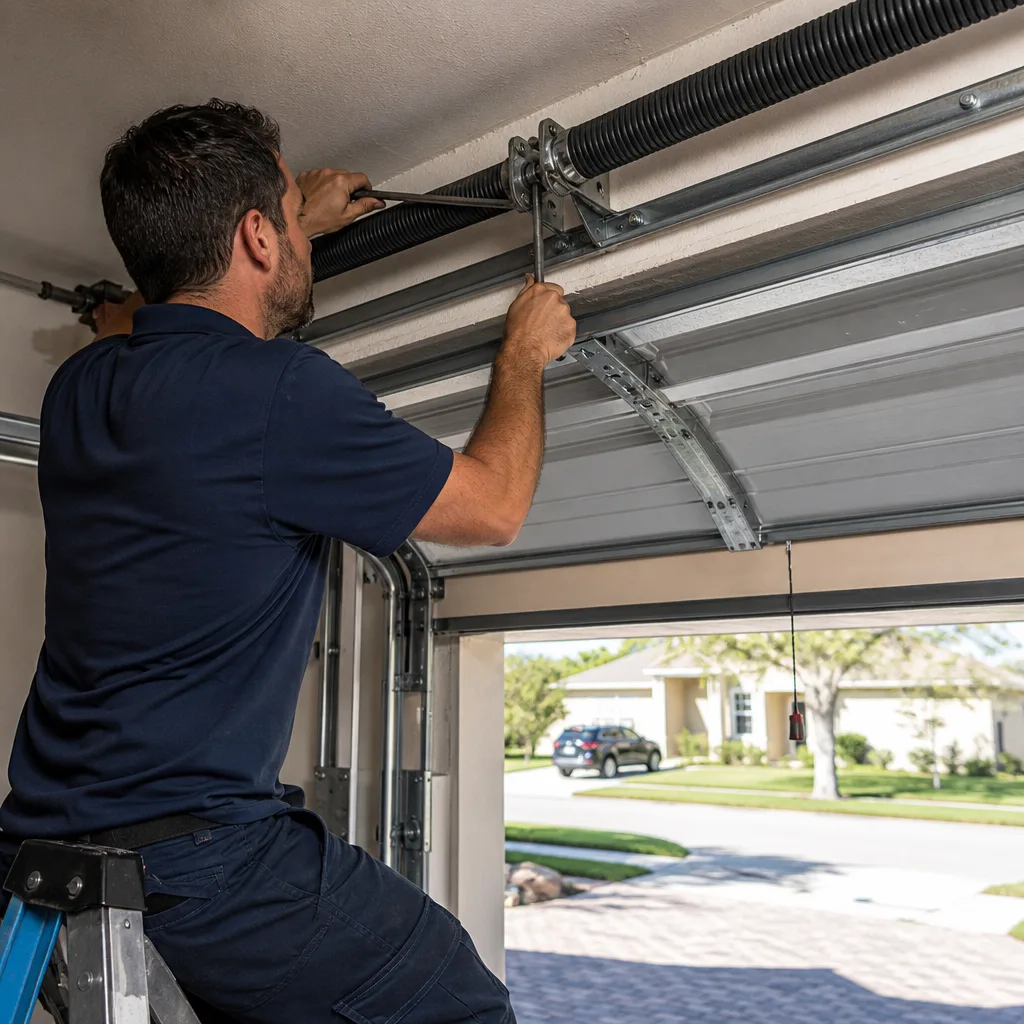 After
After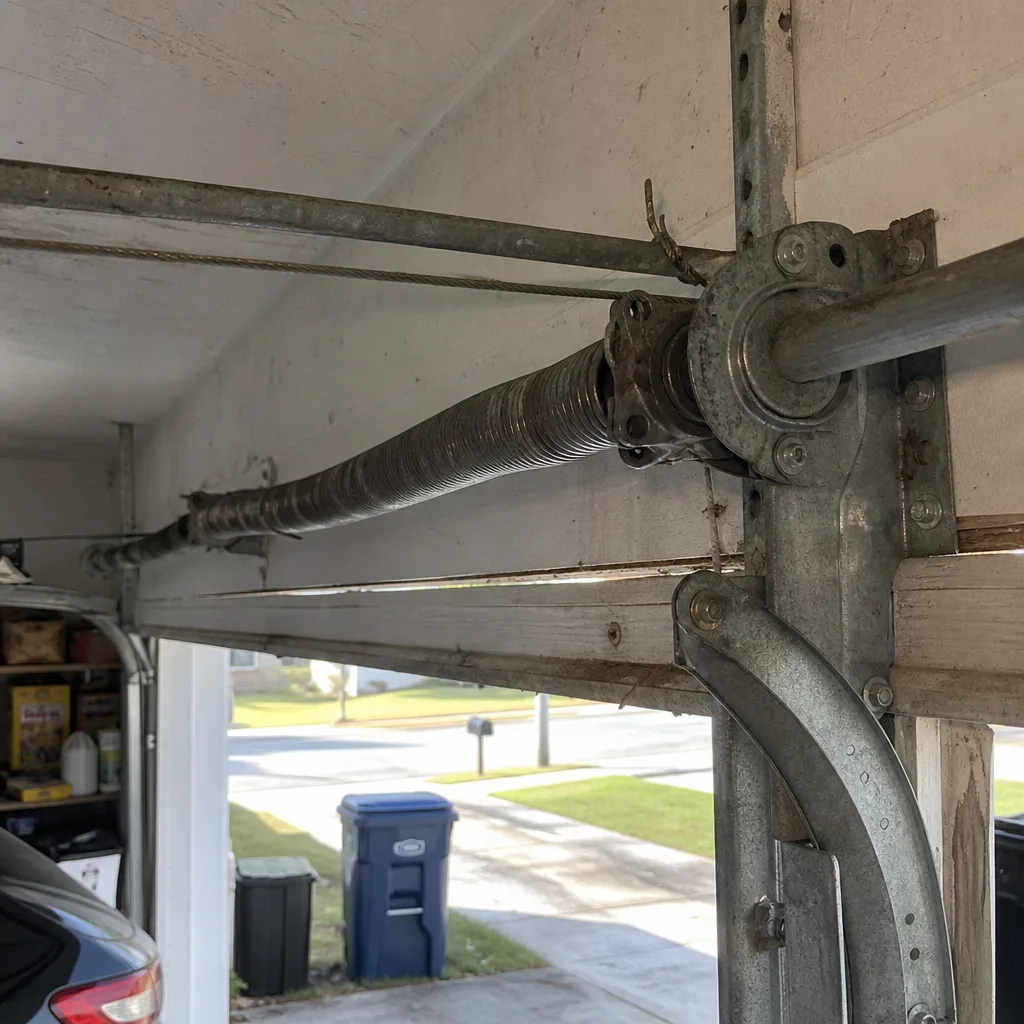 Before
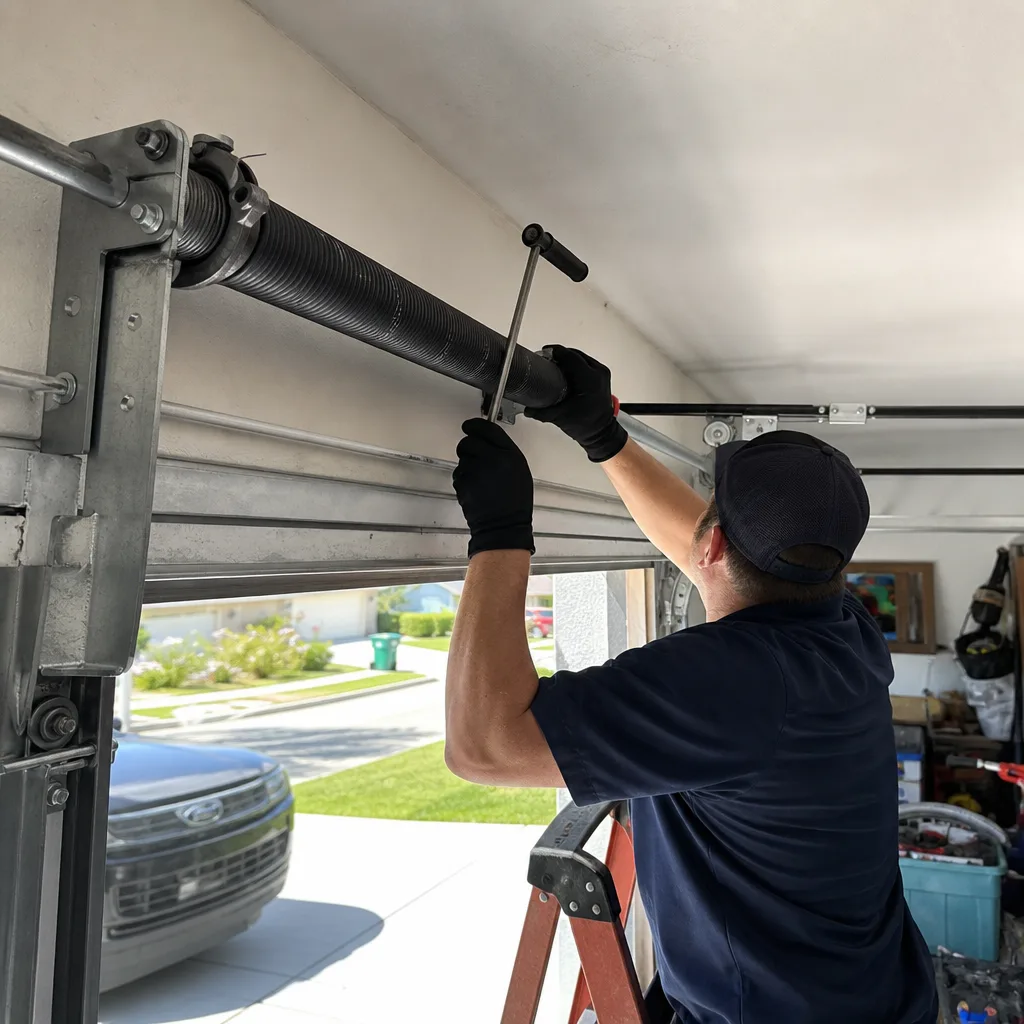 After
After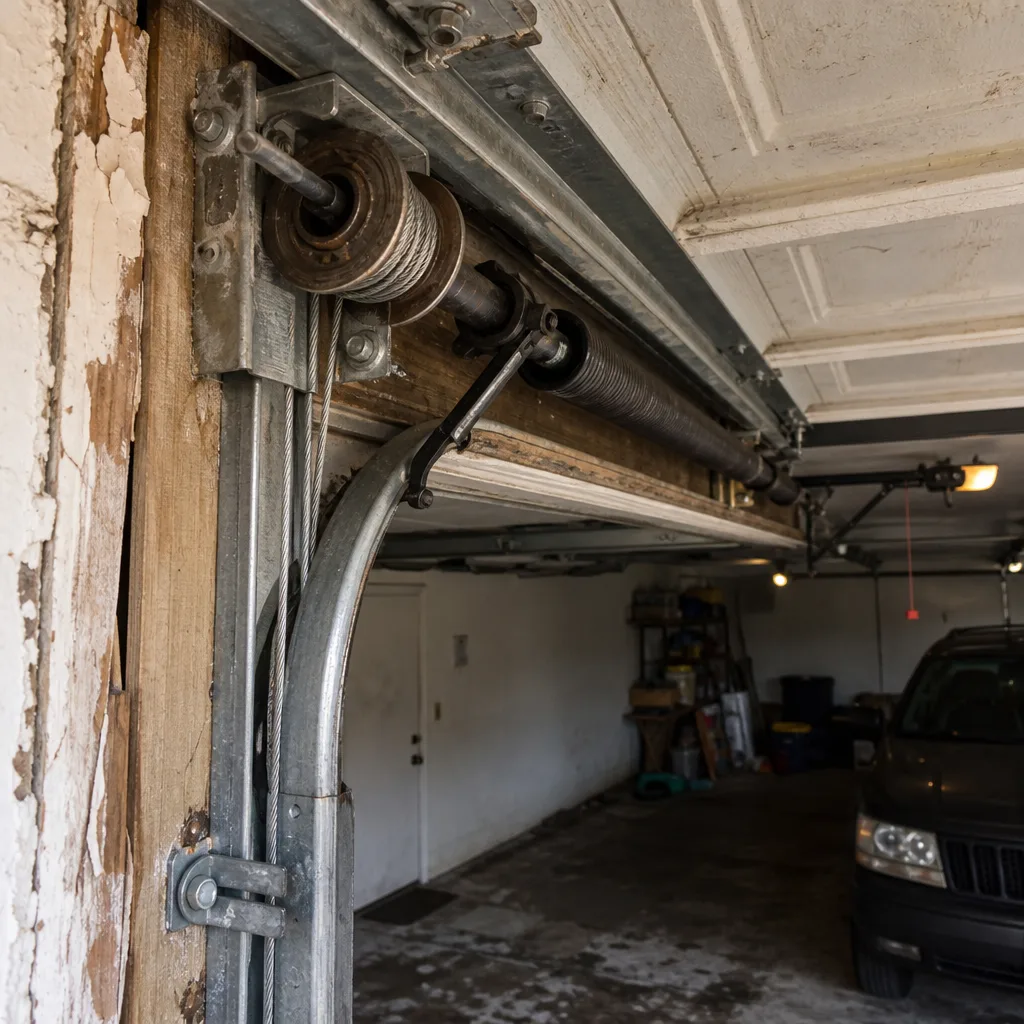 Before
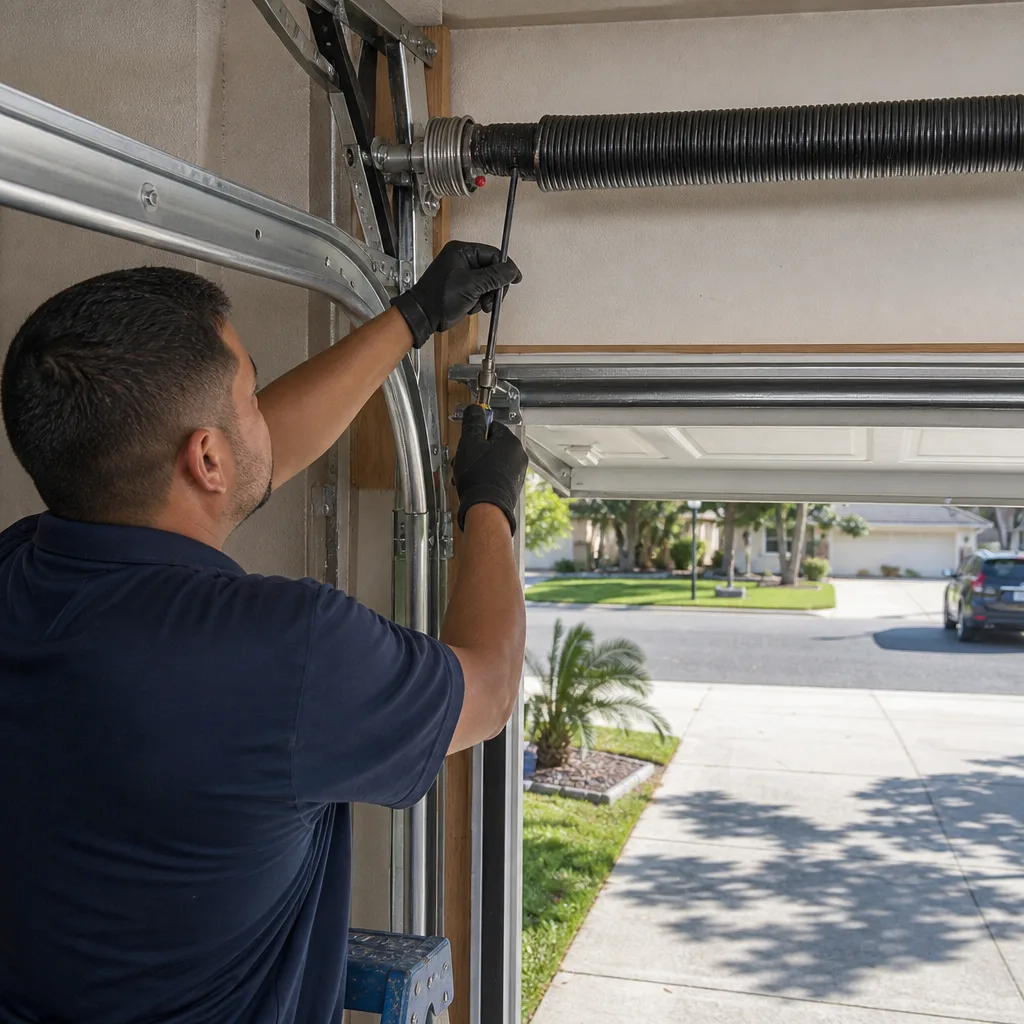 After
AfterGarage Door Warning Signs: A Kissimmee Homeowner’s Reference Guide
A garage door that reverses before hitting the floor is not “acting up.” It is either a down-limit switch offset, a safety sensor misalignment, or an obstruction the sensor is reading as resistance, and each of those has a different repair cost range and a different urgency level. Most warning sign guides stop at the symptom. This one names the component, explains the Kissimmee-specific condition that accelerates the failure, and gives you the diagnostic vocabulary to know whether you’re monitoring a problem or calling a technician. We’ve been repairing doors in Kissimmee since 2015, and the calls we get on a Tuesday morning are almost never about a door that failed without warning.
Quick Answer
The most common garage door warning signs in Kissimmee are grinding or squealing noises (roller bearings or dry spring coils), hesitation mid-lift (spring tension loss), reversal before closing (sensor misalignment or limit switch offset), and visible rust pitting on torsion springs (precursor to fracture). A door that releases at mid-travel and drifts more than 12 inches is a stop-use condition. Kissimmee’s heat, humidity, and afternoon thunderstorms accelerate spring corrosion and sensor alignment drift faster than in most of Florida’s interior.
Table of Contents
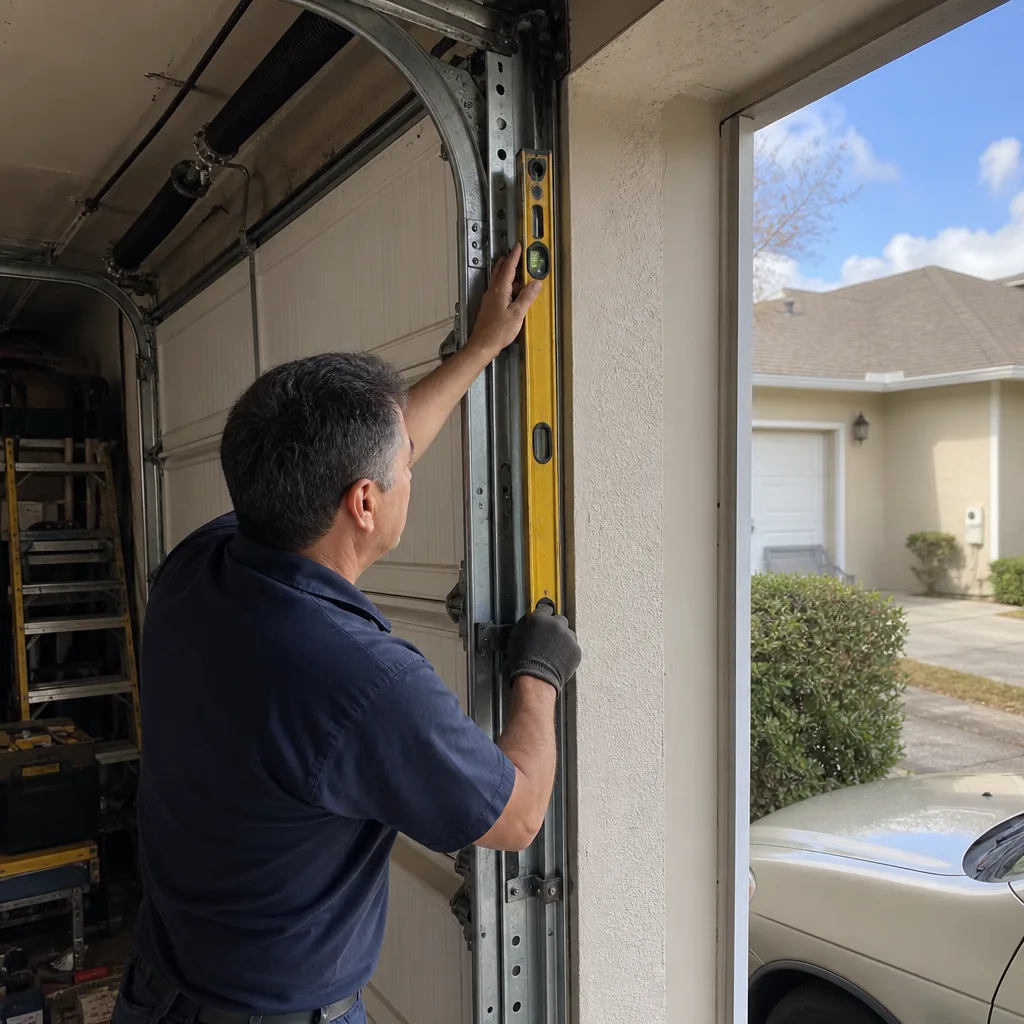
- The Symptom-to-Component Index
- Rust on Torsion Springs: Cosmetic vs. Structural
- The Door-Balance Test You Can Do in 30 Seconds
- Stop-Use Indicators vs. Monitored Conditions
- How to Photograph a Warning Sign for a Technician
- What Kissimmee Does to Garage Doors
- Opener-Specific Warning Signs
- What Each Warning Sign Costs to Fix in Kissimmee
BeforeAfterThe Symptom-to-Component Index
Every sound a garage door makes maps to a specific component. Here’s the index we use when a Kissimmee homeowner calls describing a noise. Knowing the component matters because it tells you whether you have a $90 roller replacement or a $380 spring job on your hands.
Grinding Noise: Roller Bearing or Hinge Barrel
A grinding sound during travel almost always traces to a roller bearing that has lost its seal or a hinge barrel that has worn oval. Roller bearings are sealed at the factory; once that seal fails, Florida humidity gets inside and the bearing grinds against itself. We see this most often on doors installed before 2015 that still have original steel rollers. Metal rollers on metal track are loud even when healthy, so the diagnostic distinction is a change in character: a door that got noisier over six months has a bearing issue, not a “door personality.”
Kissimmee accelerant: Our afternoon rain pattern dumps moisture on north-facing doors, and the standing humidity means a failed seal starts corroding the bearing within weeks rather than months. Replacement is straightforward: nylon rollers with sealed bearings run quieter and handle Kissimmee humidity better than steel.
Squealing: Dry Spring Coil or Cable on Drum
A high-pitched squeal when the door moves typically means either a torsion spring coil has lost its factory lubrication or the lift cable is dragging against the drum edge. Torsion springs are coated at manufacture, but that coating oxidizes. When the coil is dry, it rubs against the stationary cone and squeals. The fix is re-lubrication with a lithium-based garage door grease, not a WD-40 spray, which is a solvent that strips existing lubricant. The cable dragging is different: that’s a sharp, rhythmic chirp, and it means the cable has gone slightly off its drum groove. A cable that’s off-groove can fray fast under load.
What we tell Kissimmee customers: A dry spring coil squeal is a monitor-and-schedule condition. A cable chirp is a call-us-today condition. The distinction costs nothing to learn and saves a $490 spring assembly job from becoming a $700-plus emergency cable replacement with panel damage.
Hesitation on Lift: Spring Tension Loss or Opener Torque Limit
When a door pauses a beat before moving upward, or stutters through the first 12 inches, the torsion spring has lost tension. This is not an opener motor issue in most cases. A spring that’s lost 10 to 15 percent of its designed torque will cause that hesitation as the opener strains against the door’s honest weight. The opener’s torque limit setting is the second possibility: if it’s set too low, the motor backs off when it meets resistance. But spring tension loss is the far more common cause in Kissimmee, and it happens faster here because heat accelerates spring steel fatigue. A spring rated for 10,000 cycles may deliver 6,000 in a garage that runs 95 degrees through July and August.
Rust on Torsion Springs: Cosmetic vs. Structural
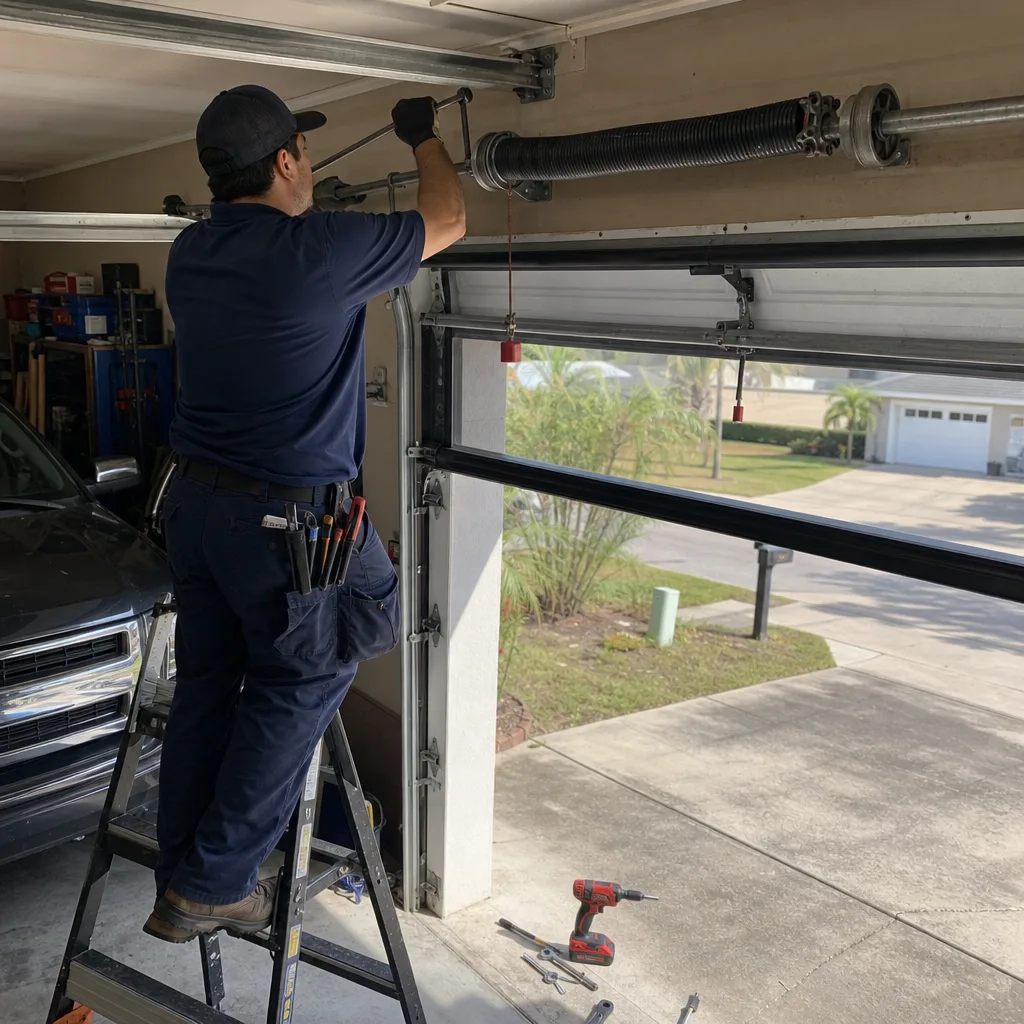
Torsion springs on a Kissimmee garage door will rust. That’s not optional; it’s chemistry. The question is whether the rust is a coating failure or a metal failure. The distinction is visible, and knowing it can prevent a spring fracture from happening while your car is inside the garage.
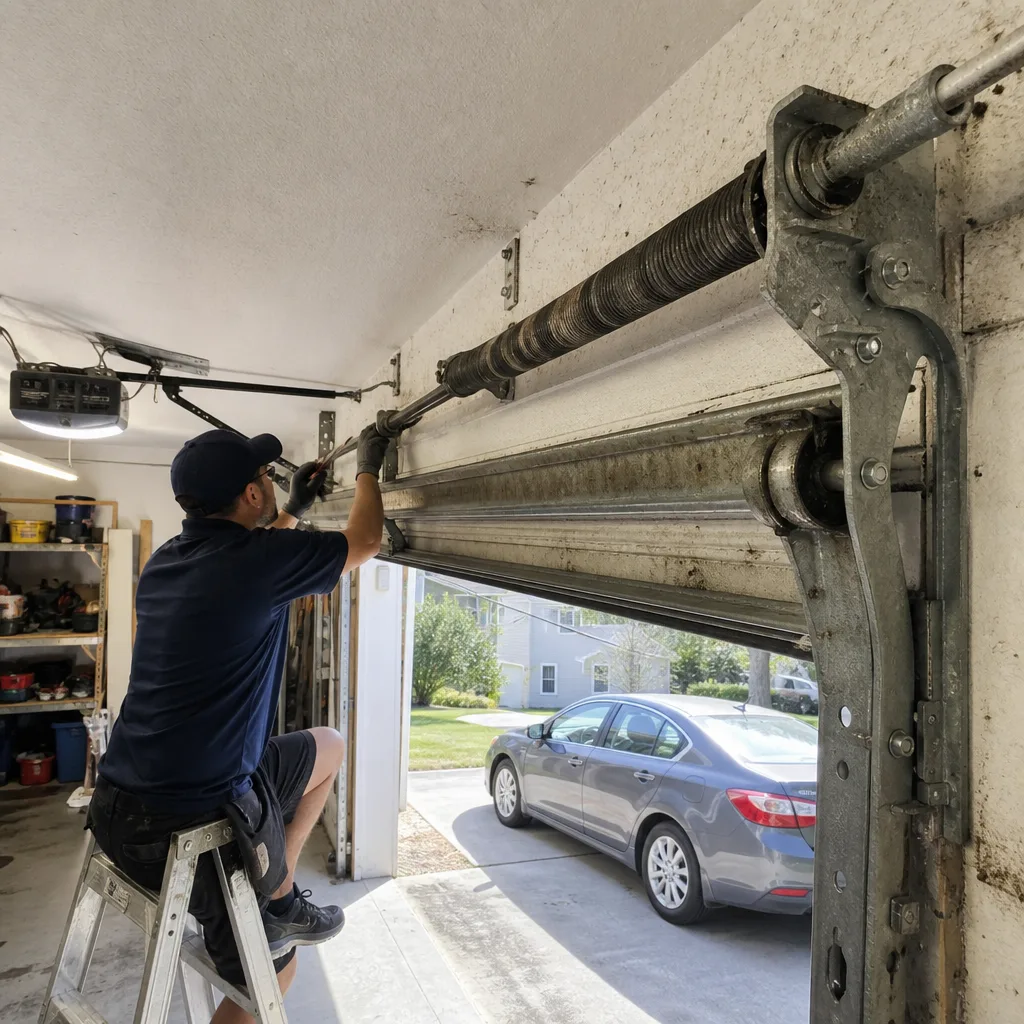
Cosmetic rust appears as a uniform orange-brown film across the coil surface. Run a finger along it (with the door closed and the opener disengaged) and it feels like fine grit but the coil still has its round profile. The spring’s structural integrity is intact. Cosmetic surface oxidation is common on springs 3 to 4 years old in this climate. It’s not pretty, but it’s not dangerous.
Structural rust looks different. You’ll see pitting: small, irregular craters or divots in the metal surface. Active pitting on a torsion spring means the wire diameter has been compromised from the outside in. A spring that was 0.225-inch wire at installation might now be 0.180-inch at the pit site. Under torsion load, that pit becomes a stress riser, and the spring fractures at the narrowest point. We’ve documented fractures on springs that showed visible pitting for only four to six weeks before breaking.
- Close the door fully and disengage the opener using the red release cord.
- Stand to the side of the spring, never directly in line with it.
- Photograph the full spring length with your phone, then zoom on any dark or irregular spots.
- Look for craters, not color. Cratering is the stop-use signal.
This is the exact inspection our technicians perform in Kissimmee, and Clause 4 of The Haven Standard requires that we photograph what we find and show it to you before quoting a replacement. If you’ve already photographed the pitting yourself, that gap between “I see it” and “they saw it too” closes fast.
The Door-Balance Test You Can Do in 30 Seconds
The balance test is the single most diagnostic thing you can do without a tool, and it’s the test our Kissimmee technicians run before touching anything on a spring concern. It answers one question: is the spring doing its job?
What a properly balanced door does: With the opener disengaged, a correctly tensioned door will stay put when you release it at mid-travel, which means you can lift it to waist height, let go, and it holds position. It might drift an inch or two and settle, but it won’t move six inches on its own. The spring is counterbalancing the door’s weight within its designed range.
What deviation signals: If the door drops more than 12 inches when released at mid-travel, the spring has lost meaningful tension. That’s not a lubrication issue. That’s a torsion spring winding down toward the end of its serviceable life. The fix is either re-tensioning if the spring is still within manufacturer spec, or replacement if the wire shows thinning or the spring has surpassed its rated cycle count. A door that drifts upward when released means the opposite condition: the spring is over-wound, and that’s usually an install error rather than age.
- Close the door. Pull the red release cord to disengage the opener.
- Lift the door manually to waist height.
- Let go with both hands and step back.
- Note the drift direction and distance.
- Re-engage the opener by pulling the release cord back toward the door.
This test is safe to perform. You’re not touching the spring, the cable, or any tensioned component. It tells you in 30 seconds whether your spring should be evaluated by a technician with a calibrated scale and a tension gauge, which is what we bring to every Garage Door Repair in Kissimmee call.
Stop-Use Indicators vs. Monitored Conditions
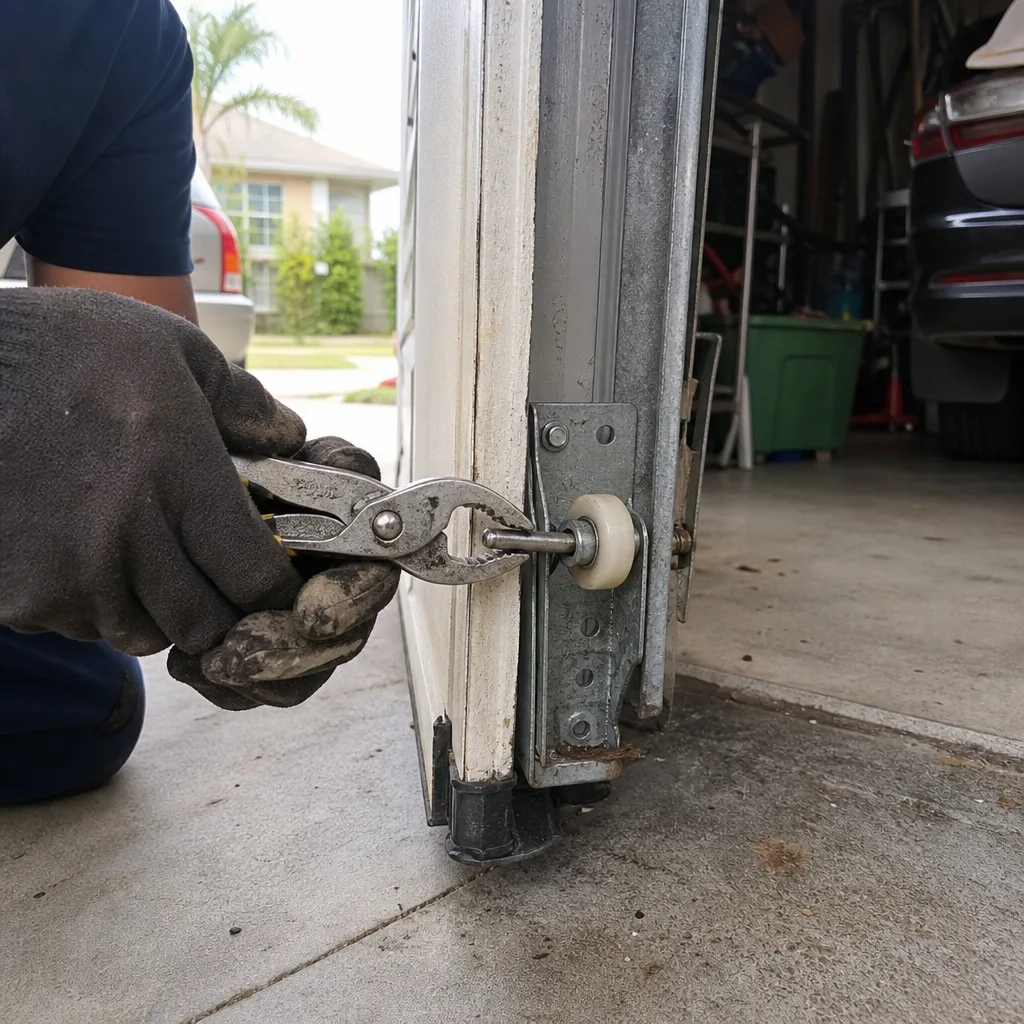
Not every warning sign means “stop using the door.” Some mean “schedule service this week.” The difference matters because a door you keep using with a broken component can cost you three times the repair when the secondary damage lands. Here’s how we categorize what we hear from Kissimmee homeowners, and you can find more guides & resources on our blog.
Stop-Use Indicators (Do Not Operate the Door)
- Visible pitting on the torsion spring: Active corrosion craters, not just surface film. A fractured spring under load can send the broken end through drywall or worse.
- Cable fraying or off-groove chirp: A frayed cable can snap, and the unbalanced door falls or jams in the track.
- Door drops when released at mid-travel beyond 12 inches: The spring is compromised. Continuing to use the door lets the opener work against a load it’s not rated for, which burns out the logic board.
- Any sound of metal grinding that started suddenly: A roller bearing that has failed can score the track, and a scored track is a replacement, not a repair.
- The door reverses immediately on close and the sensor lenses have been cleaned: This suggests a limit switch failure or a sensor wiring fault, not an obstruction. The door won’t close, which is a security problem, not an inconvenience.
Monitored Conditions (Schedule Within the Week)
- Dry spring squeal: Re-lubrication resolves it. Delay it six months and the coil friction accelerates wear.
- Cosmetic rust film on springs: Document it with a photo, continue monitoring for pitting.
- Intermittent hesitation on lift: Track it for a week. If it’s consistent across all temperature conditions, call for a spring evaluation.
- Slight track noise that hasn’t changed character in a year: Note it, photograph it, and mention it at your annual service.
Marcus Deller’s rule for Kissimmee customers: if you’re unsure which list your symptom belongs to, treat it as monitored until you’ve spoken to a technician. A five-minute phone conversation with someone who names the actual component beats an anxious week of Googling.
How to Photograph a Warning Sign for a Technician
The practice of photographing a failed component before quoting a replacement is the founding rule at Servo, and it’s now codified as Clause 4 of The Haven Standard. But the homeowner’s phone photo is a diagnostic tool too. A clear picture sent before the technician arrives changes what’s on the truck and what gets quoted. Here’s what makes a photo useful rather than just evidence.
- Frame the whole component, not the symptom. A photo of a noisy roller means nothing. A photo that shows the roller, its hinge, and the track bracket gives the technician the model and wear condition.
- Shoot the torsion spring straight-on and from the side. Straight-on shows pitting. The side angle shows coil separation or a gap that indicates the spring has slipped.
- Use a quarter for scale on pitting. Hold a coin next to the corrosion crater. It turns “some pitting” into “a 0.4-inch active pit,” which changes the urgency conversation.
- Photograph the door at rest and at mid-travel. The gap between the panel and the track at two positions reveals a cable drum issue or a spring imbalance that a single static photo won’t show.
- Take the photos in the morning, not during Kissimmee’s afternoon glare. Direct Florida sun creates shadows that mask pitting. Diffuse morning light reveals surface texture.
The technician uses these photos to pre-diagnose, but more importantly, you now have your own documentation baseline. The photo you take today and the photo the technician takes on arrival either match, which builds trust, or contradict, which prompts questions. The Haven Standard makes this the default on our end: we photograph what we find and deliver that record to you before you approve any repair.
What Kissimmee Does to Garage Doors
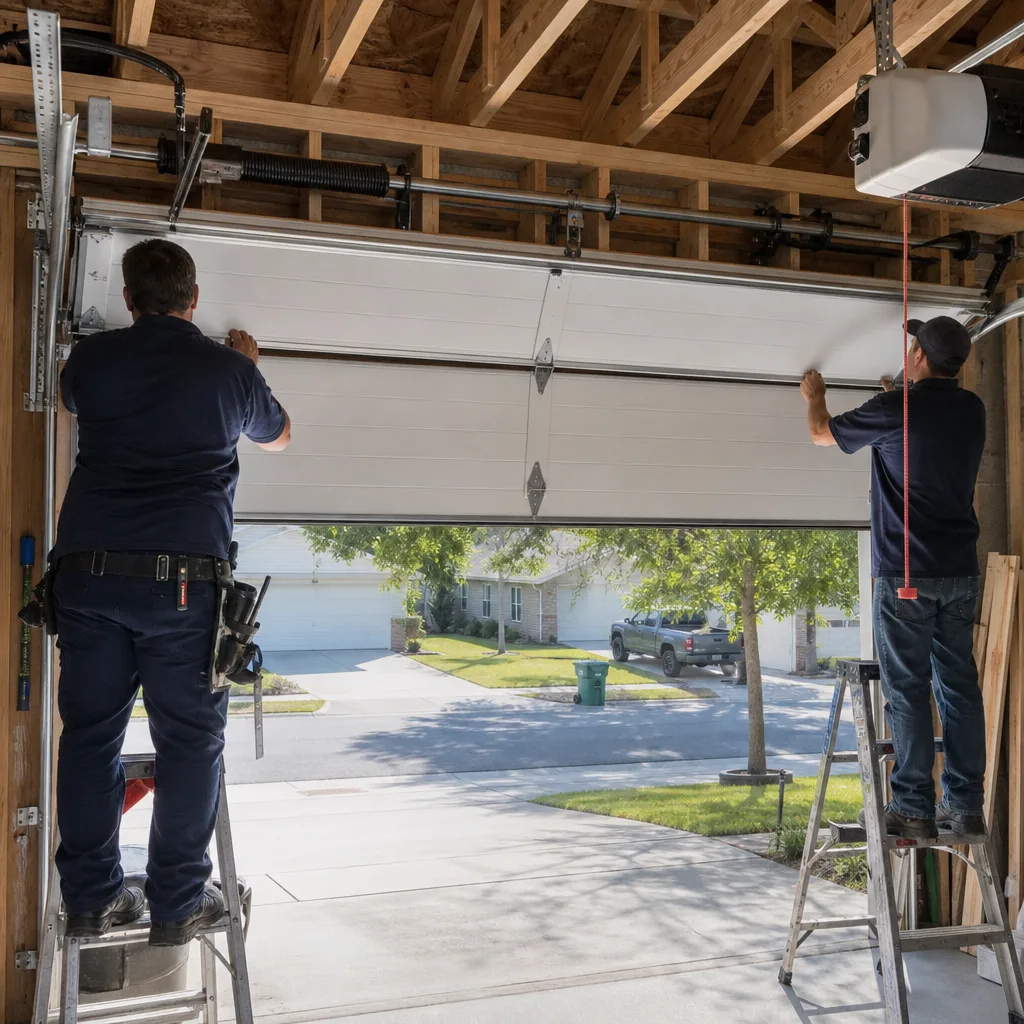
Kissimmee is harder on garage door components than Orlando, St. Cloud, or Celebration, and the reasons are specific: our heat loads, our afternoon storm cycle, and our soil. A garage door spring in Kissimmee runs hotter than one 20 miles north, and the corrosion pattern is different too.
Heat and spring fatigue: Torsion springs are rated in cycles, but the rating assumes a moderate operating temperature. A garage in Kissimmee that faces west will hold 105 to 115 degrees through the summer afternoon. Steel fatigues faster at sustained high temperatures. A spring rated for 10,000 cycles may deliver 7,000 here. We see spring replacements on doors installed in 2019 and 2020 with regularity, where the same door in a cooler garage would still have two years of life.
Humidity and sensor drift: The safety sensor brackets on most doors are stamped steel. In Kissimmee’s humidity, the bracket flexes imperceptibly as it oxidizes, and the sensor beam drifts out of alignment. A sensor that was perfectly aligned at installation can develop enough drift within 18 months to cause false reversal or refusal-to-close behavior. This is the single most common Kissimmee-specific opener issue we diagnose, and the fix is usually realignment, not replacement.
Afternoon storms and cable corrosion: Lightning isn’t the issue; moisture is. The lift cables on a Kissimmee door exposed to storm-driven rain wick water into the drum area. Over years, that produces pitting on the cable at the drum contact point, and a pitted cable is a frayed cable waiting for load. Doors on the north and east sides of homes show this pattern first because those are the windward faces during our summer storms.
What this means for maintenance: A Kissimmee door on a west-facing garage should be inspected twice a year. A north-facing door goes on the same schedule because of cable moisture. The door is working against conditions that are not neutral, and the Servo Garage Doors Kissimmee home service area sees every one of these patterns on a weekly basis.
Opener-Specific Warning Signs
Openers fail differently than doors, and the warning signs are often electrical rather than mechanical. The good news is that most opener failures give warning in the form of behavior changes. The less good news is that most homeowners in Kissimmee ignore those changes until the logic board is dead.
The Opener Hums But the Door Doesn’t Move
That hum is the motor running without the trolley carriage engaging. The cause is almost always a stripped drive gear inside the opener housing, which is a known weak point on older LiftMaster and Chamberlain chain-drive units. In Kissimmee’s heat, the nylon drive gear degrades faster; we replace gears on openers as young as five years old routinely. The repair is a gear kit, typically less than half the cost of a new opener, but if the unit also shows logic board corrosion, replacement makes more sense. We service all major opener brands, including LiftMaster, Chamberlain, Genie, Craft, and Raynor, and carry gear kits for the common models on the truck.
Intermittent Door Reversal During Close
If the door reverses during close occasionally but not consistently, you’re looking at one of two things: a safety sensor beam that’s drifting out of alignment as the bracket flexes, or a down-limit switch that’s losing calibration. The sensor issue is the Kissimmee default because of the humidity-driven bracket oxidation described above. The fix is realignment and bracket tightening, and we photograph the beam alignment before and after so the customer sees the delta. The limit switch is a different repair: it sits inside the opener drive assembly and controls how far the door travels downward. A limit switch that’s off by a quarter inch will cause the door to reverse because it reads resistance it shouldn’t.
The Door Runs But the Opener Sounds Labored
A labored opener is usually a spring issue, not an opener issue. The motor is working against the door’s actual weight because the spring has lost tension. Running an opener in this condition for months is what kills the logic board: the amp draw goes up, the board overheats, and eventually the unit stops responding to remotes. If the opener sounds like it’s working harder than it did a year ago, have the spring evaluated before you replace the opener. This is the cheapest way to avoid an unnecessary Garage Door Opener Repair & Installation in Kissimmee job.
What Each Warning Sign Costs to Fix in Kissimmee
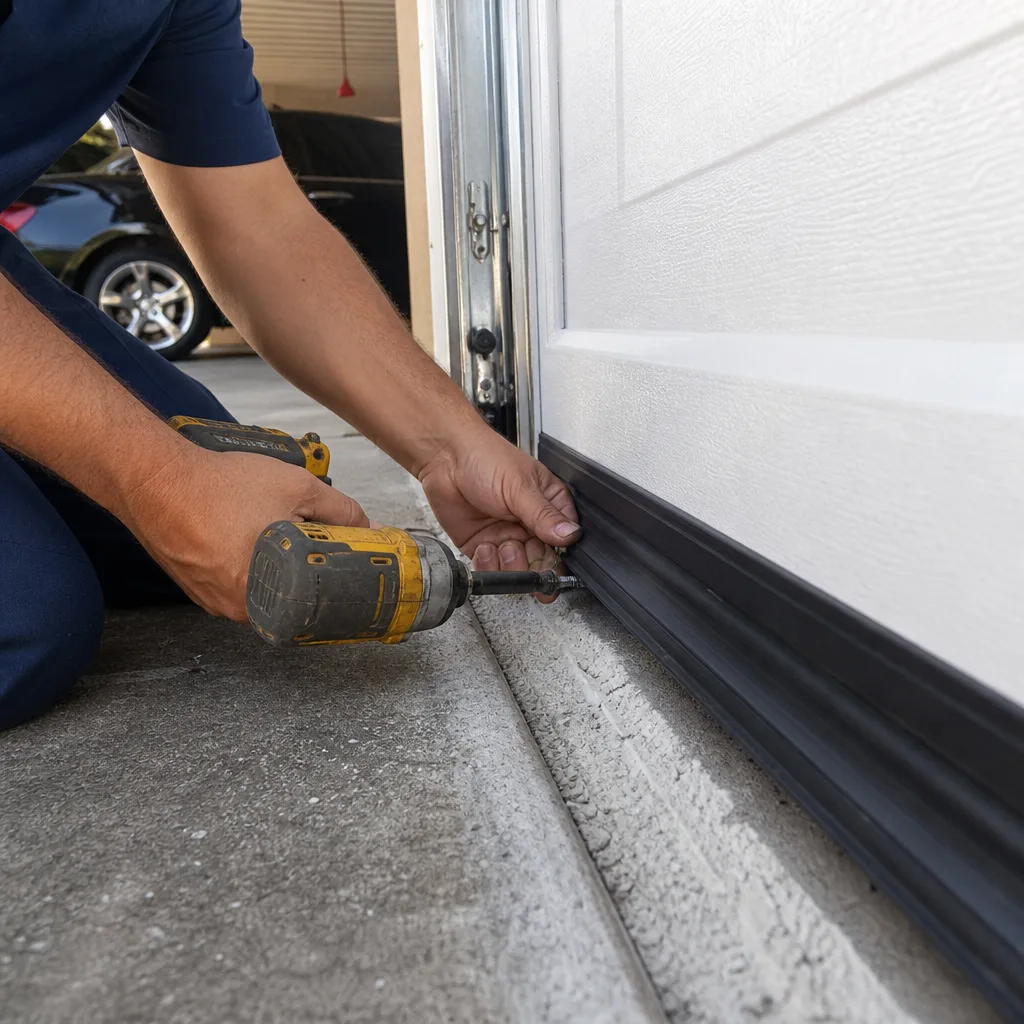
Kissimmee garage door repair pricing varies by the component, not by the day of the week. Here are the cost ranges we quote for the warning signs described in this guide. Every price below is a flat, written price delivered before any work starts, per Clause 1 of The Haven Standard. No “call for a quote,” no discovery-based billing. If you’re planning a larger project, read How to Hire a Garage Door Contractor in Kissimmee: A Step-by-Step Guide first.
- Roller bearing or hinge barrel replacement: $90 to $180 depending on the roller count and whether the hinges need replacement. Nylon rollers with sealed bearings run higher but last past a decade in Kissimmee humidity.
- Spring re-lubrication and tension check: $75 to $120 as a service call. If the spring shows pitting, the conversation turns to replacement, not lubrication.
- Torsion spring replacement (single spring): $280 to $420 installed. Pair replacement (when both springs are the same age) runs $480 to $640. The price includes the photo record of the old spring’s condition before replacement.
- Cable replacement (single cable): $160 to $240 depending on the drum condition and whether the track shows scoring.
- Safety sensor realignment: $95 to $150, with photo documentation of the beam alignment before and after.
- Drive gear replacement: $180 to $260 depending on the opener model. New opener supply in Kissimmee runs higher, and replacement is quoted only when the gear kit won’t resolve the issue.
We’re deliberately naming the numbers because “call for a quote” contradicts everything about how Servo operates. A Kissimmee homeowner who researches before calling deserves to know the range on the page. That’s the difference between a repair estimate and a diagnostic conversation.
Common Mistakes to Avoid
- Spraying WD-40 on torsion springs. WD-40 is a solvent. It strips the factory coating and accelerates dry-coil friction. Use a lithium-based garage door grease instead, or have it done during a service call.
- Continuing to use a door after a cable chirp starts. The chirp means the cable is off-groove or fraying. Every cycle loads the damaged cable until it snaps, and the door can drop or jam in the track.
- Ignoring drift on the balance test because “the opener still works.” The opener is masking the spring failure. Running it in that condition is how you replace a $380 spring and a $320 logic board in the same quarter.
- Assuming a noisy door is a character trait. A door that got louder over six months has a bearing issue. A door that was always loud needs different rollers. The change in character is the diagnostic.
- Photographing the symptom without the component. A photo of “the noisy part” that doesn’t show the roller and track gives the technician nothing to work with. Frame the whole assembly.
- Replacing the opener before checking the spring. A labored opener is usually a spring tension issue. Replacing the opener without addressing the spring means the new opener inherits the same premature wear.
- Waiting for the spring to “look broken” before calling. A spring that shows pitting but hasn’t fractured is the best time to replace it. Planned replacement is a weekday job at standard pricing. Fracture cleanup is an emergency with panel damage sometimes added.
When to Call a Professional
Call a technician when the balance test shows drift beyond 12 inches, when the spring shows pitting rather than film rust, when the cable chirps, or when the opener hums without moving the door. These are all conditions where further operation compounds the cost. If you have a written estimate from another Kissimmee company and you’re not sure about the diagnosis, we offer a free second opinion at Servo Garage Doors Kissimmee: bring the paperwork, and we’ll document our findings with photos and a written scope. Service calls are free estimates for Kissimmee homeowners. Call (689) 210-6506 and a real person answers, including on weekends. For everything covered here in one place, see The Complete Guide to Garage Door in Kissimmee.
Frequently Asked Questions
A torsion spring nearing fracture shows active rust pitting, not just surface film, and the door will drift downward when you release it at mid-travel. In Kissimmee, springs on west-facing garages are the most prone to early failure because the afternoon heat accelerates steel fatigue. If you see craters in the spring coil surface, stop using the door and schedule an inspection.
A door that reverses before reaching the floor is either reading resistance from the safety sensor (misalignment or obstruction), or the down-limit switch has drifted out of calibration. Kissimmee’s humidity causes sensor bracket oxidation that shifts the beam out of alignment over 18 to 24 months. Clean the sensor lenses first; if the reversal continues, call (689) 210-6506 for a realignment and limit switch check.
A dry spring squeal is a monitor-and-schedule condition; a sudden grinding or metal-on-metal change is a stop-use condition. The squeal means the spring coil needs re-lubrication. The grinding means a roller bearing or hinge barrel has failed and the door is chewing its track. When in doubt, stop using the door and get a documented assessment.
Single torsion spring replacement in Kissimmee runs $280 to $420 installed; a pair (which is standard when both springs are the same age) runs $480 to $640. The price is flat and written before any work starts, and it includes the documented photo record of the old spring’s condition. This is one of the few repairs where getting ahead of the failure saves real money: a planned replacement avoids emergency surcharges and panel damage from a fractured spring.
If the opener is a chain-drive unit under seven years old and the issue is a stripped drive gear or a limit switch, a repair at $180 to $260 makes sense. If the logic board shows corrosion (which Kissimmee humidity accelerates) or the motor has been running labored for months due to a failing spring, replacement is the better math. We carry gear kits for the common LiftMaster, Chamberlain, Genie, and Craftsman models, and we’ll quote repair or replacement in writing before you choose.
Photograph the full torsion spring straight-on and from the side, the roller and track assembly for any noise complaint, and the door at rest and at mid-travel to show panel-to-track gaps. Use a coin for scale on any visible pitting. Morning light is better than afternoon glare. Send these to the technician before the visit, and they’ll arrive with a clearer diagnostic picture and the right parts on the truck.
The Bottom Line
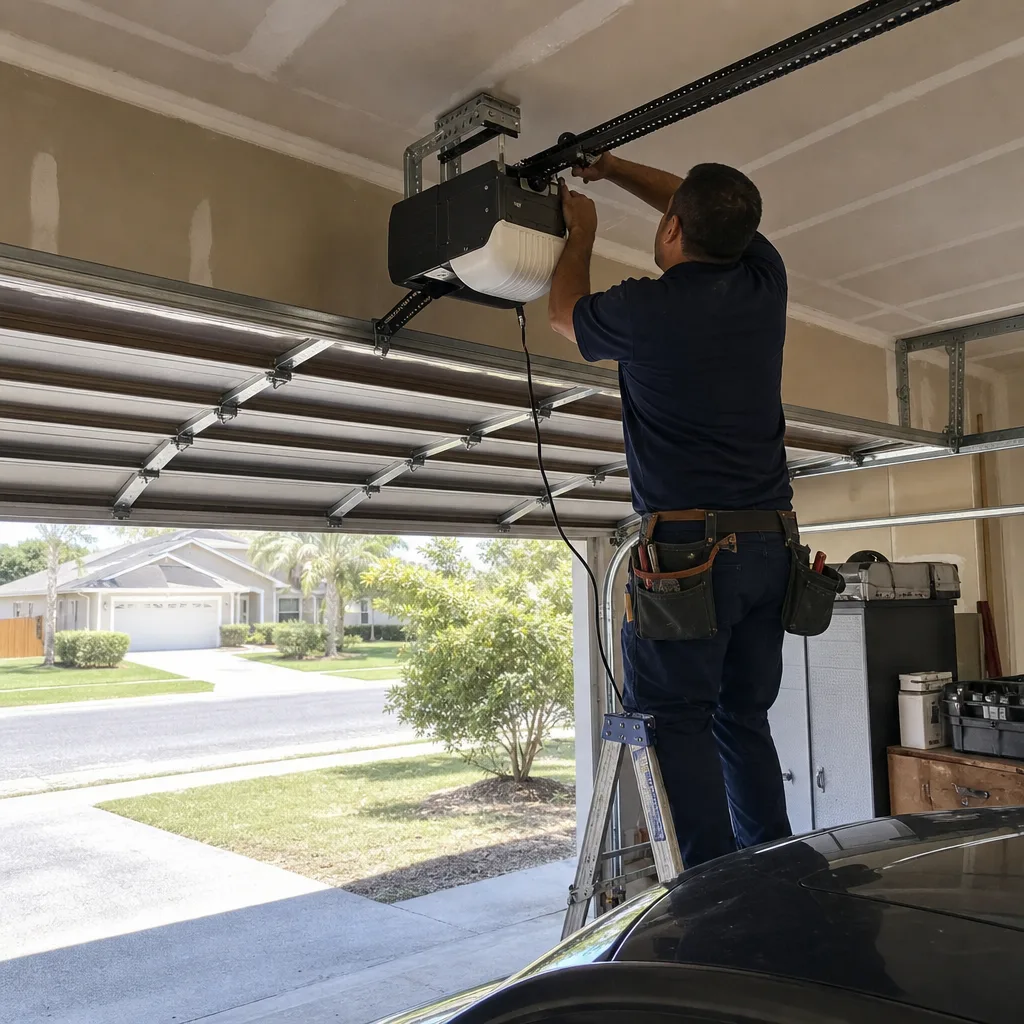
A garage door warning sign is a component telling you something. The grinding roller has a bearing problem. The squealing spring needs lubrication. The drifting door has a tension-compromised torsion spring, and in Kissimmee’s heat and humidity, that progression happens faster than most national guides account for. Learn the balance test, photograph what you see, and know which signs mean stop-use and which ones mean schedule-this-week. When the sign points to a spring, a cable, or a logic board, get a documented assessment with a flat written price before you approve anything. That’s how Garage Door Installation in Kissimmee and repair work should work: the component named, the evidence shown, and the number on the page. For a free estimate or a second opinion on any written quote, call Servo Garage Doors Kissimmee at (689) 210-6506.
Written by Marcus Deller, Owner at Servo Garage Doors Kissimmee, serving Kissimmee since 2015.