
Last updated September 20, 2026
Full 25-point door and opener safety check with every visit - springs, cables, rollers, tracks, and your LiftMaster or Chamberlain opener included
You get a price before we start. It does not change when the truck arrives.
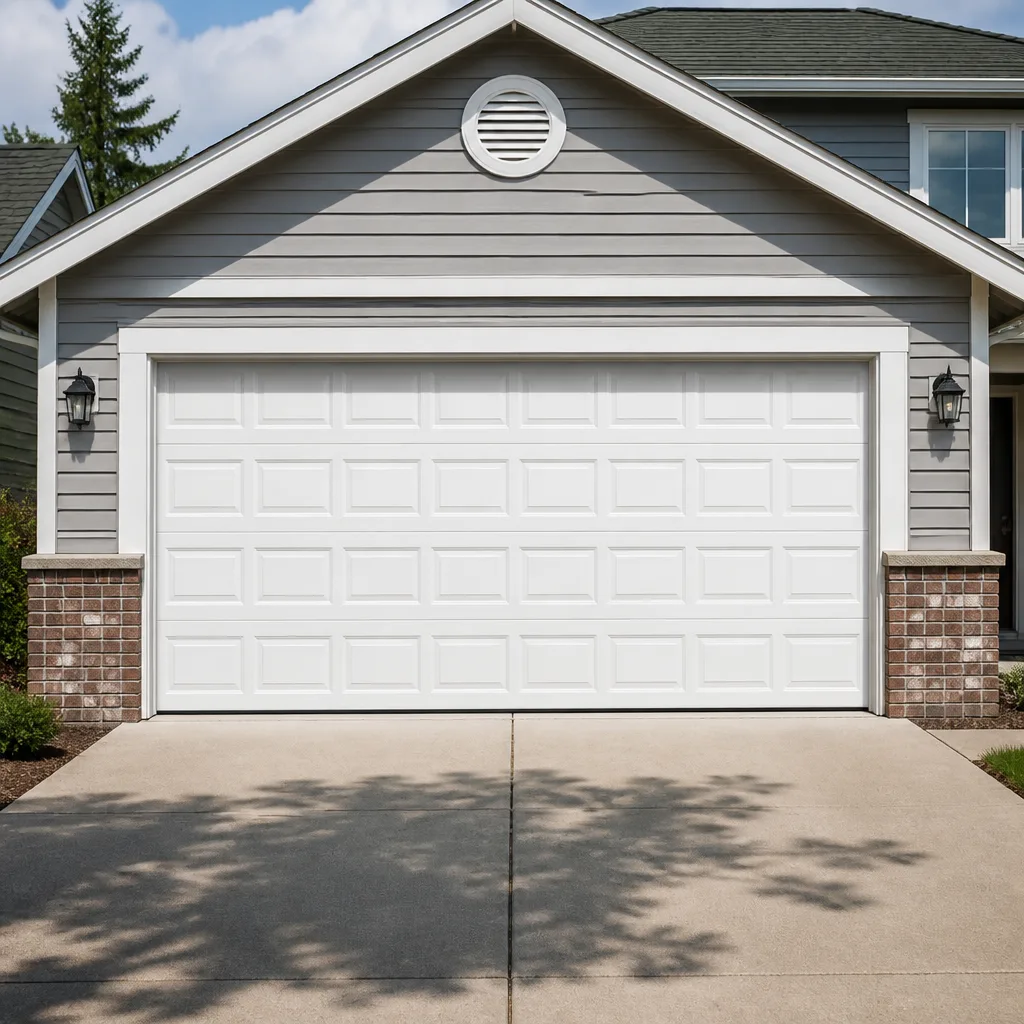
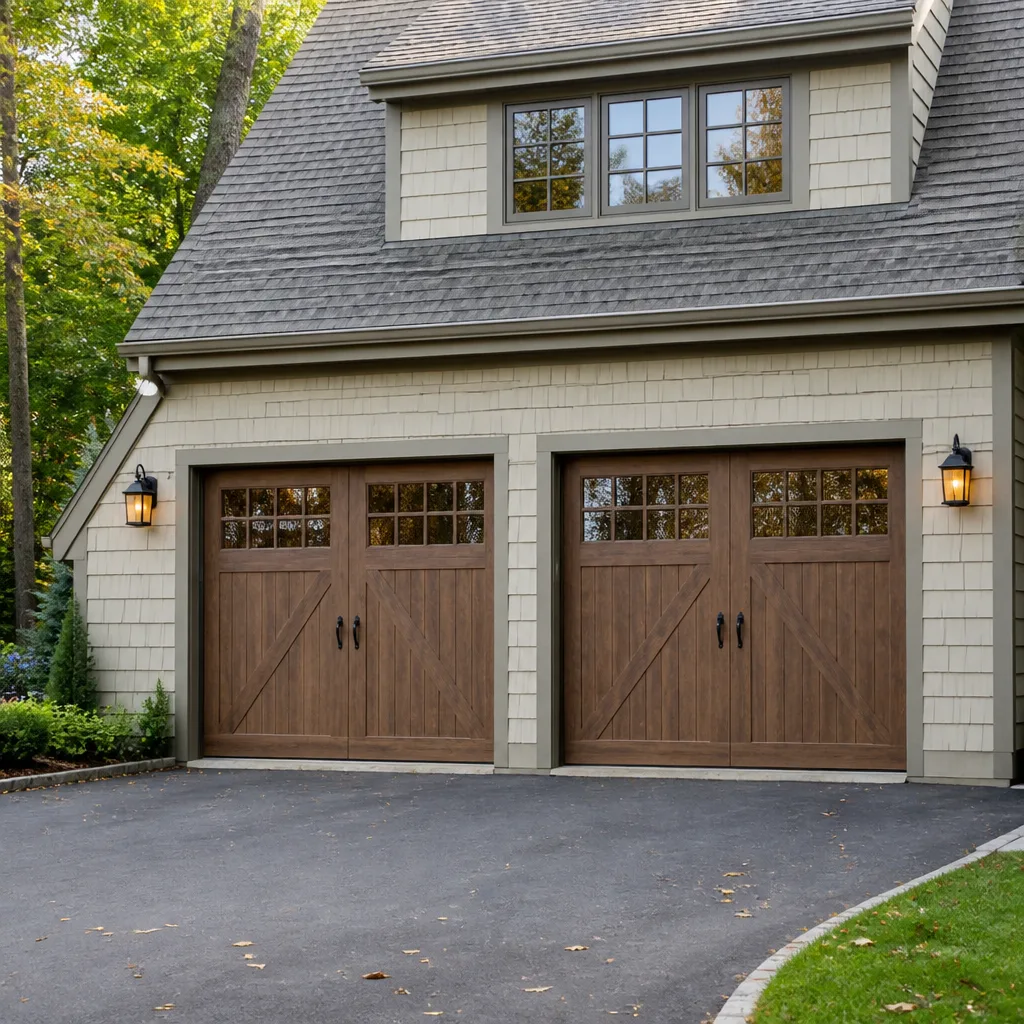
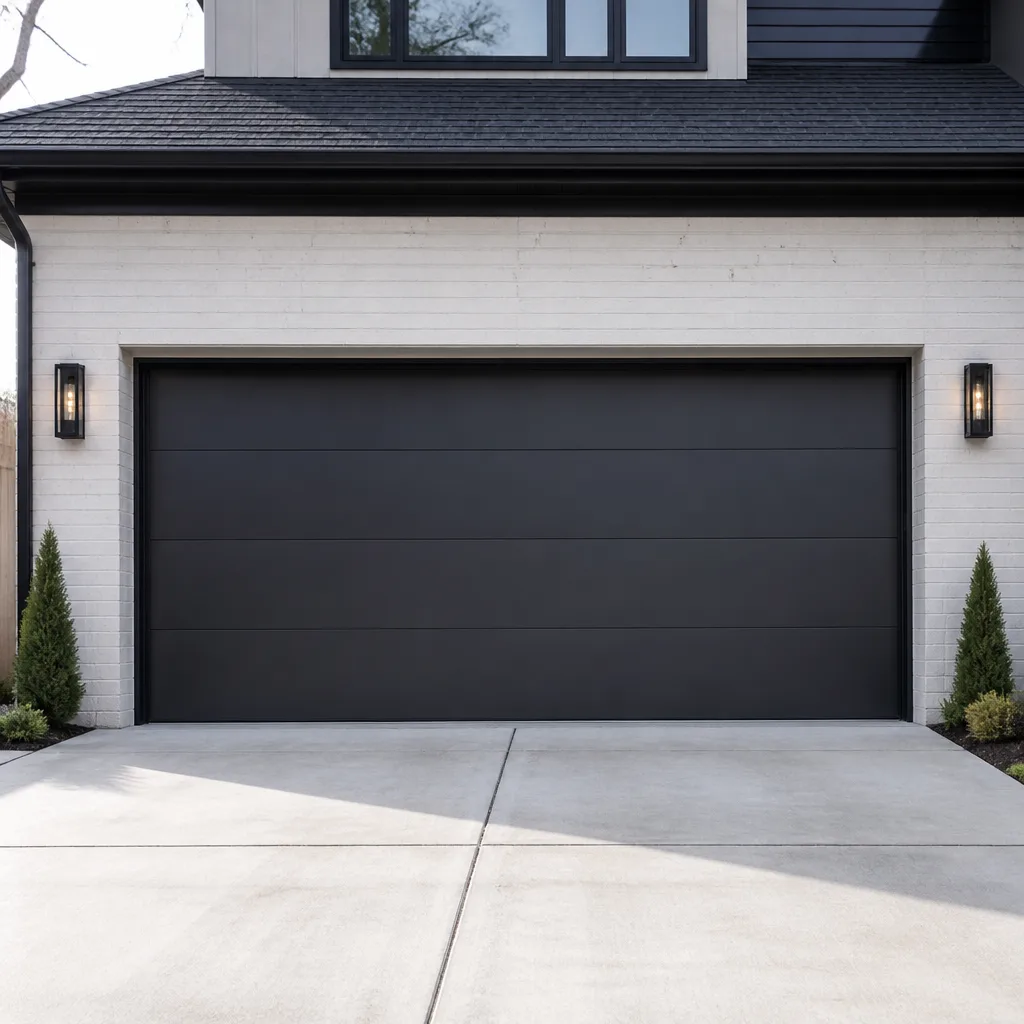
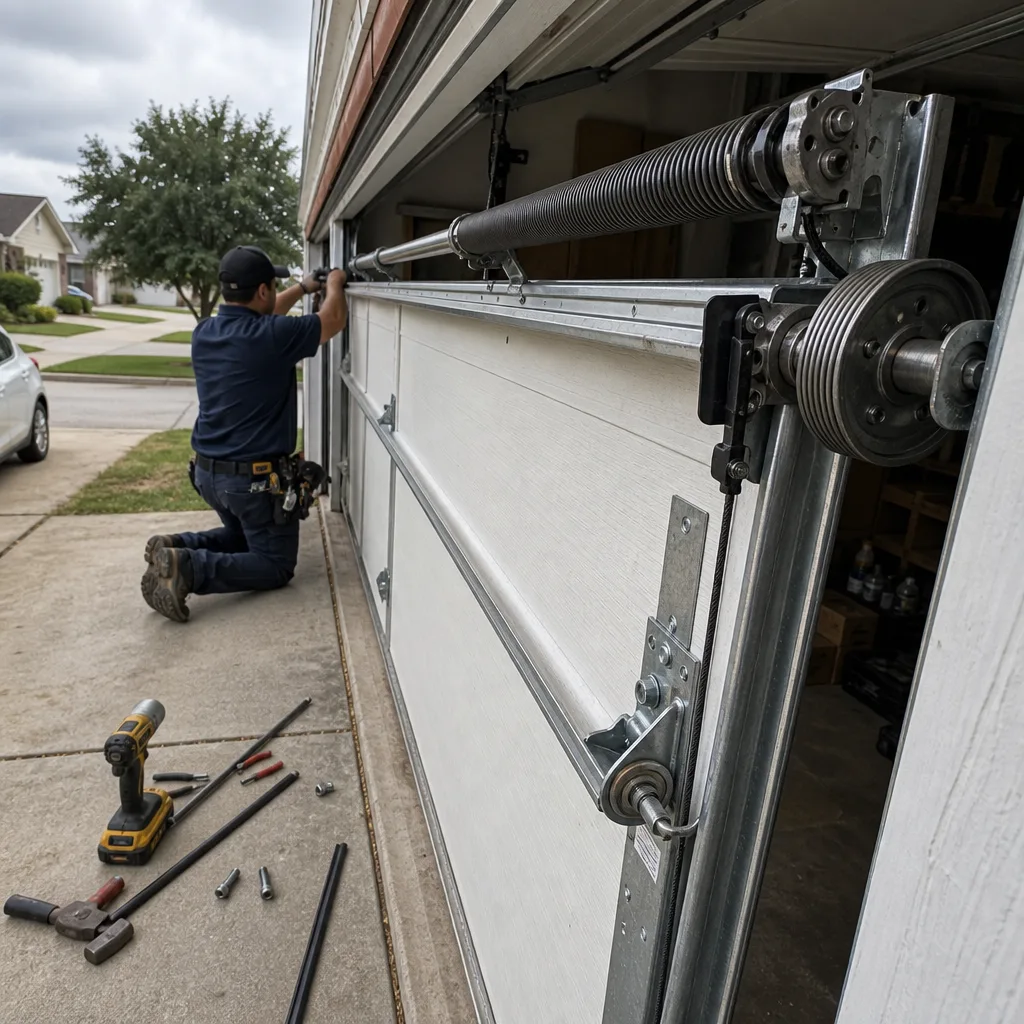
 Before
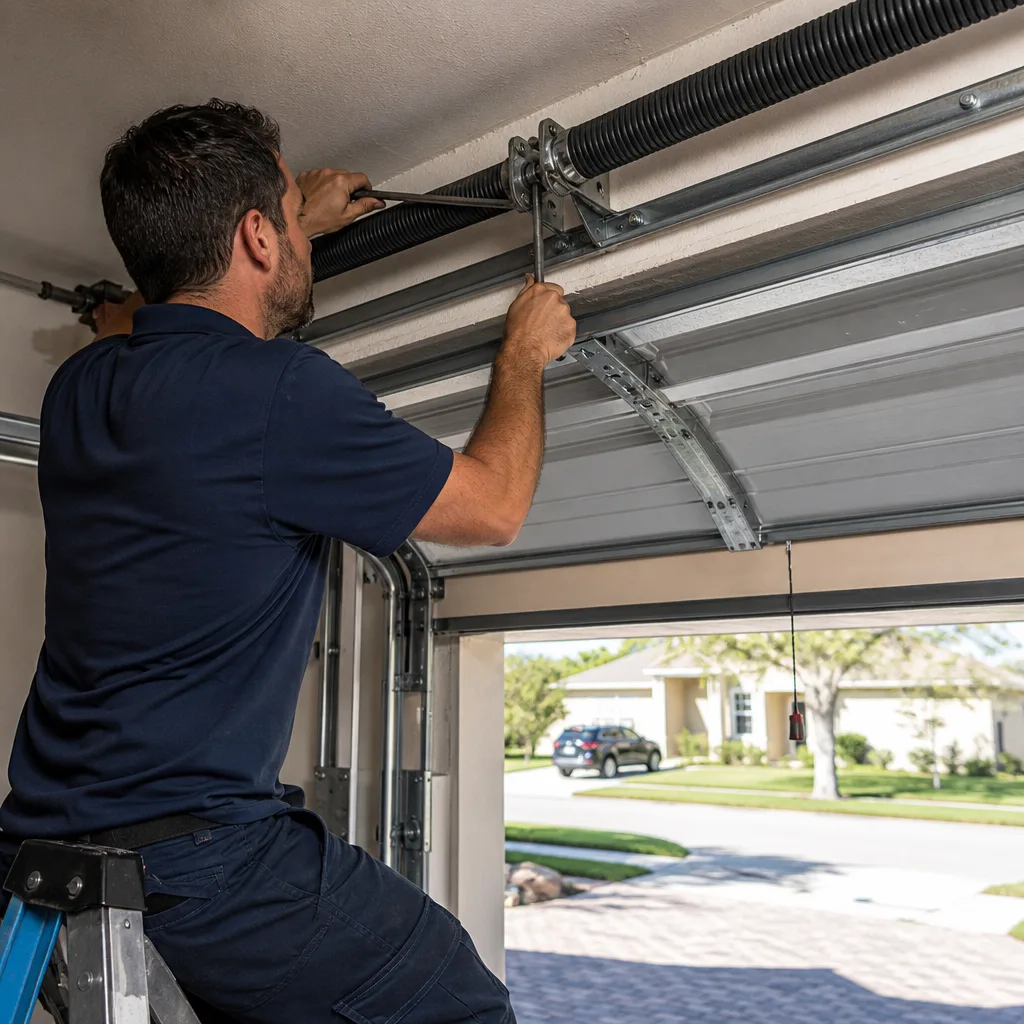 After
After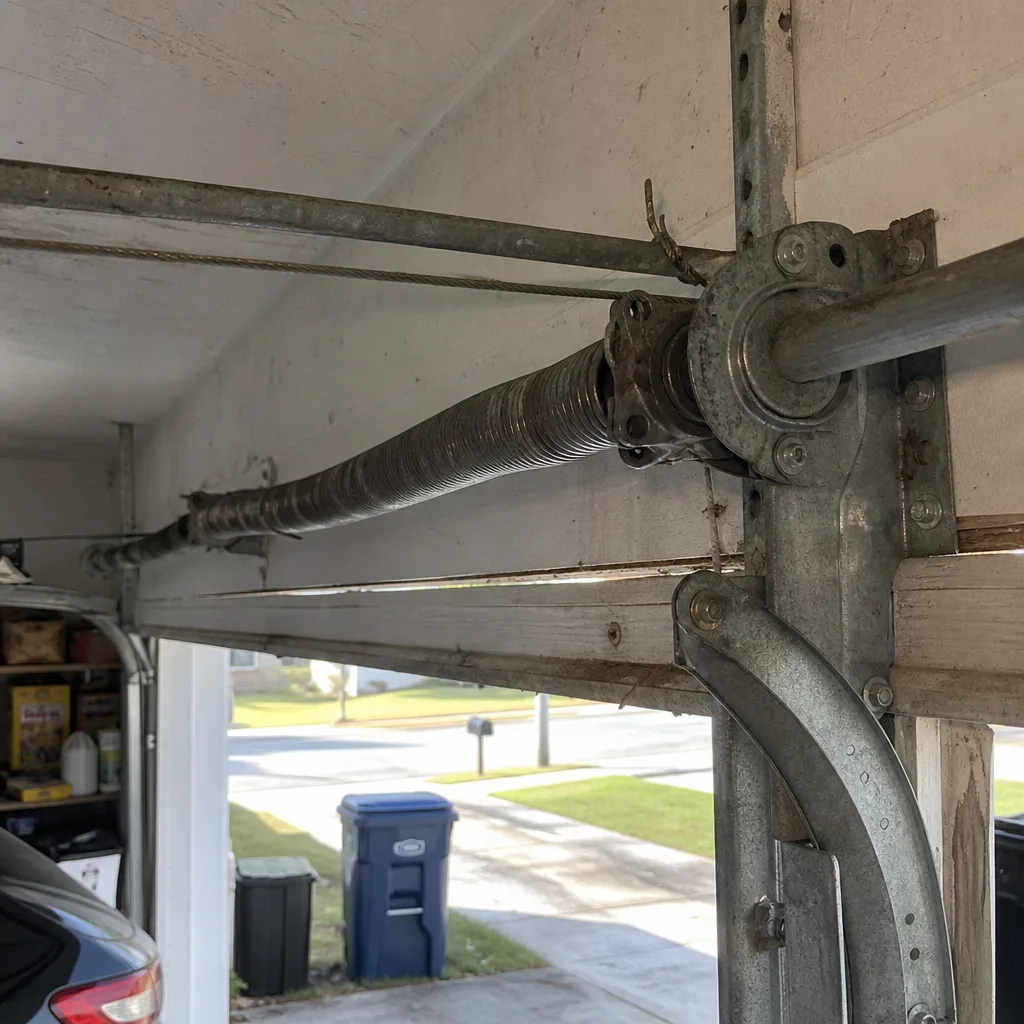 Before
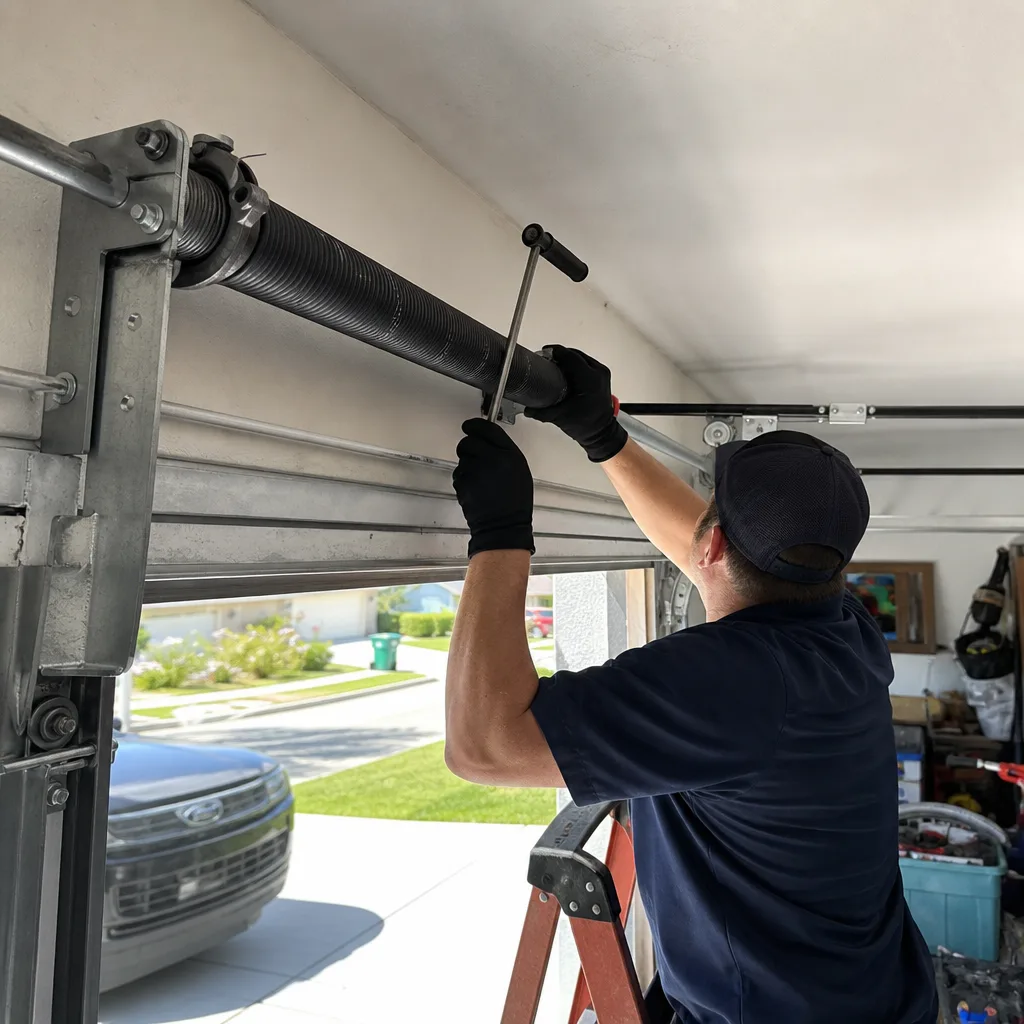 After
After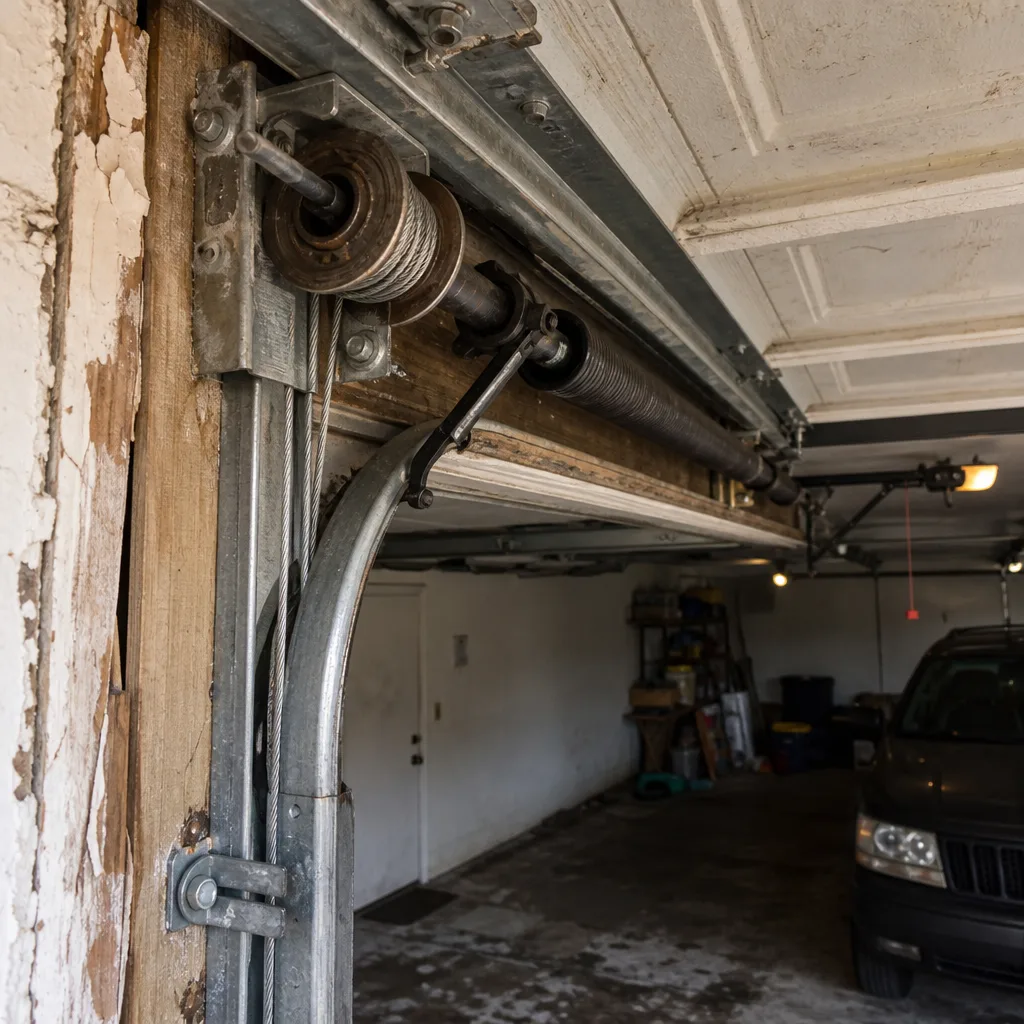 Before
 After
AfterSeasonal Garage Door Care for Kissimmee: Year-Round Homeowner’s Guide
The Kissimmee component that fails most predictably in October is not the one stressed by summer heat. It’s the bottom seal, softened by five months of daily thermal expansion, that finally splits under the first cold-front door slam of the season. This guide replaces the generic four-season maintenance framework with a calendar built around three real cycles: the wet season, the dry season, and the hurricane preparation window. For a deeper dive, see The Complete Guide to Garage Door in Kissimmee. Each applies a different kind of stress to different parts of your door, and knowing which part takes the hit during which month is what turns a $45 seal replacement into a job that never becomes a $900 track repair.
Quick Answer
Seasonal garage door maintenance in Kissimmee comes down to three cycles: during the wet season (June through September), check cables for corrosion, watch for water intrusion at the threshold, and listen for opener strain. During the dry season (November through April), address UV finish degradation on panels and re-lubricate rollers that dried out over summer. And across the hurricane window (June 1 through November 30), verify that your door’s bracing and track reinforcement actually match what the wind-load label claims. The single most effective year-round habit is a monthly manual operation test in full disconnect mode, which catches opener-masked door problems before they become emergency calls.
Table of Contents
- The Wet Season (June-September): Corrosion, Compression, and Daily Storm Cycles
- May and October: Why Balance Testing Matters Most During Temperature Swings
- Hurricane Preparation Window (June 1-November 30): What the Label Says vs. What the Installation Requires
- The Dry Season (November-April): UV Degradation and Finish Failure
- The One Year-Round Task: Monthly Manual Operation in Full Disconnect Mode
- Lubrication Schedules for Kissimmee’s Climate
- Common Mistakes to Avoid
- When to Call a Professional
- Frequently Asked Questions
- The Bottom Line
BeforeAfterThe Wet Season (June-September): Corrosion, Compression, and Daily Storm Cycles
From June through September, Kissimmee gets a daily afternoon storm pattern that most other climates never see. The heat builds through the morning, the thunderstorms roll in by mid-afternoon, and the humidity sits above 80 percent for weeks at a stretch. For a garage door, that means three specific things: galvanized cables are sitting in salt-adjacent humid air for extended periods, the vinyl bottom seal is compressing and expanding every single day, and the threshold area is getting hit with driven rain that can find its way under the seal if the door has settled even a quarter inch out of level.
Here are the wet-season checks that matter, in order of how often we see the failure in Kissimmee garages:
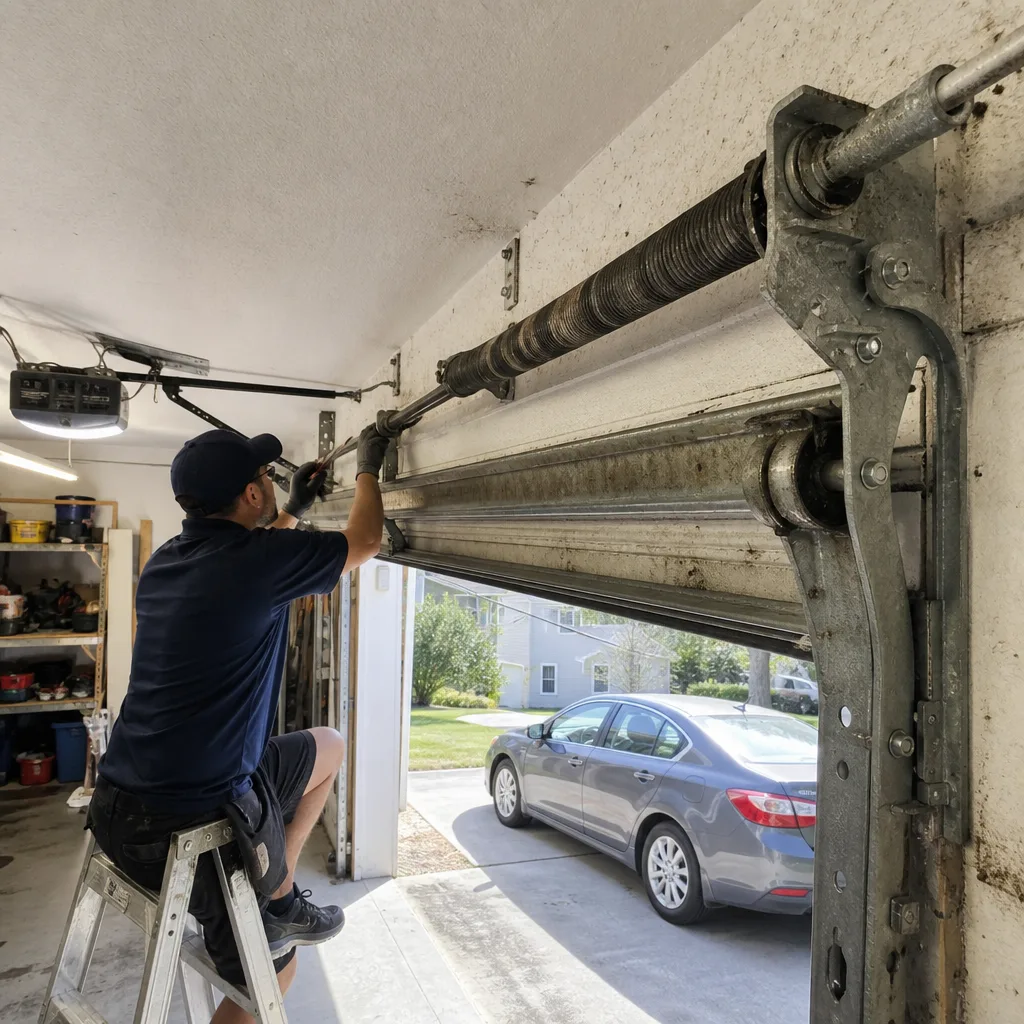
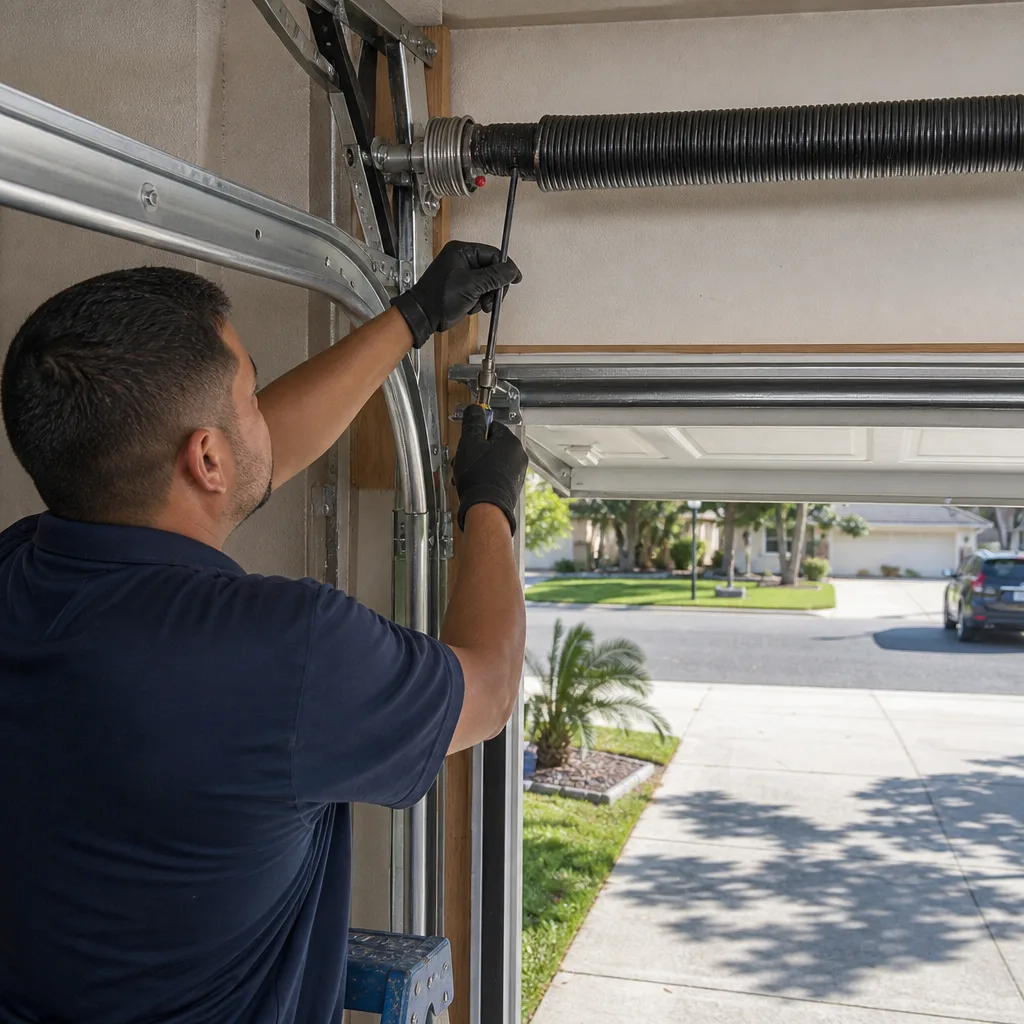
- Cable inspection at the bottom bracket. The lifting cables attach to the door at the bottom bracket, and that’s where water drips down and sits. Look for rust bloom, frayed strands, or any darkening of the galvanized coating. A cable that looks dull brown instead of silver is a cable that’s losing tensile strength. Torsion cables are under enough tension to cause serious injury if they snap while you’re standing nearby. If you see visible rust or fraying, do not attempt to replace the cable yourself. Call a professional.
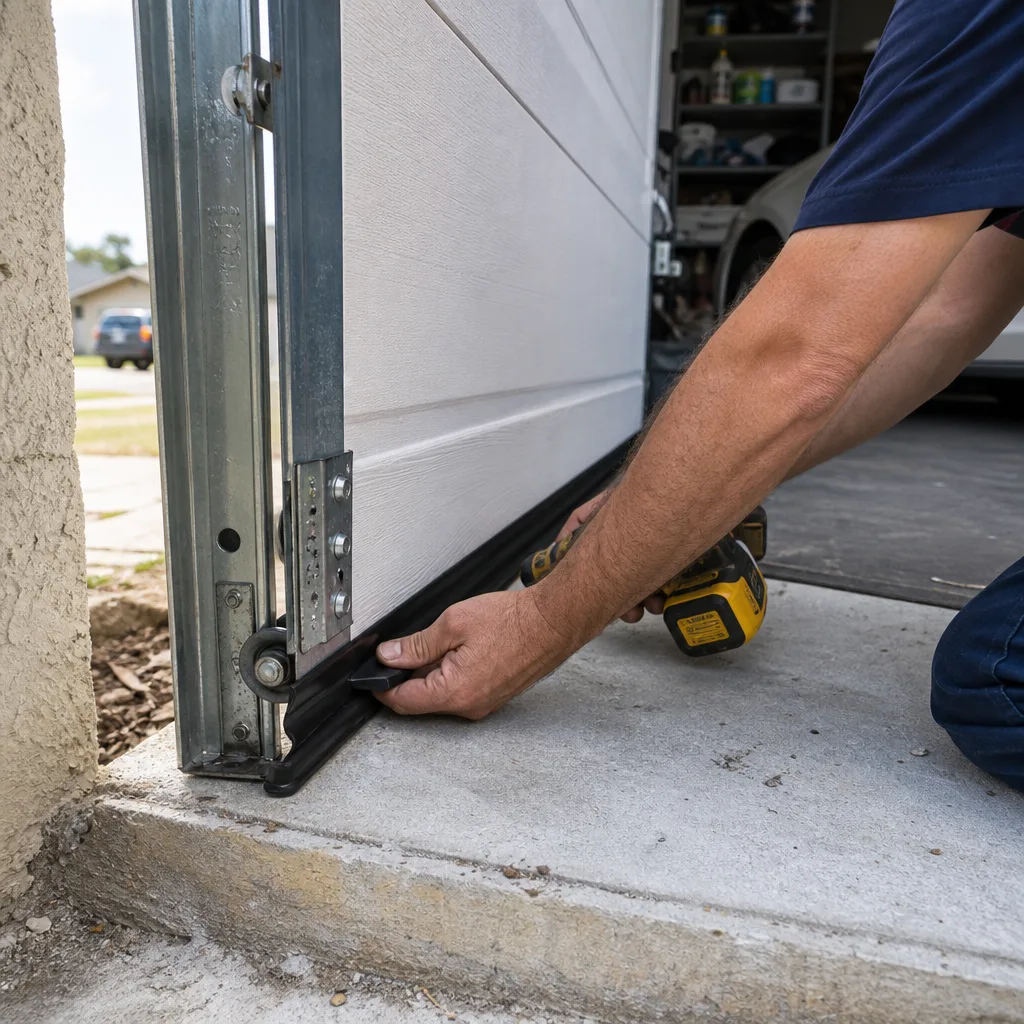
- Threshold seal compression check. Close the door and look along the bottom from inside the garage with the light off. If you see daylight anywhere along the bottom edge, water will follow that same path during a hard rain. The fix can be as simple as adjusting the close limit on the opener or replacing the bottom seal. But if you see daylight only on one side, the door itself may be out of level, and that’s a track issue, not a seal issue.
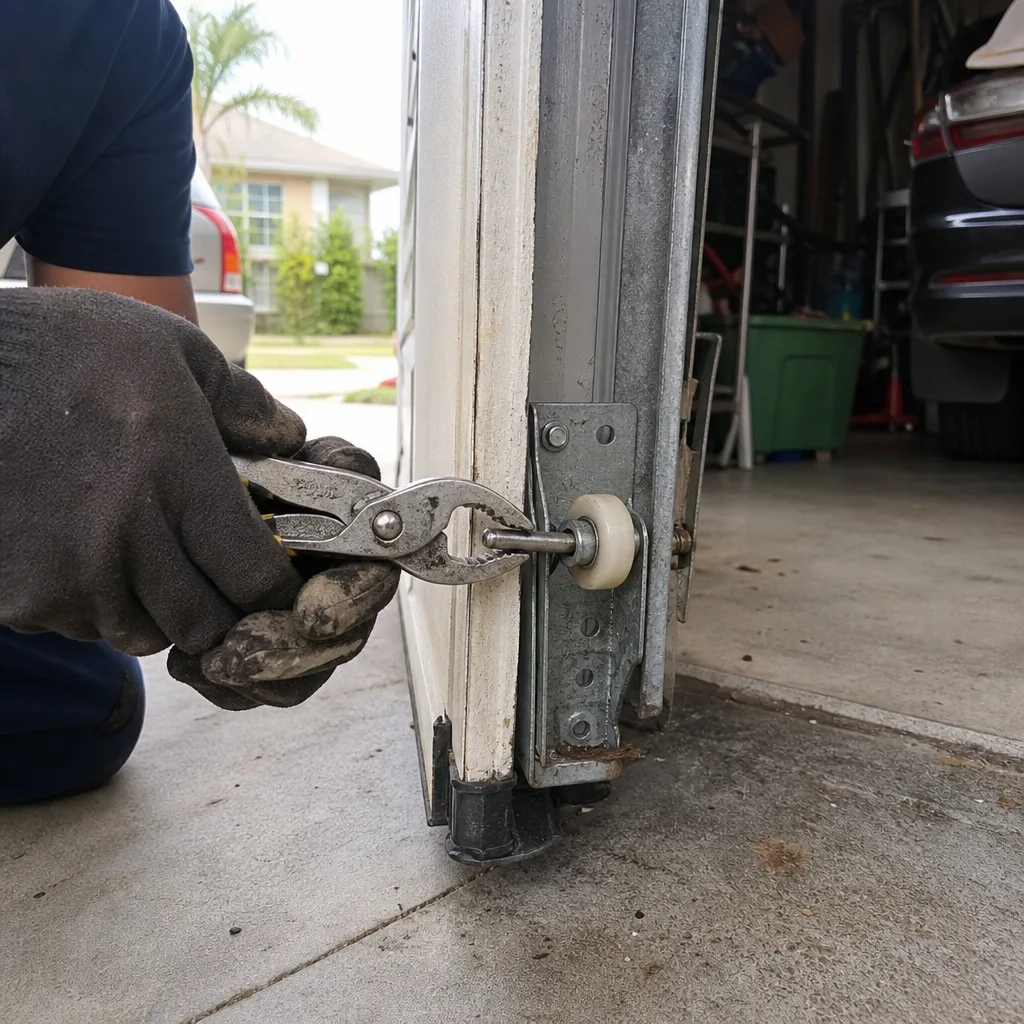
- Roller and hinge bolt tightness. Humidity causes the wood in a garage door frame to swell and contract. That movement works hinge bolts loose over a single summer. Loose hinge bolts let the door flex further on each cycle, which accelerates roller wear and eventually causes the door to bind.
- Water stain mapping on the interior drywall below the door. This one is diagnostic. After a heavy storm, check the drywall along the inside base of the garage, not just the concrete. Staining that appears an hour after a storm suggests water is entering at the threshold and wicking upward. Staining that appears a day later suggests water is entering along the side weatherstripping and traveling down.
We inspect a lot of garage doors across Kissimmee, from the older block homes off Vine Street to the newer builds along the Narcoossee corridor, and the wet season damage pattern is almost always the same: the bottom bracket area rusts first, the seal compresses next, and the homeowner doesn’t notice until September when the daily storms have been running for three straight months.
May and October: Why Balance Testing Matters Most During Temperature Swings
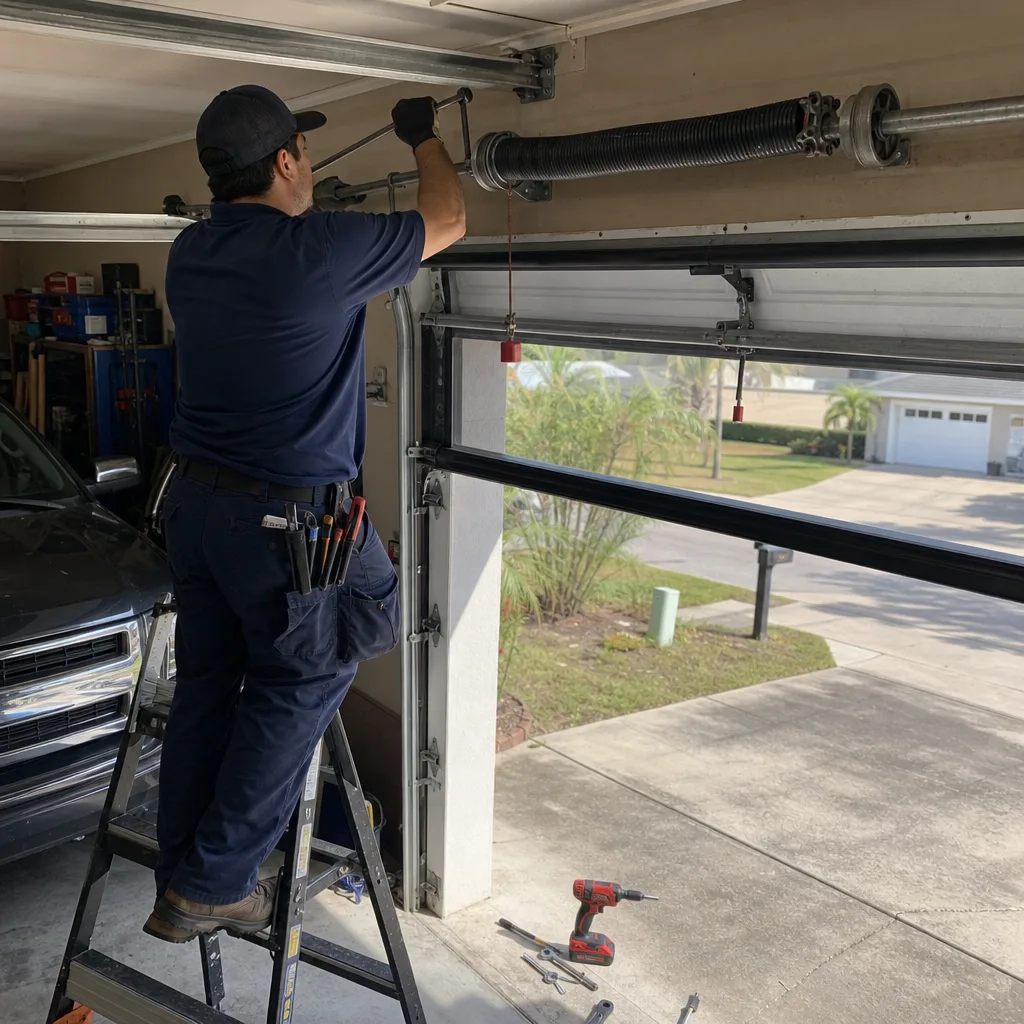
Kissimmee’s transition months are when the door balance most often goes out of spec, and it’s not intuition. The torsion spring’s wire diameter and coil count are tuned to hold a specific amount of torque. When the ambient temperature swings 20 to 30 degrees in a week, as it does during October cold fronts, the metal expands and contracts, and a spring that was already near the edge of its design tolerance starts to drift. In May, the reverse happens: we come out of the dry season’s cooler mornings into humid heat, and springs that dried out over winter now sit in moist air, which changes the friction profile at every contact point.
This is the monthly balance check, in under two minutes:
- Pull the red emergency release handle with the door in the closed position. This disconnects the opener carriage from the door. You have now isolated the door from the opener, which is exactly what you want.
- Lift the door manually to waist height. Use the handle, not the panels. A properly balanced door will stay put at waist height. It should take roughly 10 to 15 pounds of effort to lift and roughly the same to pull back down.
- Observe where the door settles. If it drifts down toward the floor, the spring is under-wound or worn and needs more tension or replacement. If it shoots up or drifts up, the spring is over-wound or too strong for the door’s weight.
- Release it to the floor gently. A door that slams down from waist height is a door that is significantly under-sprung, and that failure mode shortens the life of every hinge, roller, and bottom seal it touches.
- Reconnect the opener carriage. Pull the release handle once more and run the opener through a full open-close cycle so the carriage re-engages the trolley.
Do this in May and October at minimum. If the door fails the test, that’s an adjustment or spring replacement call, not a DIY fix. Torsion spring work is done under tension, and a spring under tension can break the wrench that’s winding it and turn it into a projectile. Garage door repair in Kissimmee for balance and spring problems should always involve a written flat price before any work starts, so you know the cost before the spring is even unwound.
Hurricane Preparation Window (June 1-November 30): What the Label Says vs. What the Installation Requires
The hurricane season for Kissimmee runs June 1 through November 30, and every year we see the same gap between what a hurricane-rated garage door label means and what an actual installation requires to deliver that rating. The label means the door assembly, in a lab, passed a specific wind pressure and debris impact test when installed with the manufacturer’s specified reinforcement kit and in the exact orientation tested. It does not mean the door on your house is hurricane-rated. That depends on the installation.
Three things determine whether a Kissimmee garage door actually meets its rated wind load in a storm:
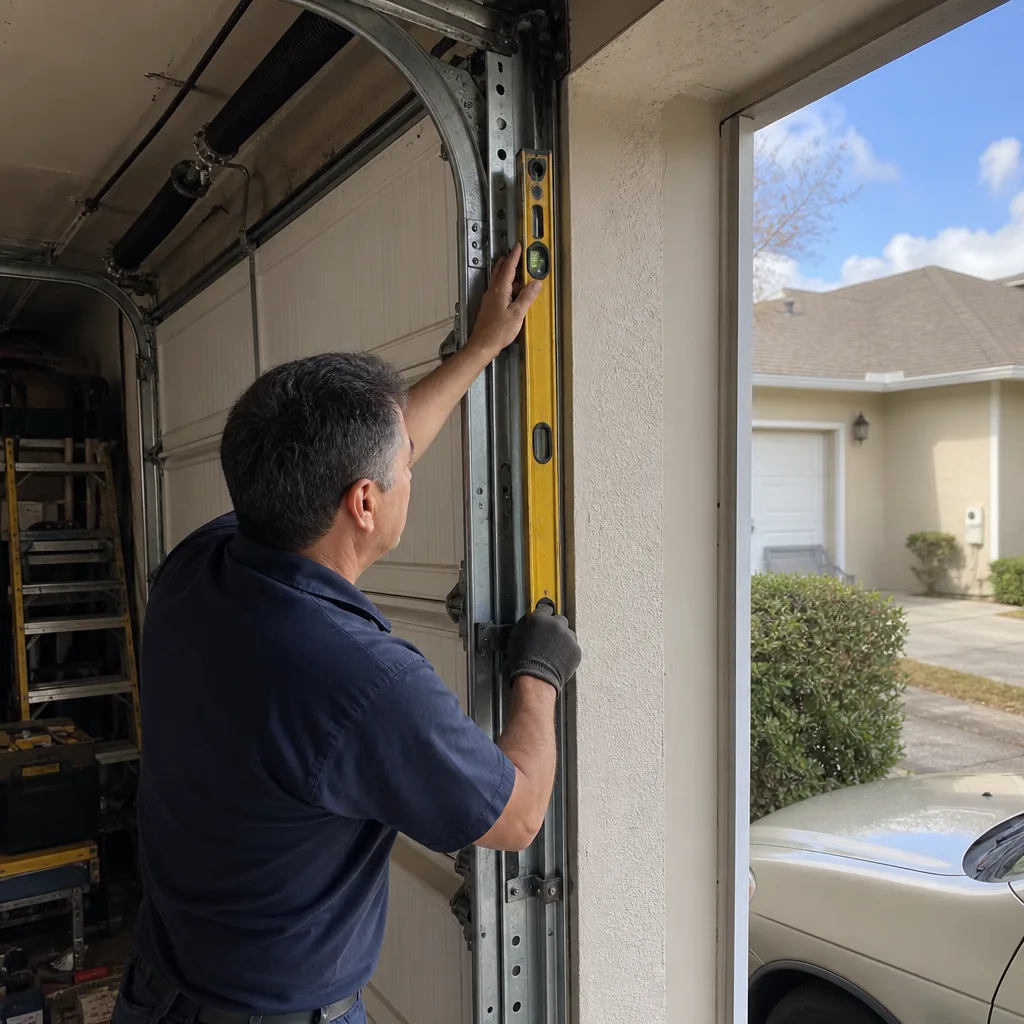
- Track reinforcement. The vertical and horizontal track sections must be through-bolted to the wall and ceiling with the size and spacing specified by the door manufacturer. Off-the-shelf installations frequently use lag screws that back out over time in Central Florida’s block and beam construction. Through-bolting is the difference between a door that holds and a track that peels off the wall at 110 mph.
- Bracing posts or struts across the panel width. Wide doors, 16 feet and above, need horizontal reinforcement struts bolted across each panel section. Without them, the door flexes inward under positive pressure and pulls out of the track. We see this most often on two-car garage doors in Kissimmee’s newer subdivisions, where the original builder-grade installation skipped struts to save on materials.
- Panel-to-frame fastening. The hinge line where the panel meets the frame needs heavy gauge fasteners at every hinge point. If the installer used standard screws instead of the manufacturer’s specified wind-load screws, the panel can separate from the frame long before the door itself fails.
The practical takeaway: if you have a hurricane-rated door but cannot confirm that the track is through-bolted, struts are in place, and panel fasteners match the manufacturer’s spec sheet, then you do not have the rated door you think you have. The verification is not a visual guess. It requires pulling the installation documentation or having the installation inspected against the manufacturer’s wind-load chart. If you’re not sure what you’re looking at, call a professional. This is exactly the kind of paper-trail question Servo was built around. When we install a door in Kissimmee, the written scope includes the exact reinforcement hardware and wind-load configuration, and the photo record shows it in place. Clause 4 of The Haven Standard is why the failed component gets photographed before a replacement is quoted, and that same evidence-first approach applies to storm readiness.
For homeowners who want to understand what goes into a properly reinforced garage door installation in Kissimmee, the installation page walks through what a wind-rated scope should include. The short version: if the paperwork doesn’t name the reinforcement kit, the rating is unverified.
The Dry Season (November-April): UV Degradation and Finish Failure
Kissimmee’s dry season is not dry by any northern standard, but the rain pattern changes, the humidity drops, and the afternoon storm cycle mostly shuts off. What remains is direct, high-angle sun. From November through April, a south-facing garage door in Kissimmee takes about 1,800 hours of direct UV exposure. That’s the equivalent of a northern door’s entire summer, and it happens every single year.
What UV does to a steel or aluminum garage door depends on the finish. Powder-coated steel, which is what Clopay and Amarr build most of their residential doors with, fades slowly but visibly over about three to five years of Kissimmee sun. Aluminum doors with a clear anodized finish don’t fade so much as they chalk, leaving a white residue that rubs off on your hand. Both are cosmetic at first, but there’s a line where the surface degradation starts working its way into the substrate.
The warning signs that UV has crossed that line:
- Micro-cracking in the finish, visible as fine spider web lines across the panel face, especially on the top panel that catches the most afternoon light.
- Chalk that reappears within weeks after you clean the panel, suggesting the coating itself is breaking down, not just accumulating oxidation.
- Color variation between the top panel and the bottom panel. The bottom panel is shaded by the driveway and the top panel isn’t, so a two-tone look after three or four years is a UV story, not a wash problem.
- Rust bloom along the horizontal seams. That’s not UV. That’s moisture that got under the finish through a crack the UV opened up. Once you see rust at a seam, the substrate is already compromised and the panel will need repair or replacement.
The intervention window is touch-up. If you catch the chalking or micro-cracking before rust forms, a touch-up using the manufacturer’s specified touch-up paint or coating, matched to the original RAL or equivalent color code, will buy you another several years. The color code is usually on a label inside the door or on the top panel, and it’s worth photographing now while the label is still legible. In our experience servicing Wayne Dalton and Clopay doors across Kissimmee, the homeowners who keep that color code on file are the ones who get a clean touch-up instead of a panel replacement.
The One Year-Round Task: Monthly Manual Operation in Full Disconnect Mode
Every garage door has two failure modes, and most homeowners only ever notice one of them. The first is the catastrophic failure: the spring snaps, the cable breaks, the door won’t move. The second is the slow creep: the door gets heavier, the opener works harder, the track wears unevenly, and the whole system degrades together until something finally lets go. The monthly manual operation test exists to catch the second failure mode while it’s still cheap to fix.
Here’s the routine. Pull the emergency release handle with the door closed, lift the door manually through its full travel, and pay attention to three things. First, does the effort stay constant, or does it get heavier halfway up? The spring torque curve should feel nearly flat. If the door gets heavier as it opens, the spring is under-tensioned or worn. Second, do you hear grinding, scraping, or a rhythmic thump that matches the roller rotation? Grinding at the roller contact point means the bearing inside the roller has seized, and a seized roller carves a groove into the track over time. Third, does the door bind at any point in the travel, pulling harder on one side than the other? Binding is a sign the track is out of alignment, the door is out of level, or the hinges are so worn the panel is no longer tracking straight.
Do this test every month, year-round, rain or shine. The manual operation isolates the door from the opener, which means it catches door problems that a working opener will mask for months. An opener’s motor just pulls through resistance; it doesn’t tell you the resistance is there. That’s why so many spring failures are discovered when a spring finally snaps and the opener can’t lift the door at all. The door was probably out of balance for a year before that. In Kissimmee’s humidity and afternoon storm cycles, the wear compounds faster. A door that’s out of balance in April and goes through the wet season like that will be a snapped spring by October.
If the monthly test reveals a problem, don’t ignore it. A spring that fails the balance test is a spring that’s already on its way out, and torsion spring replacement is not a DIY job. The spring is under high tension, and a sudden release of that tension is dangerous. Call a professional. For context, garage door repair in Kissimmee for balance issues typically involves a spring adjustment or replacement, and the price should be written and flat before anyone touches a single bolt.
Lubrication Schedules for Kissimmee’s Climate
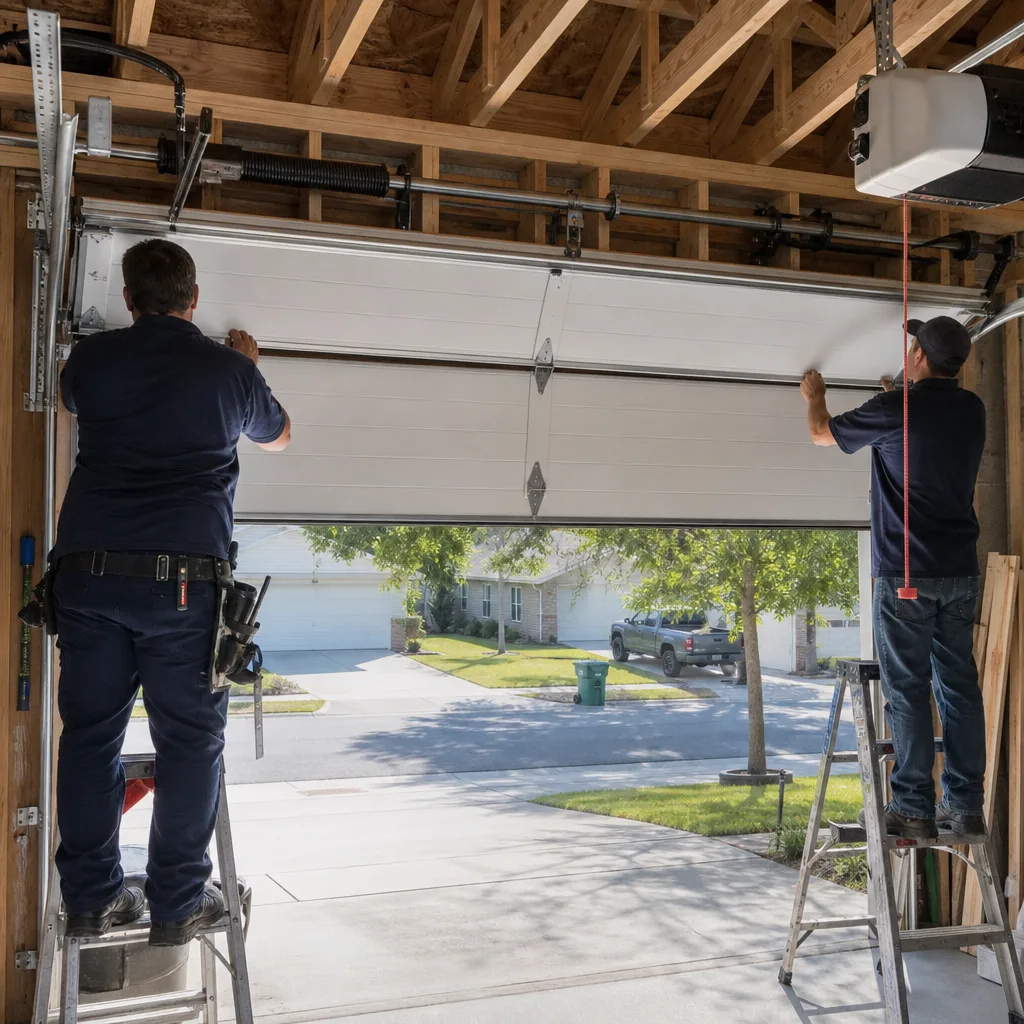
Lubrication is the most overdone and most under-specified maintenance task on a garage door. The “spray everything with WD-40” approach does more damage than good, because WD-40 is a penetrant and solvent, not a lubricant. It will wash the existing lubricant out of the roller bearings and leave them dry. The right product is a white lithium grease for steel-to-steel contact points, a silicone spray for nylon-to-steel interfaces, and nothing else for anything else.
The Kissimmee-specific twist is timing. In most climates, the guidance is to lubricate every six months. In Kissimmee, the wet season’s humidity and the dry season’s heat mean the rollers and hinge pins dry out faster than a generic schedule would suggest. We recommend lubricating in early May, right before the wet season starts, and again in early November, right before the dry season’s heat kicks in. That two-cycle rhythm keeps the contact surfaces coated when they’re under the most stress.
The points that actually need lubricant:
- Roller bearings, but only if the rollers are steel with exposed ball bearings. Nylon rollers are sealed and don’t need lubrication. If you have steel rollers, one small shot of white lithium on the bearing surface, not the wheel face.
- Hinge pins, where the two hinge leaves pivot against each other. These are steel-on-steel contact points and they wear fastest when they run dry.
- The torsion spring itself, the entire coil run, with a light coat of white lithium spray. The spring coils slide against each other as the spring winds and unwinds, and dry coil-on-coil contact accelerates fatigue and eventual fracture.
- The opener rail, but only for chain-drive openers. A thin film on the chain, not the rail. Belt-drive openers don’t need lubrication.
Too much lubricant is almost as bad as none. Excess white lithium collects dirt and grit, and dirt in a roller bearing or hinge pin wears it out faster than running it dry. A light coat is enough. If you can see the lubricant beading on the surface, you used too much. Wipe it off with a cloth. If you’re not comfortable doing any of this yourself, or if you want to confirm you’re using the right product for your roller type and opener model, call a professional. For opener-specific maintenance questions, Garage Door Opener Repair & Installation in Kissimmee covers lubrication and limit switch adjustments in more detail.
Common Mistakes to Avoid
- Spraying the track. The track doesn’t need lubrication. The rollers run inside the track on bearings, not on the track surface itself. Spraying lubricant on the track just collects dust and turns into a grinding paste. If your door is noisy despite lubricated rollers, the problem is likely a worn roller or a misaligned track, not a dry track.
- Ignoring the monthly balance test until something breaks. The manual disconnect test is the single highest-value maintenance task on a garage door, and the one most homeowners never do. A door that’s out of balance for a year will cost you a spring. Monthly testing costs you two minutes.
- Assuming the hurricane-rated label applies to your installation. The label is a laboratory test result for the door assembly. Your installation’s actual wind-load performance depends on bracing, track reinforcement, and panel fastening that were part of the tested assembly. If your installer skipped the reinforcement hardware, you don’t have the rated door.
- Replacing the bottom seal without checking door level. A new seal on a door that’s out of level will still gap at the low corner, just with new rubber. Level the door first, seal second.
- Lubing with WD-40. It’s a solvent and penetrant, which is why it works great for unsticking nuts and bolts. It’s a terrible long-term lubricant and will actually strip the grease out of your roller bearings. Use white lithium or silicone per the schedule above.
- Waiting on UV finish damage until rust appears. The touch-up window closes once rust shows through the finish. By then, the panel substrate is already compromised. Stay ahead of it by checking for chalking and micro-cracking in the dry season and keeping the color code on file.
- Skipping the photo documentation when work is done. Whatever company does your garage door work, get the documentation. A written scope, a written price, and a record of what was found are what separate a defensible warranty from a dispute. That’s the entire point of Clause 1 and Clause 4 of The Haven Standard, and it applies to every job we do.
When to Call a Professional
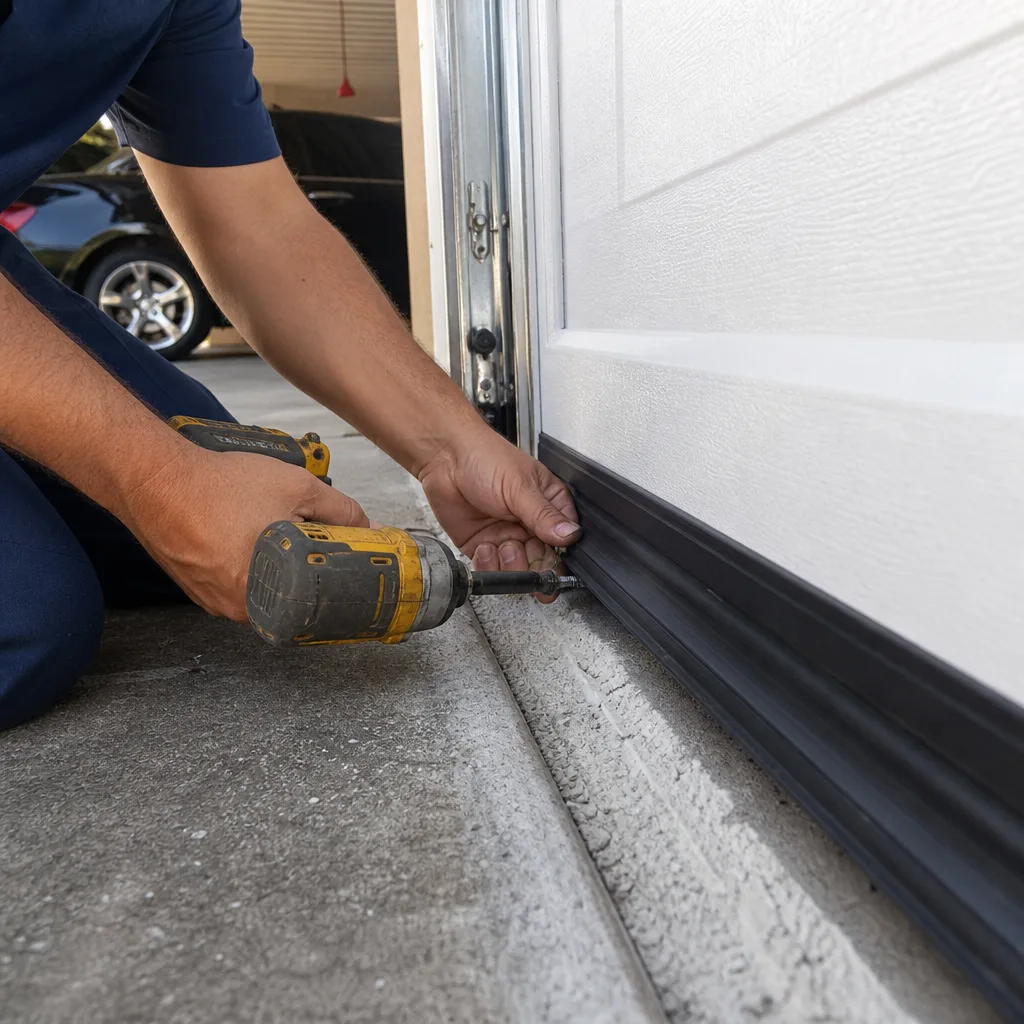
Some garage door tasks are safe and sensible for a homeowner to handle: the monthly balance test, visual inspections, lubrication with the right product, and keeping records of what you find. Others are not. For help deciding which category your repair falls into, read DIY vs Professional Garage Door: The Kissimmee Homeowner’s Decision Guide. Torsion spring replacement, cable replacement, track repair, and any work involving the opener’s electrical system should always go to a trained professional. A torsion spring under tension stores enough energy to cause serious injury if it releases suddenly, and a cable that snaps while you’re standing next to it can cut through skin and fabric. If your door fails the balance test, if you see visible rust or fraying on the cables, or if your hurricane-rated door lacks the documented reinforcement hardware it’s supposed to have, that’s a professional call. Servo Garage Doors Kissimmee offers free estimates in Kissimmee, and every estimate comes as a flat, written price with a written scope before any work starts. Call (689) 210-6506.
Frequently Asked Questions
Lubricate twice a year, in early May before the wet season starts and in early November before the dry season heat settles in. Use white lithium grease on steel-to-steel contact points like hinge pins and torsion springs, and silicone spray on nylon-to-steel interfaces. Do not spray the track. For a full lubrication walkthrough, call Servo Garage Doors Kissimmee at (689) 210-6506 and ask for the maintenance checklist. Estimates are free.
A hurricane-rated label means the door assembly passed a specific wind pressure and debris impact test in a laboratory when installed with the manufacturer’s specified reinforcement kit. It does not mean your installed door automatically meets that rating. You need through-bolted track reinforcement, horizontal struts on wide doors, and panel fasteners that match the manufacturer’s spec sheet. If you can’t confirm those are in place, you don’t have a verified hurricane-rated installation. Call (689) 210-6506 and we’ll inspect it against the wind-load chart at no charge.
Pull the red emergency release handle with the door closed, lift the door manually to waist height, and let it settle. A properly balanced door stays put with roughly 10 to 15 pounds of effort to move it. If it drifts down, the spring is under-tensioned or worn. If it drifts up, the spring is over-tensioned. Reconnect the opener by running a full cycle after the test. If the door fails, call (689) 210-6506 for a written same-day quote. We never start spring work without a flat, written price first.
October is when Kissimmee gets its first cold fronts of the season, and the rapid temperature drop causes the metal in the spring, rollers, and track to contract. A door that already has marginally worn rollers or light corrosion from the wet season will start to grind or creak audibly as the surfaces tighten. The noise is usually not a new problem; it’s an existing one becoming audible under different metal tolerances. Pull the release handle and listen for grinding during manual operation to isolate a roller problem. If you hear it, call (689) 210-6506. We carry rollers on the truck and give you the price before any work starts.
Wet season work, June through September, is about moisture: cable corrosion, threshold seal compression, and water intrusion at the bottom bracket. Dry season work, November through April, is about UV: finish chalking, micro-cracking, and rust bloom along panel seams. The same door faces entirely different failure modes depending on which cycle it’s in, and the monthly balance test is the one task that applies year-round. Call (689) 210-6506 for a free estimate on any seasonal repair or replacement.
No. Torsion springs are wound under high tension, and a spring that releases suddenly can throw the winding bar with enough force to cause serious injury or death. Do not attempt it. A professional with the right training and winding tools can replace the spring safely, and the price should be flat and written before any work starts. Servo Garage Doors Kissimmee quotes torsion spring replacement as a fixed price, not an estimate subject to change. Call (689) 210-6506 and we’ll check the existing spring’s wire diameter and coil count right in front of you, per Clause 4. That’s the standard.
The Bottom Line
Kissimmee garage doors don’t fail on a four-season schedule. They fail on a three-part rhythm: the wet season attacks cables, seals, and thresholds. The dry season attacks finishes and panel integrity. The hurricane window tests whether the installation actually delivers what the label claims. The common thread that runs through all three is the monthly manual operation test: two minutes, a red release handle, and an honest read of whether the door is balanced and free. Do that consistently, keep the color code and installation paperwork on file, and address small failures before they become emergency calls. The biggest mistake a Kissimmee homeowner can make is treating garage door maintenance like a northern chore list. It’s not. It’s a calendar built around local weather, and the door is telling you exactly when something’s wrong. You just have to check. For more guides & resources, visit our blog.
Written by Marcus Deller, Owner at Servo Garage Doors Kissimmee, serving Kissimmee since 2015.