
Last updated September 20, 2026
Full 25-point door and opener safety check with every visit - springs, cables, rollers, tracks, and your LiftMaster or Chamberlain opener included
You get a price before we start. It does not change when the truck arrives.
 Before
 After
After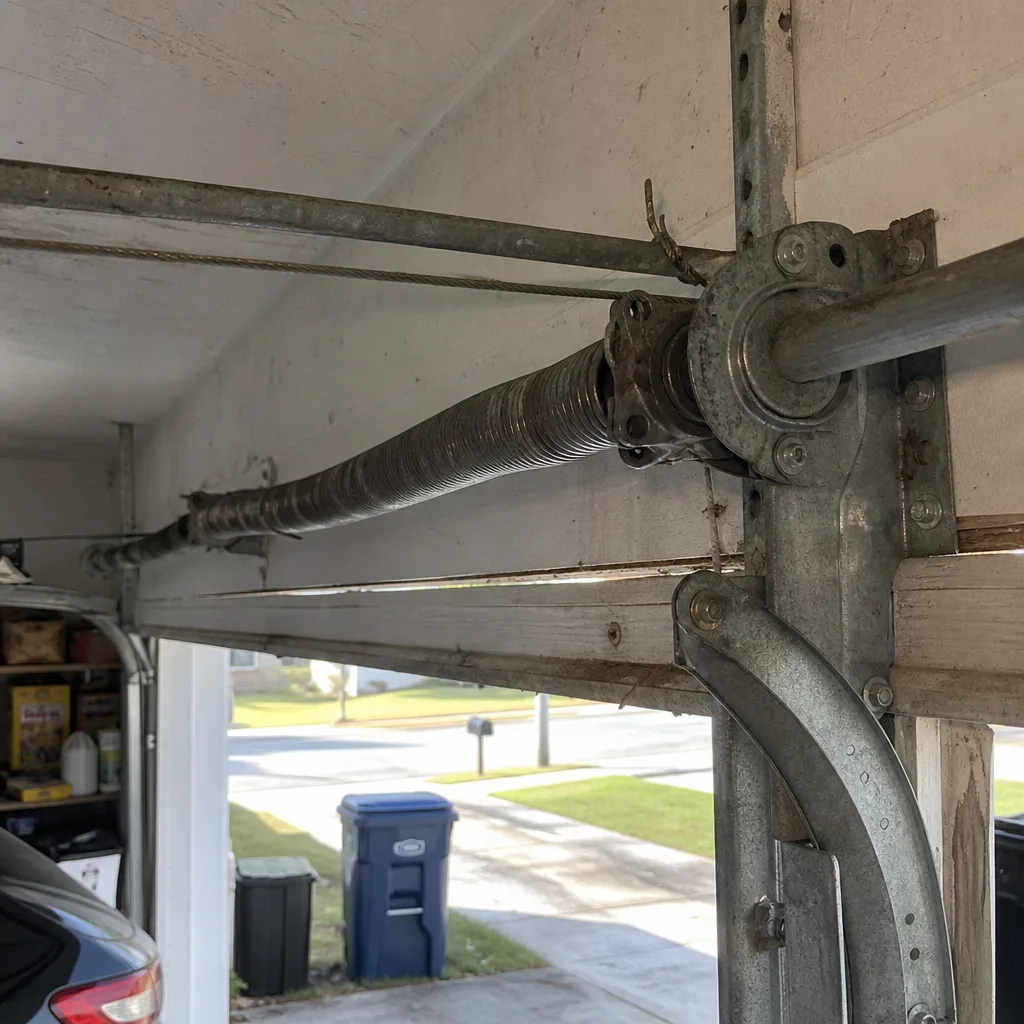 Before
 After
After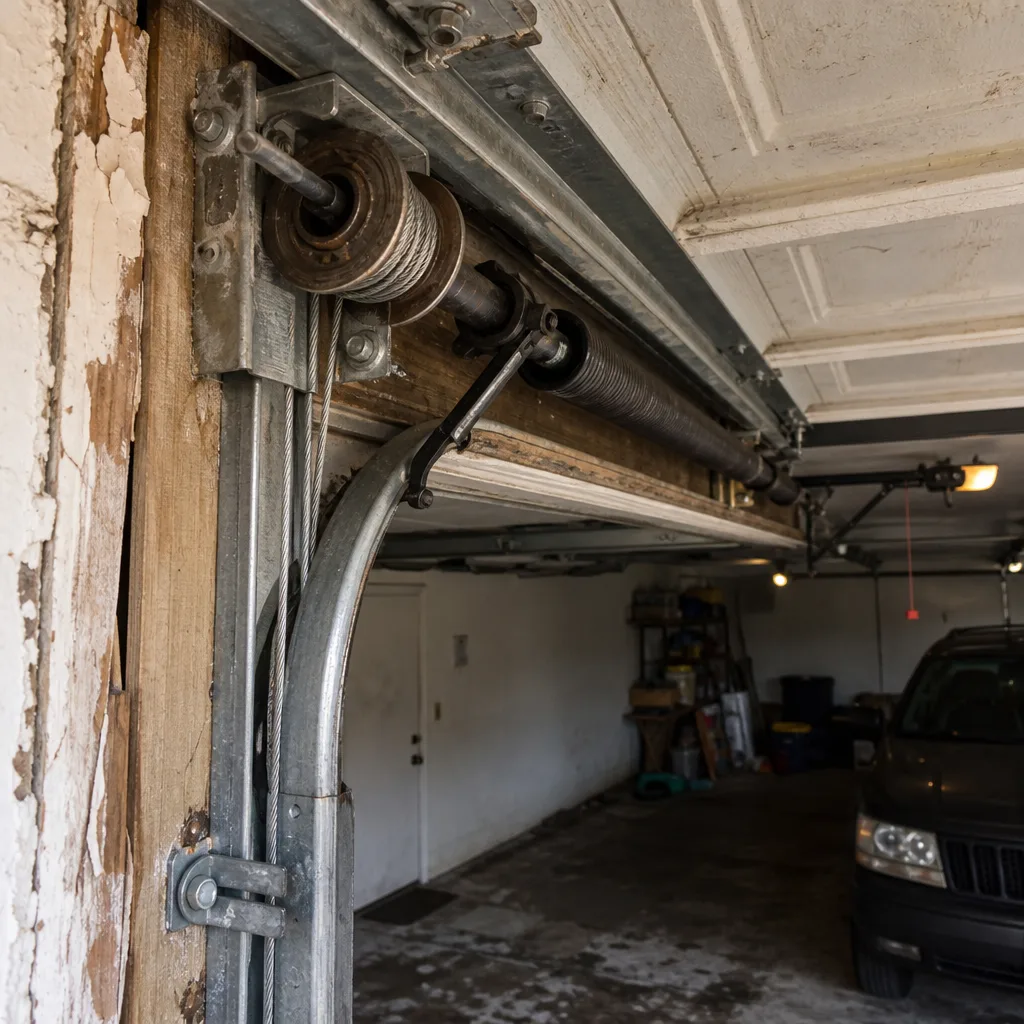 Before
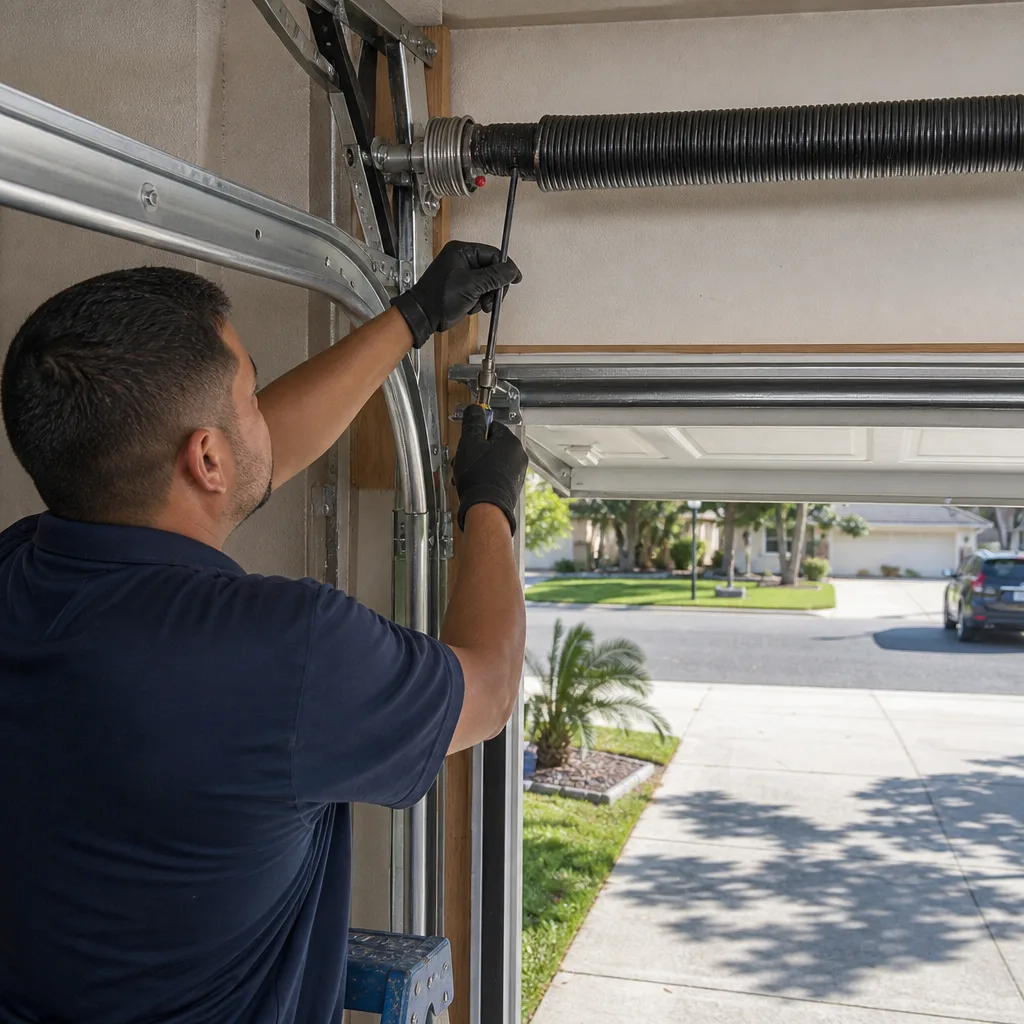 After
AfterDIY vs Professional Garage Door: The Kissimmee Homeowner’s Decision Guide
Every year, roughly 20,000 Americans land in an emergency room because of a garage door injury. Most of those people weren’t reckless. They were homeowners who looked at a torsion spring, a cable, or a misaligned track and thought, “How hard can this be?” The answer depends entirely on which task we’re talking about. A can of lithium grease and a visual inspection? That’s straightforward. A torsion spring under 200 pounds per inch of torque? That’s stored energy that doesn’t announce itself before it releases. This guide walks through every common garage door task a Kissimmee homeowner might consider doing themselves, maps each one to its actual risk level, and shows where the math of DIY actually works, and where a single mistake erases the savings and then some.
Quick Answer
Most garage door maintenance in Kissimmee is safe to do yourself: lubrication, visual inspection, sensor cleaning, and weatherstripping replacement. But anything involving torsion springs, lift cables, or full door replacement should be handled by a licensed professional, both because of the injury risk and because Kissimmee and Osceola County have permitting and code requirements that make certain DIY work legally and financially questionable. The realistic dividing line is this: tasks that involve releasing stored tension or modifying the structure belong with a pro. Everything else, you can likely handle with a wrench, a ladder, and thirty minutes.
Table of Contents
- Task-by-Task Risk Assessment: What’s Actually Safe to Touch
- Florida Building Code and Kissimmee Permits: The Legal Side of DIY
- The Real DIY Cost Calculation: Where the Savings Actually Are
- What a DIY Mistake Costs to Fix in Kissimmee
- Using a Paid Diagnostic Visit Without Committing to the Repair
- Why Kissimmee’s Climate Changes the DIY Calculation
- Common Mistakes to Avoid
- When to Call a Professional
- Frequently Asked Questions
- The Bottom Line
BeforeAfterTask-by-Task Risk Assessment: What’s Actually Safe to Touch
We have repaired garage doors across Kissimmee, from Poinciana to Bellalago to the older subdivisions off Orange Blossom Trail, and the pattern is consistent: the tasks homeowners think are dangerous are often manageable, and the tasks they think are simple are the ones that cause the damage. Here is how each common job stacks up.
Lubrication and Visual Inspection: Safe DIY
This is the task we want Kissimmee homeowners doing themselves. A can of white lithium grease or a silicone-based lubricant, applied to the hinges, rollers, and bearing plates twice a year, extends the life of a door system measurably. In Kissimmee’s humidity, metal components attract condensation, and lubrication is cheap insurance against rust and binding. While you’re up there, look for frayed cables, loose bolts, worn roller wheels, and rust on the spring coils-essentially running through a quick maintenance checklist. You’re not fixing anything; you’re documenting what might need attention. That’s a DIY win, and it costs you about $12 and twenty minutes.
Sensor Alignment and Cleaning: Low-Risk DIY
The photo-eye sensors near the bottom of each track are the most common reason a garage door won’t close in Kissimmee. Humidity fogs them, lawn equipment knocks them out of alignment, and spiders build webs across the lens. The fix is real: wipe the lens, check the small LED indicator lights, and gently nudge the sensor bracket until both lights are solid. This is a low-risk task with a documented procedure. You are not touching anything under tension. If the sensors still won’t align after a few minutes of adjustment, the issue is likely wiring or a failing logic board, and that’s where you stop.
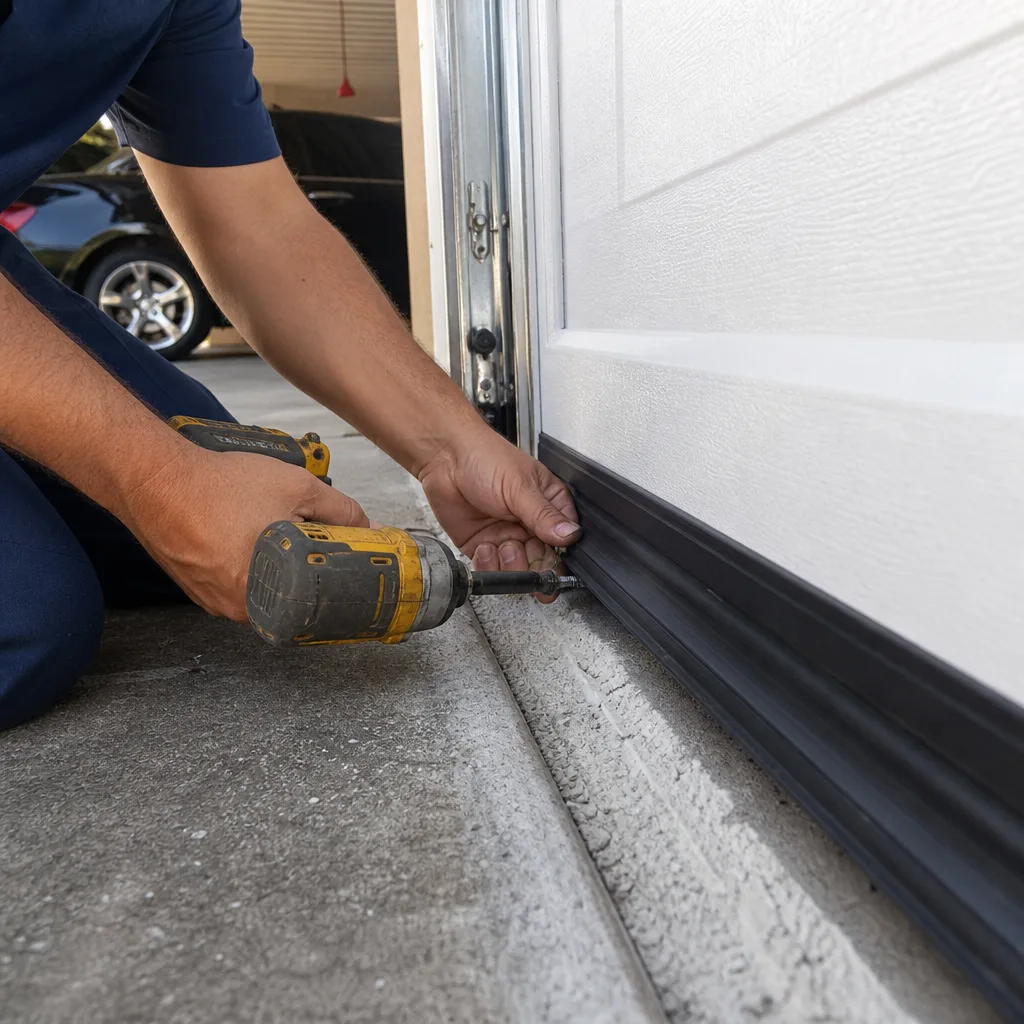
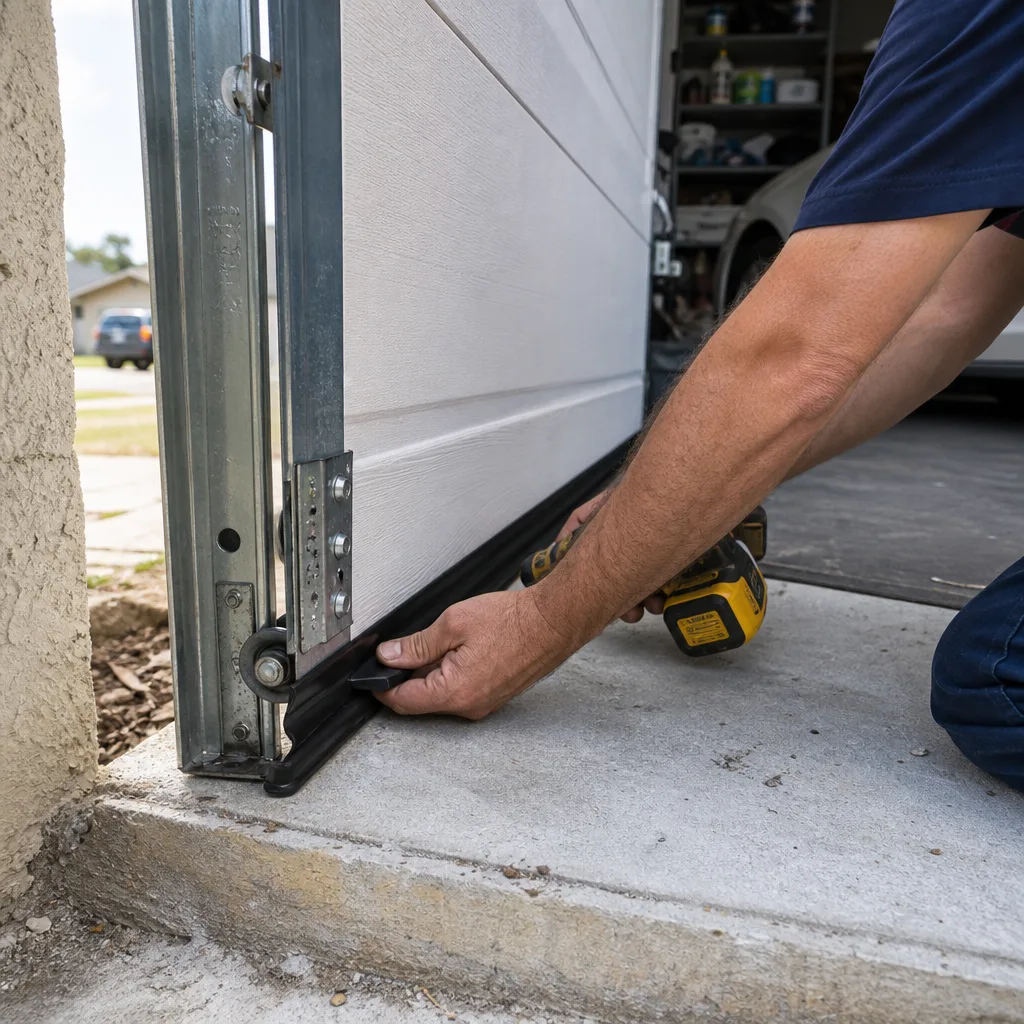
Weatherstripping and Bottom Seal Replacement: Safe DIY
Kissimmee’s afternoon thunderstorms mean a failed bottom seal lets rainwater, dirt, and the occasional palmetto bug into the garage. Replacing the U-shaped rubber seal at the bottom of the door is straightforward: it slides into a retaining track, and you can buy replacement seal at any hardware store in Osceola County for $15 to $40 depending on door width. This is a thirty-minute job with no tension, no weight-bearing components, and no code implications. Do it yourself, and do it before the summer rainy season.
Roller Replacement (On Non-Cable Rollers): Moderate DIY
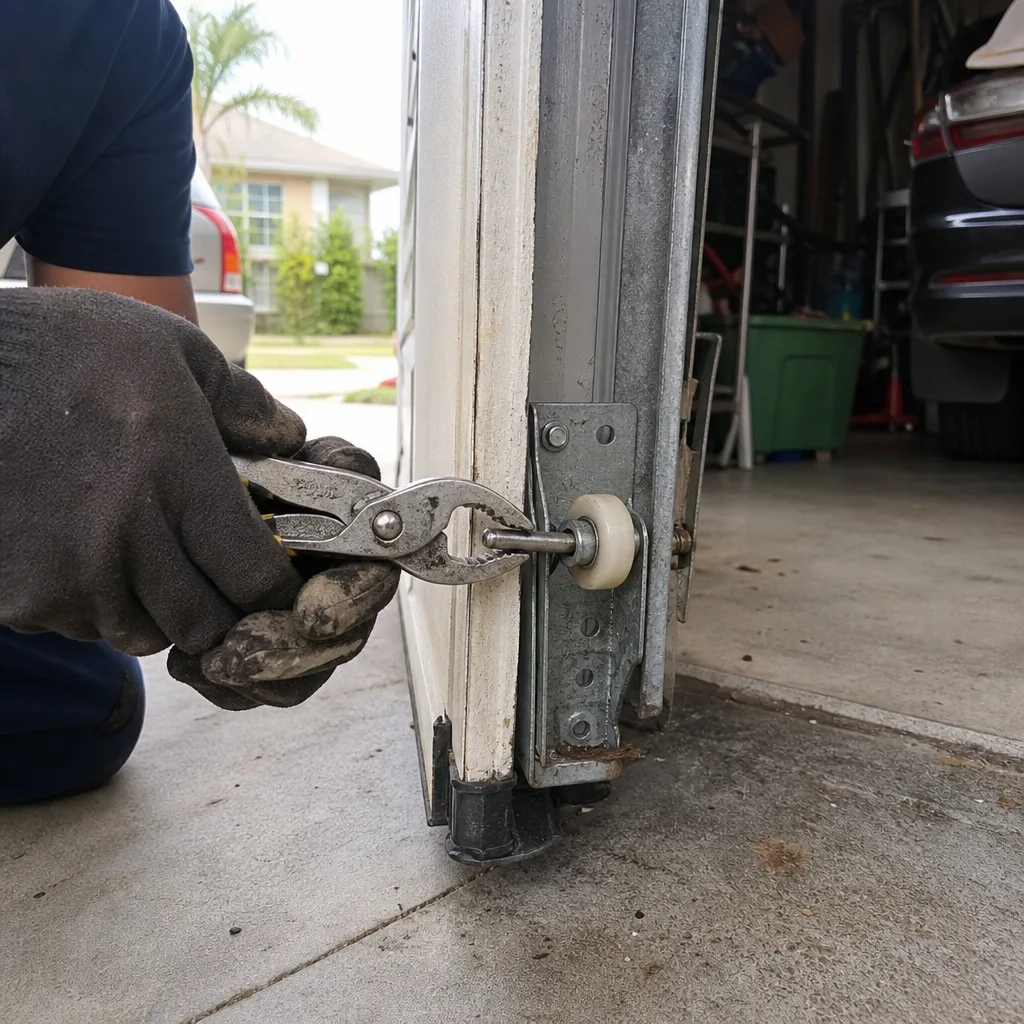
Garage door rollers wear out, and nylon rollers with worn bearings make a door sound like it’s grinding itself apart. Replacing the rollers that sit in the vertical track is doable for a careful homeowner. The risk is that the top and bottom rollers are attached to the cable system, and removing them without knowing how the cable is routed can cause the cable to unspool. If you’re replacing only the middle rollers, go ahead. If it involves any roller attached to a cable, stop and get a pro involved. The garage door repair process in Kissimmee for cable-attached rollers is different because the cable carries the door’s weight.
Cable Replacement: High Risk, Call a Pro
Here’s the line, and it matters. The lift cables on a standard residential door run from the bottom brackets up the sides and wind around drums at the top of the shaft. They are under full tension at all times, even when the door is closed, and they hold the door’s weight plus the tension of the spring system. When a cable frays or snaps in Kissimmee’s humid, salt-adjacent air, it releases energy suddenly. The replacement involves unwinding and rewinding the drums under controlled tension. If you get this wrong, the door can drop or the other cable can snap, and you’re standing right there. Leave cables to a pro. Every time.
Torsion Spring Replacement: Stop. Do Not Attempt.
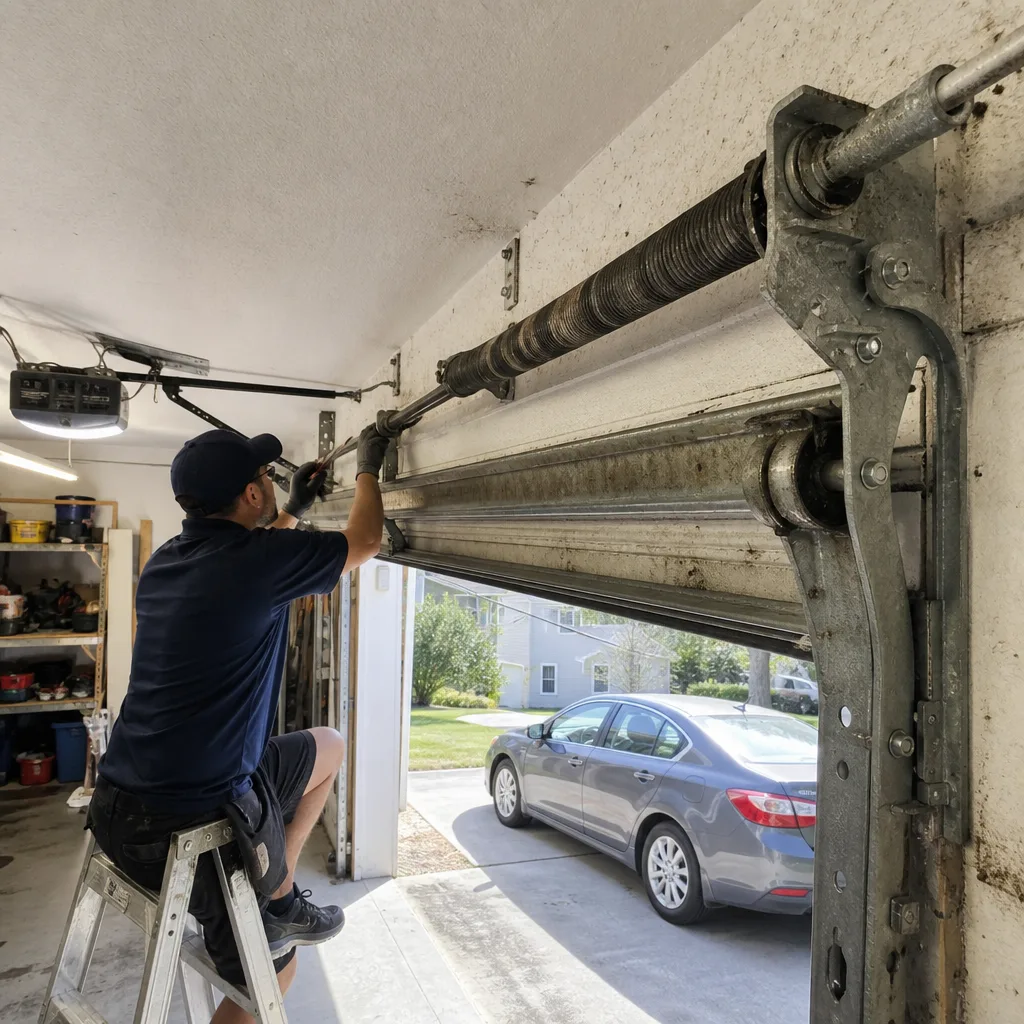
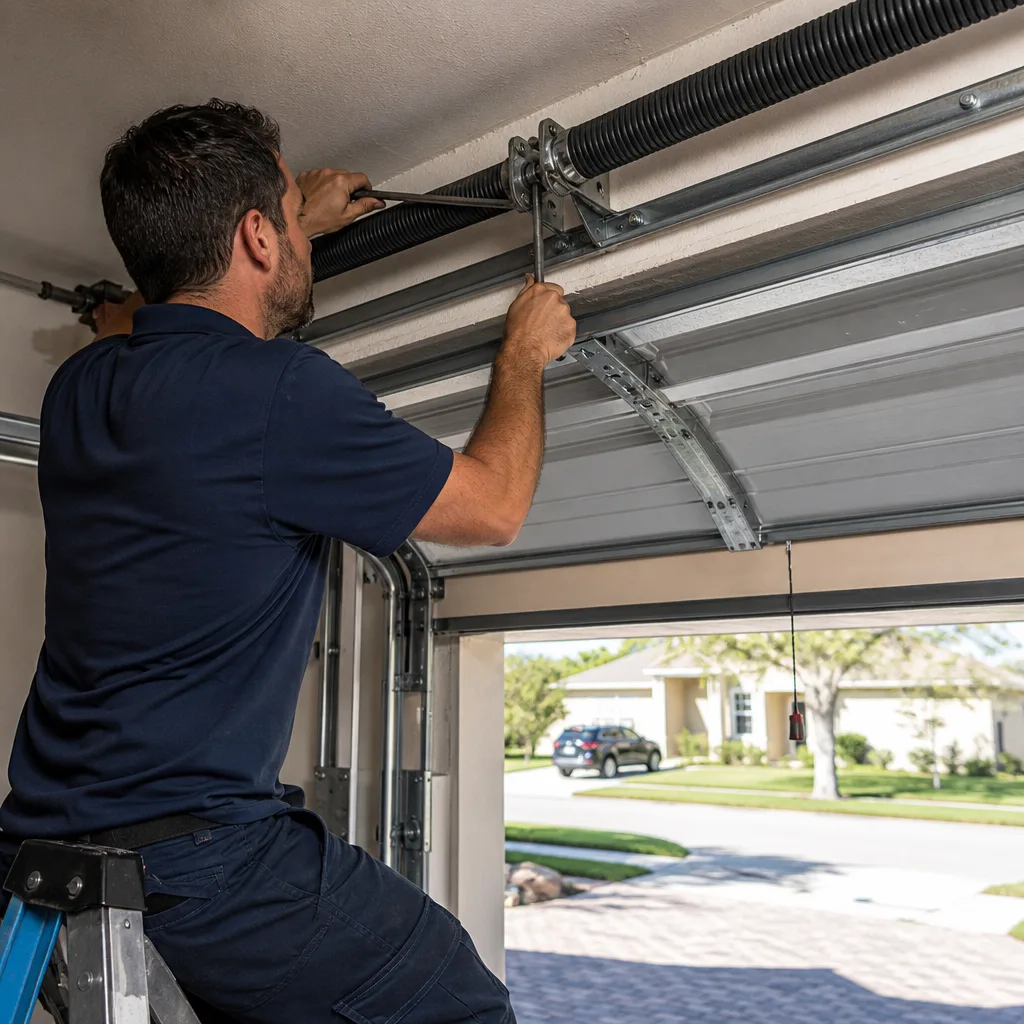
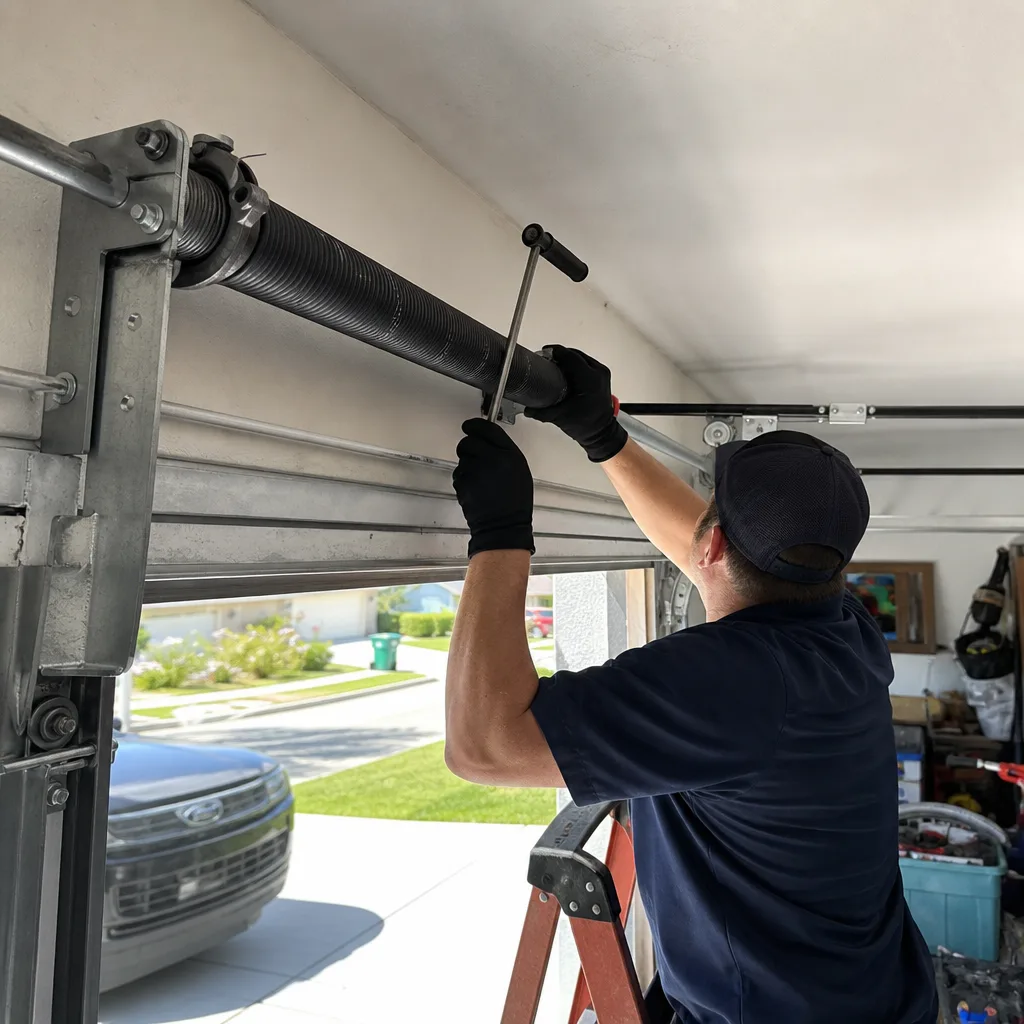
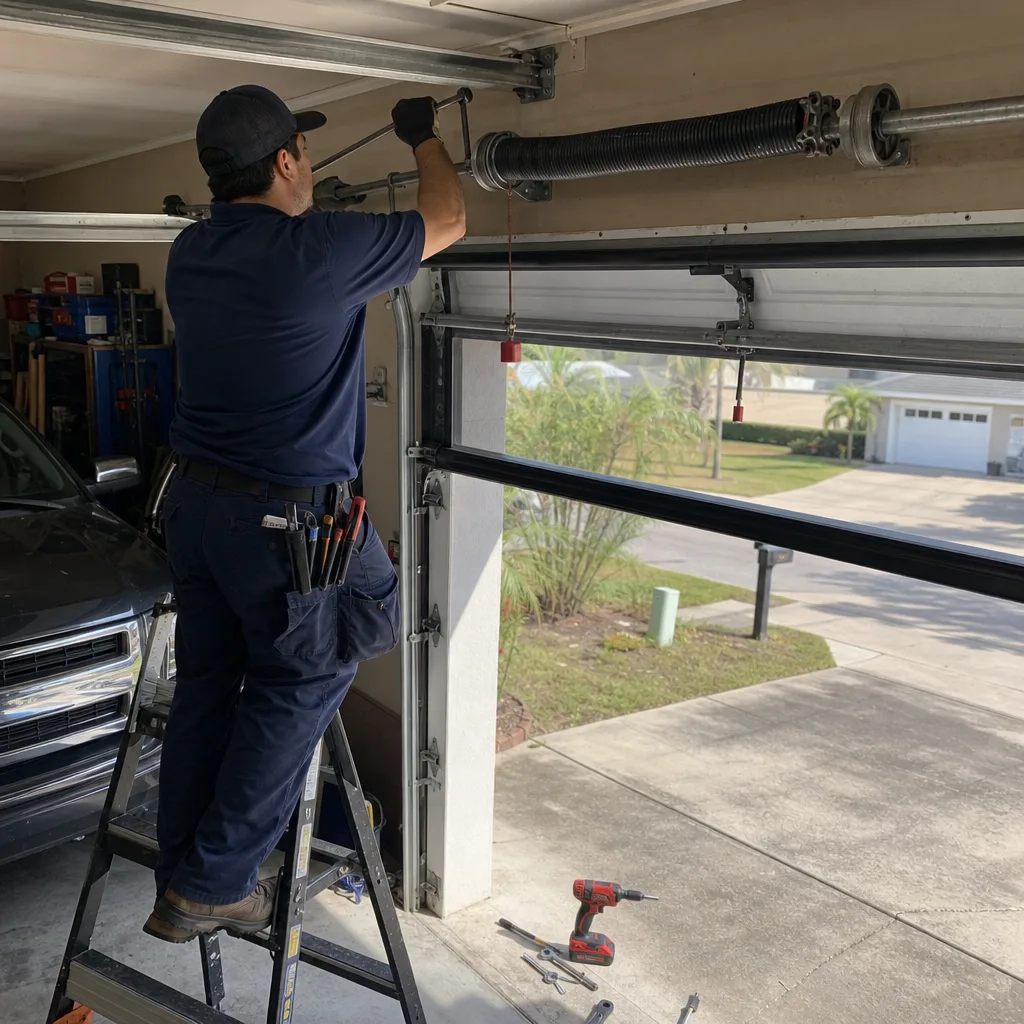
Torsion springs are the coils mounted on the steel shaft above the door opening. They hold the door’s weight through stored mechanical energy. A standard residential spring is wound to roughly seven to eight turns, storing enough force to lift a 150- to 200-pound door multiple times per day. When one breaks, it doesn’t unwind slowly. It releases all of that stored force in a fraction of a second. The winding bars used to tension these springs are essentially levers, and if one slips, it strikes whatever is in its path. That’s the 20,000-ER-visit statistic. We do not say this to scare anyone off; we say it because the risk is real and documented. Never attempt torsion spring replacement yourself.
Full Door Installation or Replacement: Permit-Required, Professional-Only
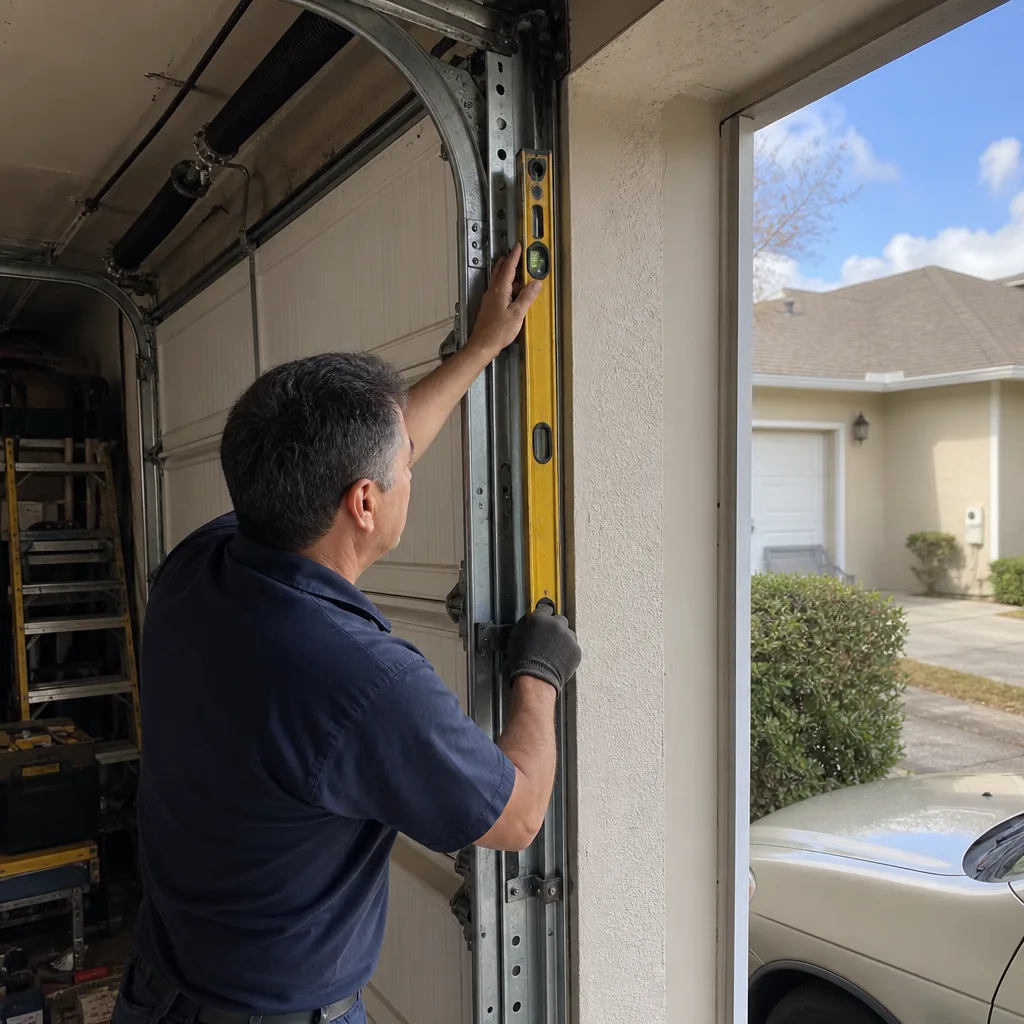
In Osceola County, replacing a garage door requires a building permit, and the work must be performed or supervised by a licensed contractor for the installation to be insurable and code-compliant. That’s not a suggestion; it’s the Florida Building Code applied through the local permitting office in Kissimmee. A homeowner who installs a door without a permit now has an unpermitted structural modification on their property, which becomes relevant at resale and complicates insurance claims if the door fails. The garage door installation process in Kissimmee involves measuring, ordering, permitting, and installation that meets wind-load and structural requirements specific to Central Florida. This is not a weekend project.
Florida Building Code and Kissimmee Permits: The Legal Side of DIY
The Florida Building Code exists because Florida weather is not hypothetical. Kissimmee sits in a high-wind zone, and garage doors are the largest opening in most homes, which means they are a structural failure point during hurricanes and severe thunderstorms. Code requires garage doors to meet specific wind-load ratings, and the permitting process verifies that the door, the track, and the anchoring system are installed to that standard.
Here’s what that means for DIY in Kissimmee:
- Minor repairs do not require a permit: lubrication, sensor alignment, roller replacement, and weatherstripping are considered routine maintenance under the code.
- Spring and cable replacement fall into a gray area: technically, they are repairs, not structural modifications, but the Florida Building Code’s contractor licensing requirements mean that performing this work for compensation requires a license. A homeowner doing it themselves assumes all liability, and a mistake that causes property damage may not be covered by homeowners insurance.
- Full door replacement requires a permit: the permit is pulled by a licensed contractor, and the work is inspected. This is the point where DIY becomes legally noncompliant in Kissimmee, regardless of how capable the homeowner is.
- Opener installation involving new wiring: if you’re adding a new electrical circuit or moving an outlet for a garage door opener, that’s electrical work subject to code and permits. Replacing an existing opener in the same location is simpler but still benefits from professional installation to ensure the safety sensors and force settings are correct. For details, see garage door opener repair and installation in Kissimmee.
The practical takeaway: the closer a task gets to the door’s structure or the spring system, the more likely it is that Kissimmee’s permitting and code requirements make professional work the only sensible option. This isn’t about skill. It’s about what is legal, what is insurable, and what survives an inspection.
The Real DIY Cost Calculation: Where the Savings Actually Are
The honest math on DIY garage door work is more nuanced than “parts are cheap and labor is expensive.” Here’s the calculation most homeowners miss.
When a homeowner buys a replacement part, they pay retail. When a local garage door company buys that same part, they pay wholesale or trade pricing, and they buy it in the exact spec needed for the specific door. A torsion spring that costs $70 retail might cost $35 to a contractor. The homeowner saves $0 on parts and actually often pays more for the same component. What the homeowner is saving on is labor, and labor on most garage door repairs in Kissimmee runs $95 to $150 for a service call plus the repair time.
So the DIY savings calculation looks like this:
- Lubrication: DIY saves $95 to $150 in service-call labor. Total cost: $12 in materials. Clear DIY win.
- Weatherstripping: DIY saves $95 to $150. Total cost: $15 to $40. Clear DIY win.
- Sensor alignment: DIY saves $95 to $150. Total cost: $0 if it’s just alignment. Clear DIY win.
- Roller replacement: DIY saves $95 to $150, but risks cable damage if you’re not careful. Nylon rollers cost $5 to $15 each. Marginal DIY win if you know the limits.
- Cable replacement: the parts are $25 to $50, but the risk of doing it wrong leads directly to the next category. Not worth the savings.
- Spring replacement: parts run $70 to $180 retail, but a single mistake can cause injury, door damage, or both. The labor you save is $95 to $150. In our experience in Kissimmee, the injury risk alone eliminates this as a rational option. Never DIY.
- Full door replacement: permits, inspections, and wind-load compliance make DIY illegal for most homeowners. The “savings” don’t exist because you can’t legally do the work. Never DIY.
The threshold where DIY savings are erased by a single mistake is roughly $200. If a task’s parts cost under $50 and the procedure is low-risk, DIY wins. If the parts cost more than $50 or the procedure involves tension, the risk-adjusted math flips in favor of hiring a professional. That’s the number to remember.
What a DIY Mistake Costs to Fix in Kissimmee
We have arrived at homes throughout Kissimmee to fix DIY attempts that went sideways, and the failure pattern is consistent. Here’s what those mistakes actually cost to remediate, in dollars and in time.
Misaligned Track: $180 to $350
A homeowner replacing a roller or adjusting a bracket shifts the track by a fraction of an inch. The door still works for a few weeks, then the rollers start wearing unevenly. Over 90 days, that slight misalignment grinds the roller bearings and scores the track. By the time the door is binding and grinding, the fix is often track replacement or realignment plus new rollers. We see this most often in Kissimmee communities where doors are older, like the 1990s-era homes around Lake Tohopekaliga, because those track systems have less tolerance for error.
Incorrectly Wound Spring: $250 to $500
The most expensive DIY mistake short of injury is an improperly wound torsion spring. If a spring is wound too few turns, the door is heavy, the opener strains, and the panels absorb stress they weren’t designed for. Over months, this causes stress fractures at the panel joints and premature opener failure. If the spring is wound too many turns, the door flies up, and the opener’s limit switch wears out prematurely. We have replaced doors in Kissimmee with cracked panels caused by spring imbalance, and the homeowner usually didn’t know the spring was the root cause until we showed them the photo record. The fix is a new spring with correct winding, sometimes plus panel or track work.
Unspooled Cable: $150 to $300
When a homeowner removes the wrong roller or bracket, the cable slips off the drum. The cable then wraps around the shaft, the door hangs unevenly, and the entire system is out of balance. Restringing a cable under tension requires releasing the spring, resetting the drum, and rewinding everything to spec. This is the repair that most often turns into a full spring and cable replacement because the cable, once unspooled and kinked, cannot be reused safely.
The pattern here is not that homeowners lack mechanical ability. It’s that garage door systems are interlocking. A misalignment in one component creates uneven wear in another, and that wear shows up weeks or months later as a different problem entirely. The DIY money saved up front becomes a larger repair bill down the line, and that’s before we even talk about the injury risk.
Using a Paid Diagnostic Visit Without Committing to the Repair
Here’s an option most Kissimmee homeowners don’t know they have. You can hire a technician for a diagnostic visit, receive a written fault report, and use that document to make your own decision about what to do next. This is not a commitment to hire the company for the repair.
Here’s how the process works, step by step:
- Schedule a diagnostic visit. Ask specifically for a written fault report with part identification. A company worth hiring will include this. We include it on every visit because it’s Clause 4 of The Haven Standard, the documentation system we’ve worked under since 2015: the technician photographs the failed component before quoting a replacement.
- The technician inspects the entire system. Springs measured for wire diameter, door balance checked, cables inspected for fraying, tracks examined for alignment, opener tested under load, and sensors verified. The goal is a complete picture, not just the symptom that prompted the call.
- You receive a written report. The report identifies what is broken, what is wearing, and what is fine. It includes the specific part numbers and the measured specs. For example: “Torsion spring measured at 0.243-inch wire diameter, 2-inch inside diameter, 31.5-inch length, showing a clean break at the stationary cone.” That level of detail lets you buy the exact right part if you decide to DIY, and it tells you whether DIY is realistic.
- You decide. If the report says the spring is broken and the door is 18 years old, you now have documented information to make a hire-or-replace decision. If the report says the only issue is a dirty sensor, you just paid for confirmation and you can handle the fix yourself.
The diagnostic visit costs less than a full repair, and it converts a guess into a documented decision. In our experience, this is the option that resonates most with the homeowners who research before they call, because it respects their ability to evaluate evidence. To be clear: we charge for the diagnostic visit because we are going to produce a written document with photographs. The report is yours to keep regardless of who does the repair.
Why Kissimmee’s Climate Changes the DIY Calculation
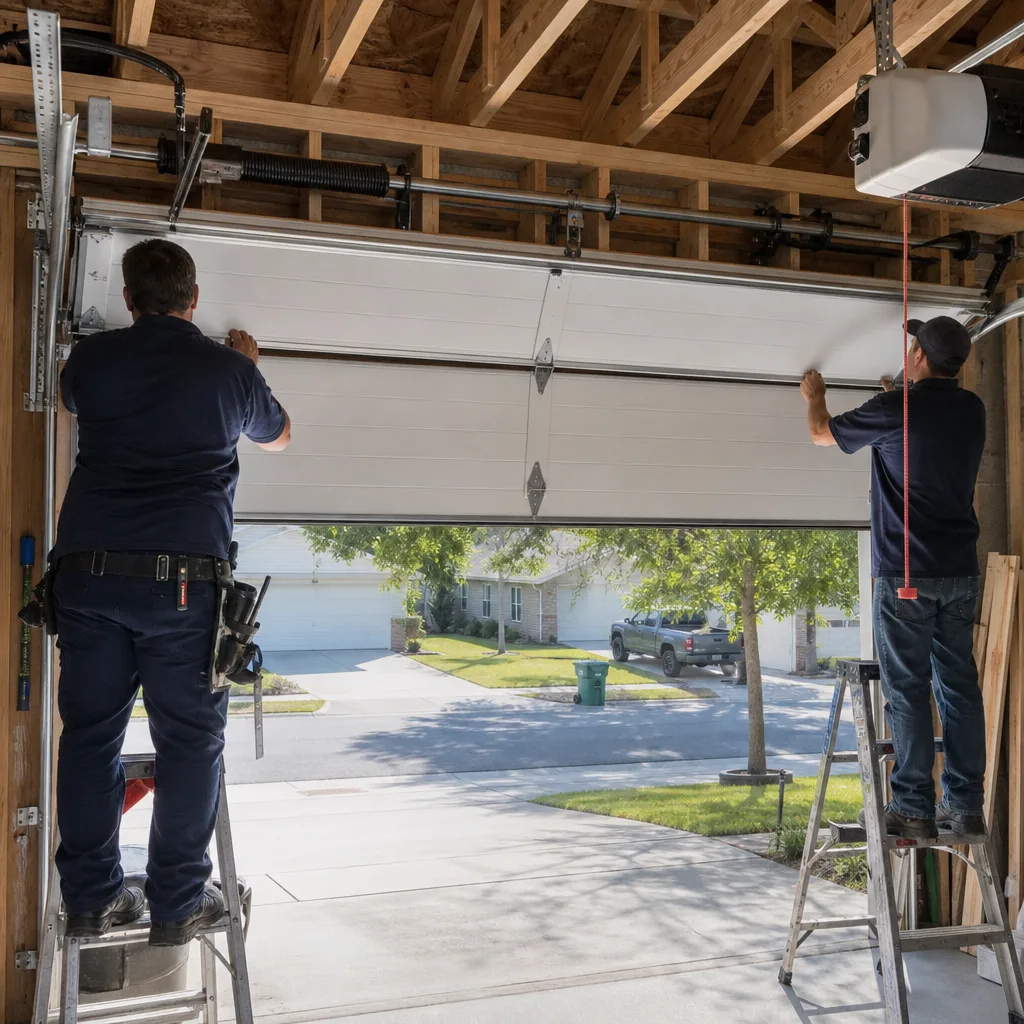
Garage door components fail differently in Kissimmee than they do in other parts of the country, and that difference matters when you’re deciding whether to DIY a repair.
Kissimmee’s humidity is relentless. It sits between 70 and 90 percent for much of the year, and the afternoon thunderstorms from June through September dump rain on a schedule. That moisture attacks springs and cables through slow corrosion. A torsion spring that would last 12 to 15 years in a dry climate might fail in 8 to 10 years here, and the failure is often sudden because the rust creates a weak point that fractures without warning. The same humidity also causes condensation inside the opener housing, which affects the logic board and the limit switch contacts over time.
The heat is a second factor. Garage temperatures in Kissimmee regularly exceed 110 degrees during the summer, and that heat breaks down nylon roller bearings and rubber weatherstripping faster than in cooler climates. A bottom seal that lasts five years in a temperate climate might last three years off Poinciana Boulevard.
What this means for the DIY decision is simple: if you’re seeing rust on your springs or cables, or if your door is more than eight years old, the likelihood that a basic repair will escalate is higher in Kissimmee than it would be elsewhere. The DIY tasks remain the same, but the margin for error shrinks because the components you’re working around are more likely to be compromised. A visual inspection that reveals rust on the cable or the spring tells you that the task has moved from maintenance to replacement territory.
Common Mistakes to Avoid
- Lubricating the spring with the wrong product. WD-40 is a solvent, not a lubricant. It cleans but doesn’t coat, and on Kissimmee’s humid days, a bare spring starts rusting faster. Use white lithium grease or a silicone spray specifically for garage doors.
- Adjusting the travel limits on an opener without checking the door balance first. If the door is out of balance, the opener is compensating. Adjusting the opener masks the real problem and causes premature wear on the gear assembly. Disconnect the opener and check whether the door stays put at half-open. If it doesn’t, you have a spring or cable issue, not an opener issue.
- Replacing one garage door spring when there are two. If your door has two torsion springs and one breaks, replace both. The other spring has the same number of cycles on it and is likely close to failure. Replacing one means you’ll be back in six months paying for another service call.
- Ignoring a frayed cable. In Kissimmee’s humidity, a cable that starts fraying doesn’t stop. Each cycle of the door rubs the frayed strands against the drum, and the cable loses strength progressively. By the time it snaps, you have a door that’s jammed in the track and potentially damaged panels.
- Attempting to reset a snapped cable while the spring is still tensioned. This is the one that sends people to urgent care. The cable is connected to a tensioned spring. You cannot simply loop it back over the drum. The spring must be unwound first, the cable reset, and the spring rewound. That procedure belongs with a trained technician.
- Buying a garage door opener online without checking the horsepower against the door weight. A lightweight aluminum door works fine with a 1/2 HP opener. A heavy double-car wood or steel door needs 3/4 HP or more. An underpowered opener in Kissimmee, where heat already stresses the motor, fails prematurely.
- Forgetting that Kissimmee requires permits for full door replacement. We’ve had homeowners ask us to install a door they bought from a big-box store, and we’ve had to explain that the door must meet wind-load requirements and the installation must be permitted. The door they bought may be compliant, but the process still requires a licensed contractor to pull the permit. That’s not a revenue tactic; it’s Osceola County code.
When to Call a Professional
Call a professional any time the task involves a torsion spring, a lift cable, or the structural replacement of the door. If you’re unsure which category your problem falls into, a diagnostic visit settles it with documentation rather than guesswork. If the door is unbalanced, call. If the door is off its track, call. If you hear a sound like a firecracker from the garage and the door won’t lift, that was a spring, and you should not touch anything. Servo Garage Doors Kissimmee home is the starting point for understanding our process. The free estimate in Kissimmee covers all repairs, and it comes with the photo record and the written scope that tells you exactly what you’re paying for before anything starts. Call (689) 210-6506 and a real person answers, day or night.
Frequently Asked Questions
Most garage door repairs in Kissimmee run between $95 and $350, depending on the component. A sensor realignment is $95 to $125, a roller replacement is $150 to $225, a cable replacement is $180 to $280, and a torsion spring replacement for a single spring is $220 to $350 installed. Every quote we provide includes a flat written price and a written scope before any work starts, per Clause 1 of The Haven Standard. Call (689) 210-6506 for an exact quote on your specific issue.
No. Torsion springs store enough energy to lift 150 to 200 pounds, and that energy releases in a fraction of a second if a winding bar slips. This is the task responsible for most of the 20,000 annual garage-door emergency room visits in the U.S. The labor savings of $95 to $150 is not worth the injury risk. Hire a licensed professional for spring replacement.
No. Full garage door replacement in Kissimmee requires a building permit through Osceola County, and the work must be performed or supervised by a licensed contractor to be code-compliant and insurable. Unpermitted door installation creates resale complications and potential insurance claim denials. Routine maintenance tasks like lubrication and sensor alignment do not require permits.
Lubrication with white lithium grease, visual inspection, sensor cleaning and alignment, weatherstripping replacement, and replacing the middle rollers that are not attached to cables are all safe DIY tasks. These require basic tools and no contact with components under tension. Everything involving springs, cables, or track structural work should be left to a professional.
It depends on the cause. If the opener motor hums and the gear assembly is stripped, that’s a replaceable part but it requires disassembling the opener housing. If the door is heavy and binding, the problem may be the spring, not the opener, and a spring problem is not a DIY fix. We recommend a diagnostic visit to determine which component failed before buying parts. Common opener brands we service in Kissimmee include LiftMaster, Chamberlain, and Genie, and an opener-specific diagnosis costs less than a wrong guess.
A single torsion spring replacement in Kissimmee typically costs $220 to $350 installed, including the spring, labor, and the service call. If the door has two springs, replacing both runs $350 to $500. The exact price depends on the spring’s wire diameter and length, which we measure and document, photograph before quoting, and confirm in writing before ordering anything. We provide a free estimate over the phone; call (689) 210-6506 and we’ll walk through what you’re seeing.
The Bottom Line
Garage door DIY in Kissimmee is not a single decision; it’s a task-by-task risk assessment. Lubricate, inspect, and replace weatherstripping yourself. Those are safe, cheap, and genuinely valuable. Leave the springs, cables, and structural work to a licensed professional, because the injury risk and the permit requirements outweigh any labor savings. If you’re unsure, pay for a diagnostic visit and let a written report tell you what you’re dealing with. Since 2015, we’ve built our garage door repair practice in Kissimmee on the principle that documentation beats persuasion: you see the failed part before you approve the fix. The free estimate is a phone call away at (689) 210-6506.
Written by Marcus Deller, Owner at Servo Garage Doors Kissimmee, serving Kissimmee since 2015.