
Last updated September 20, 2026
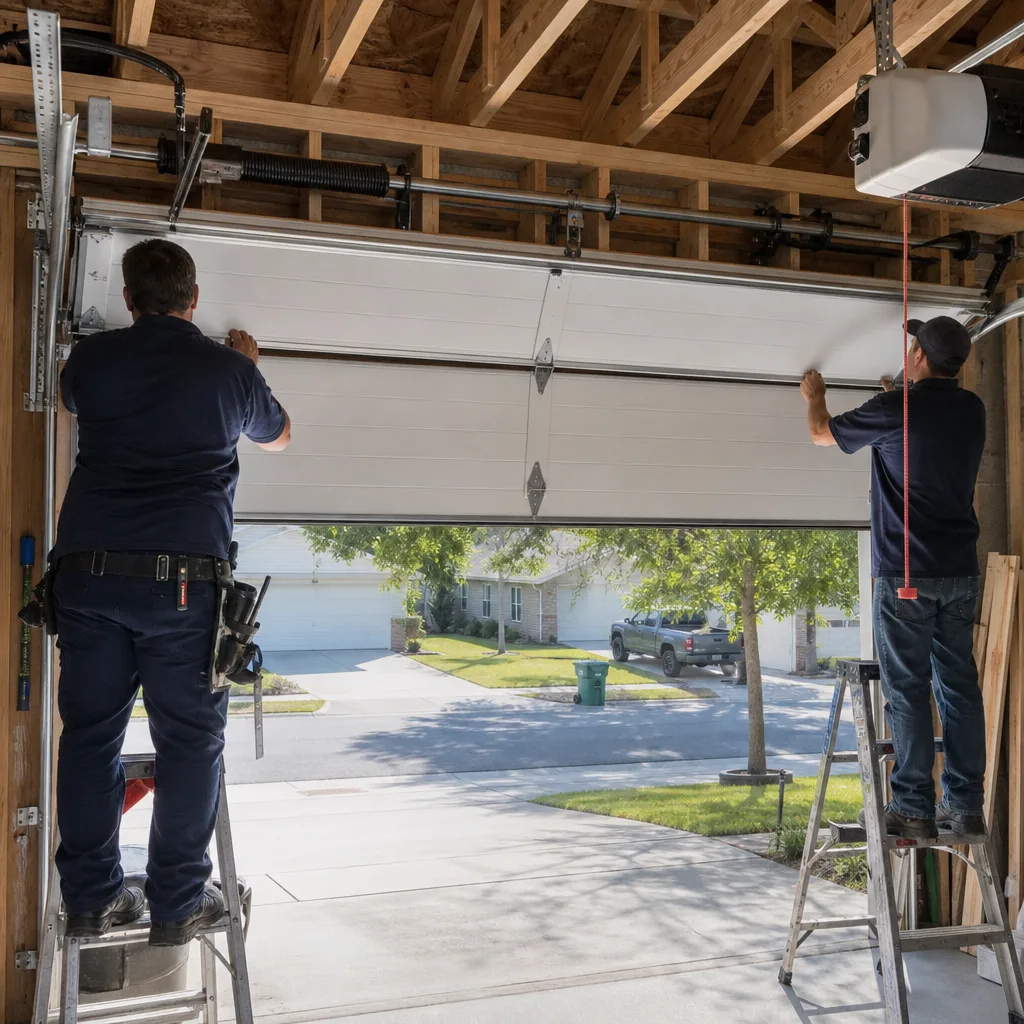
Full 25-point door and opener safety check with every visit - springs, cables, rollers, tracks, and your LiftMaster or Chamberlain opener included
You get a price before we start. It does not change when the truck arrives.
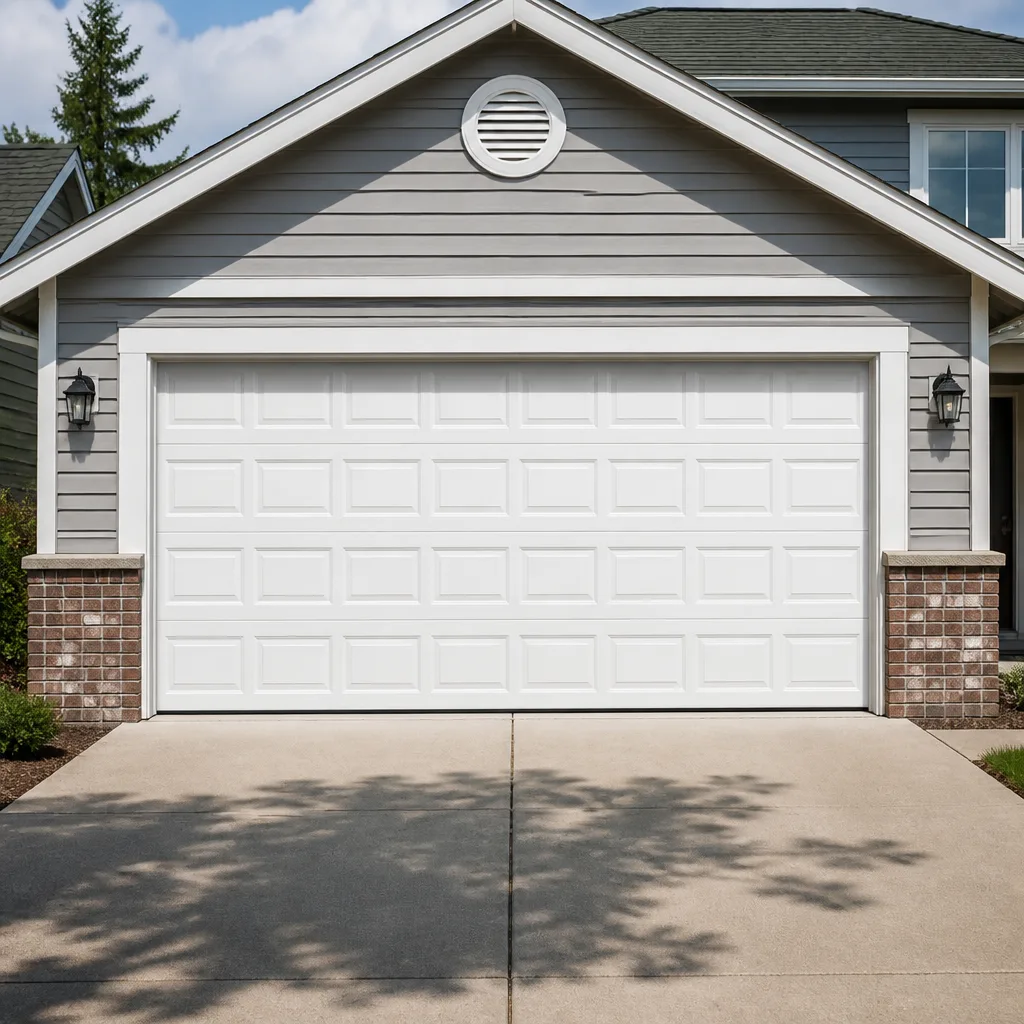
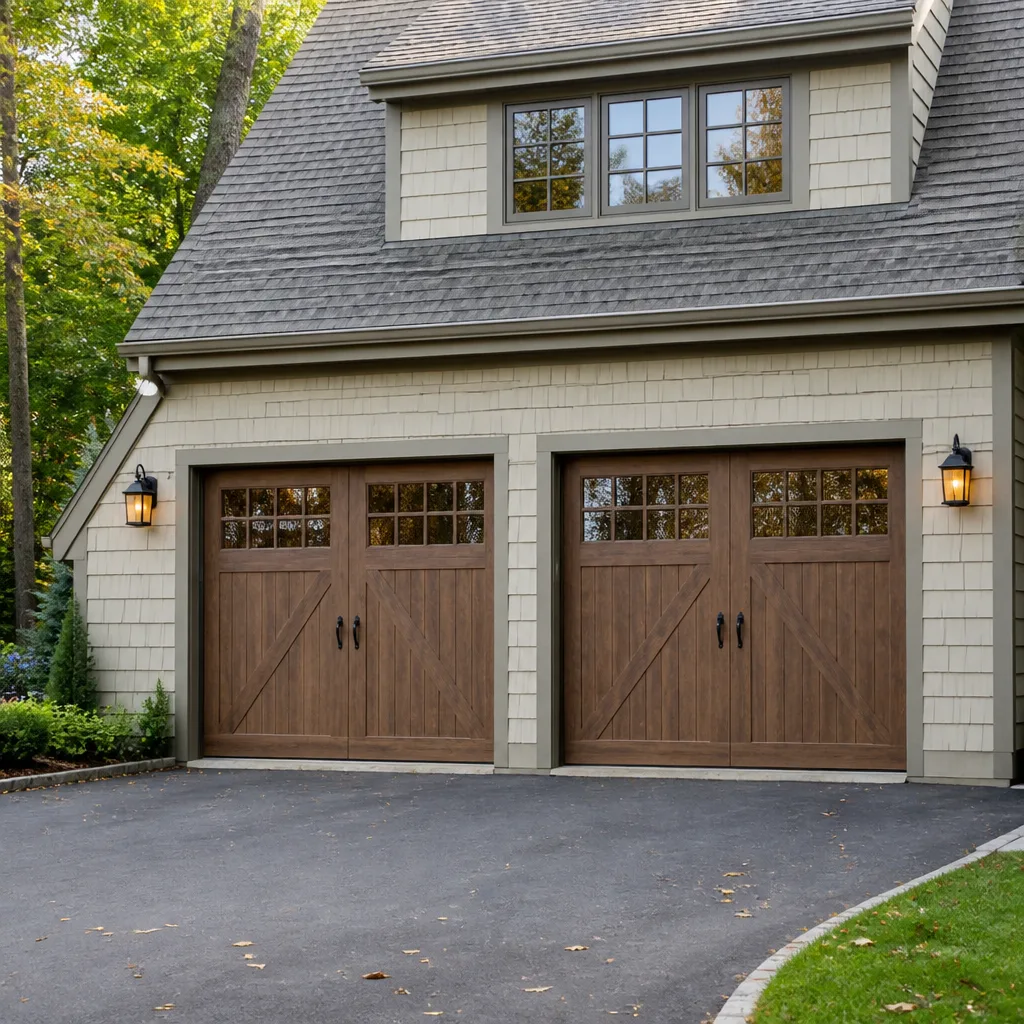
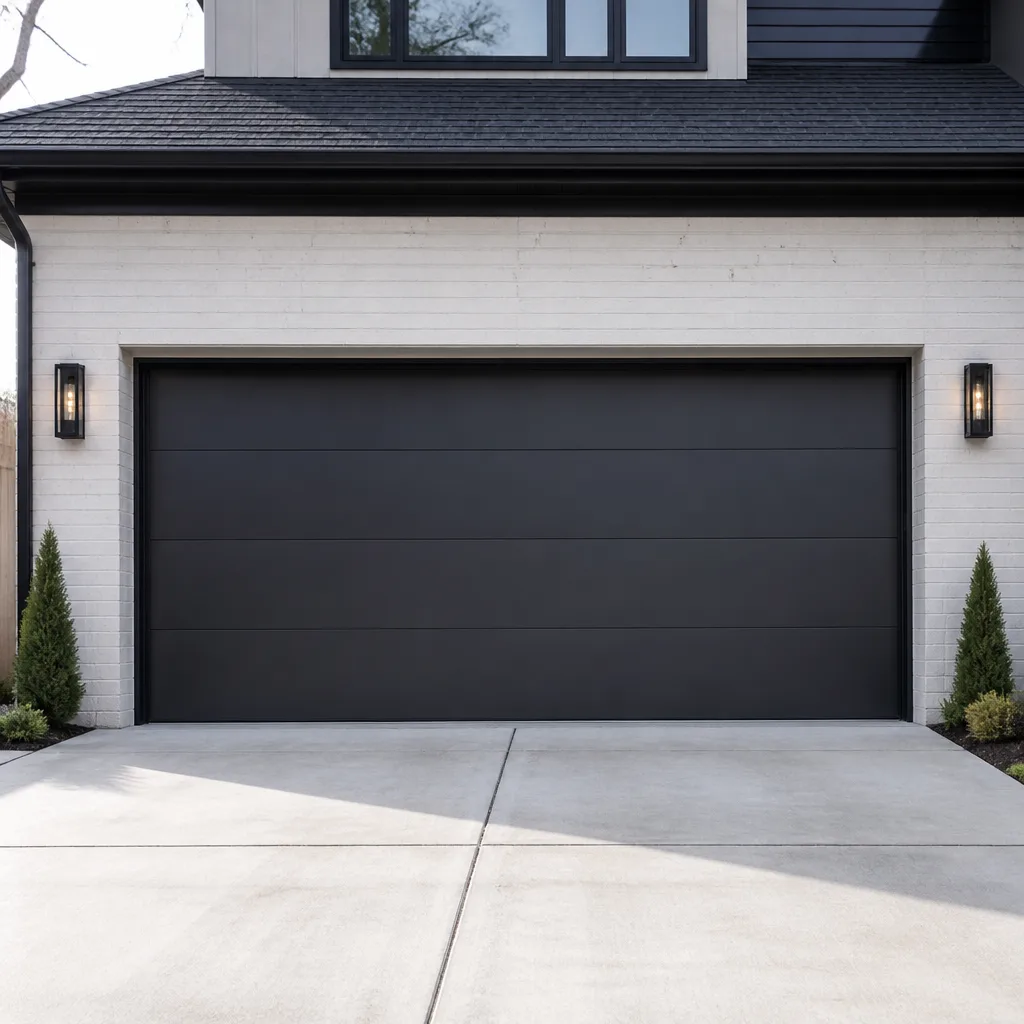
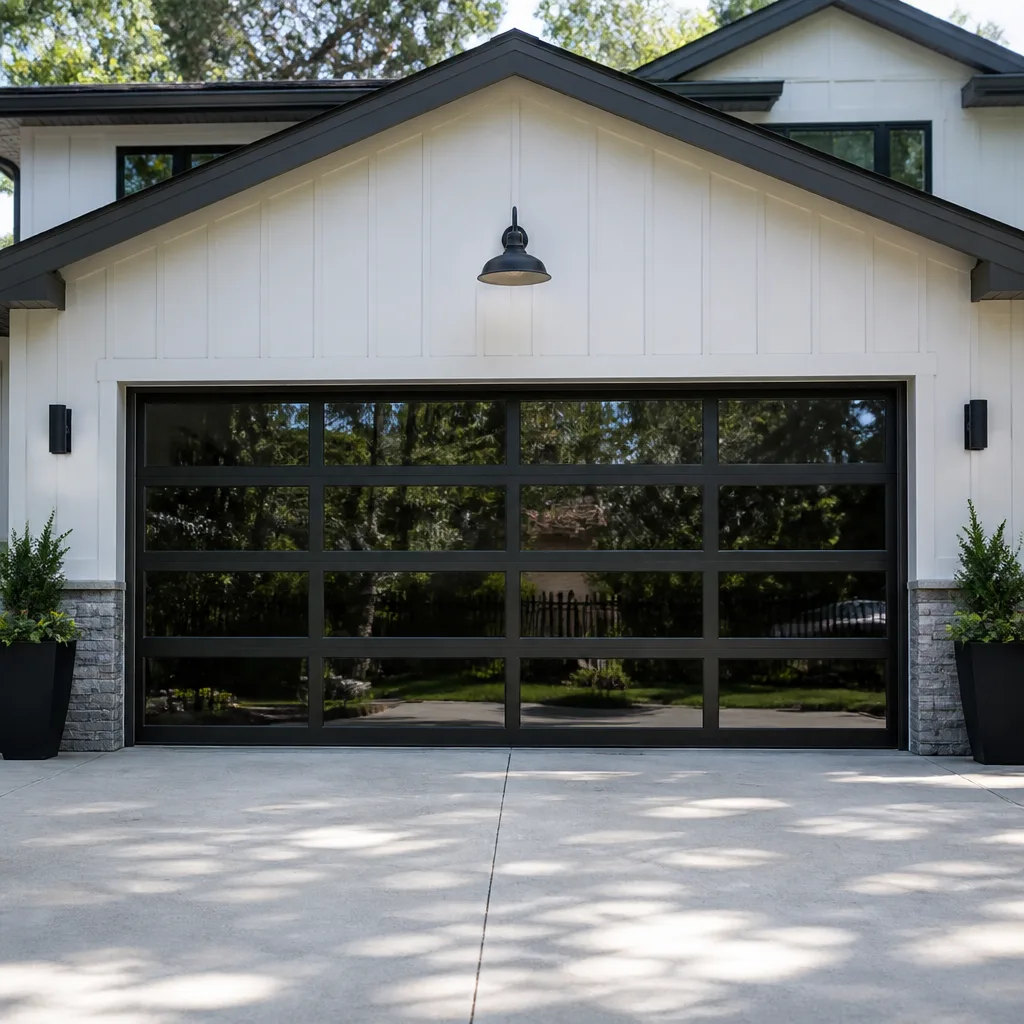
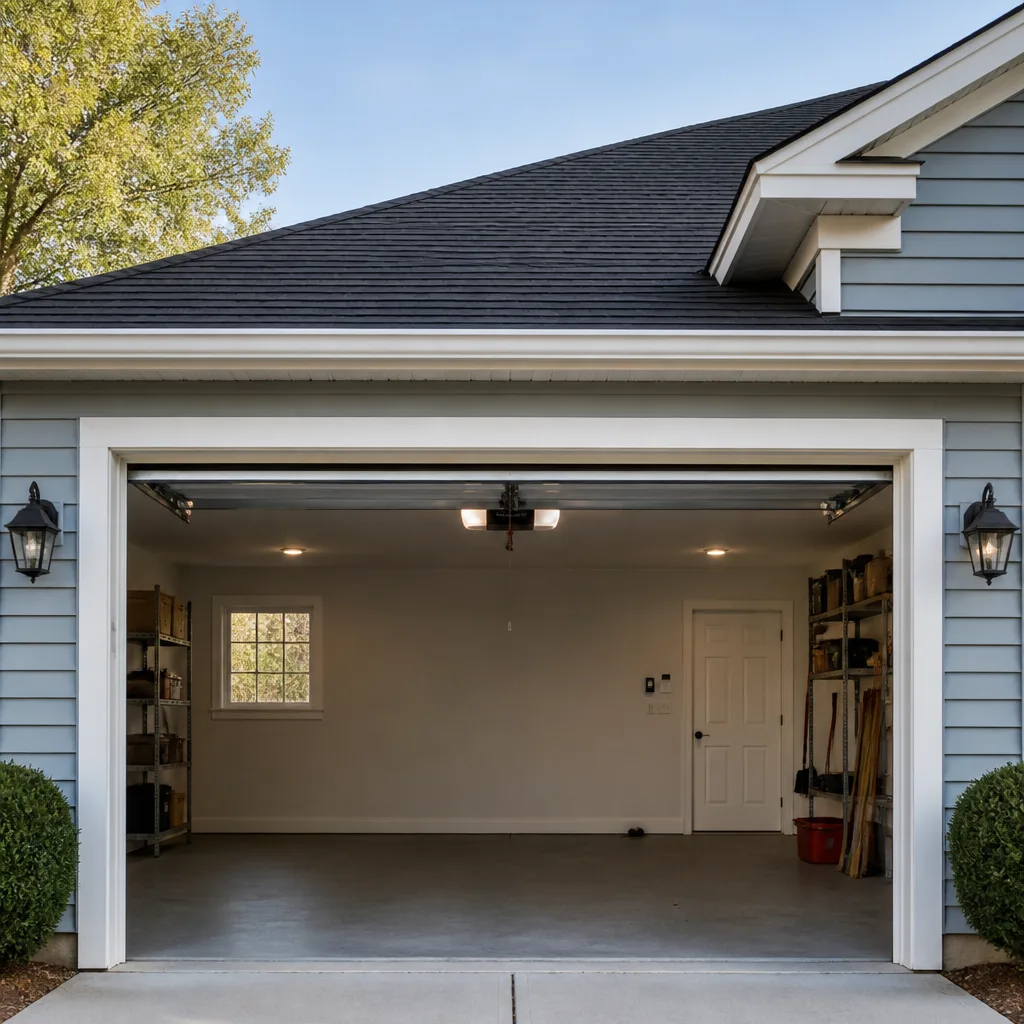
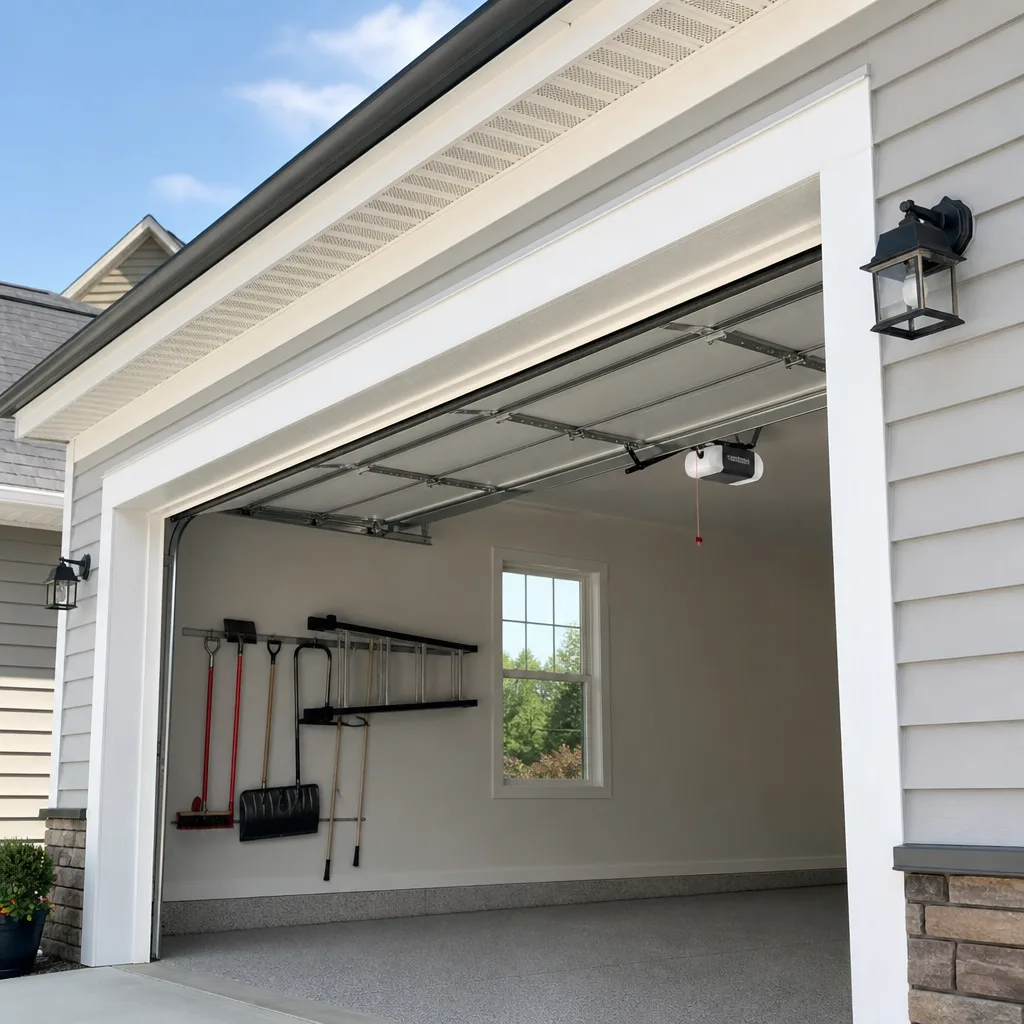
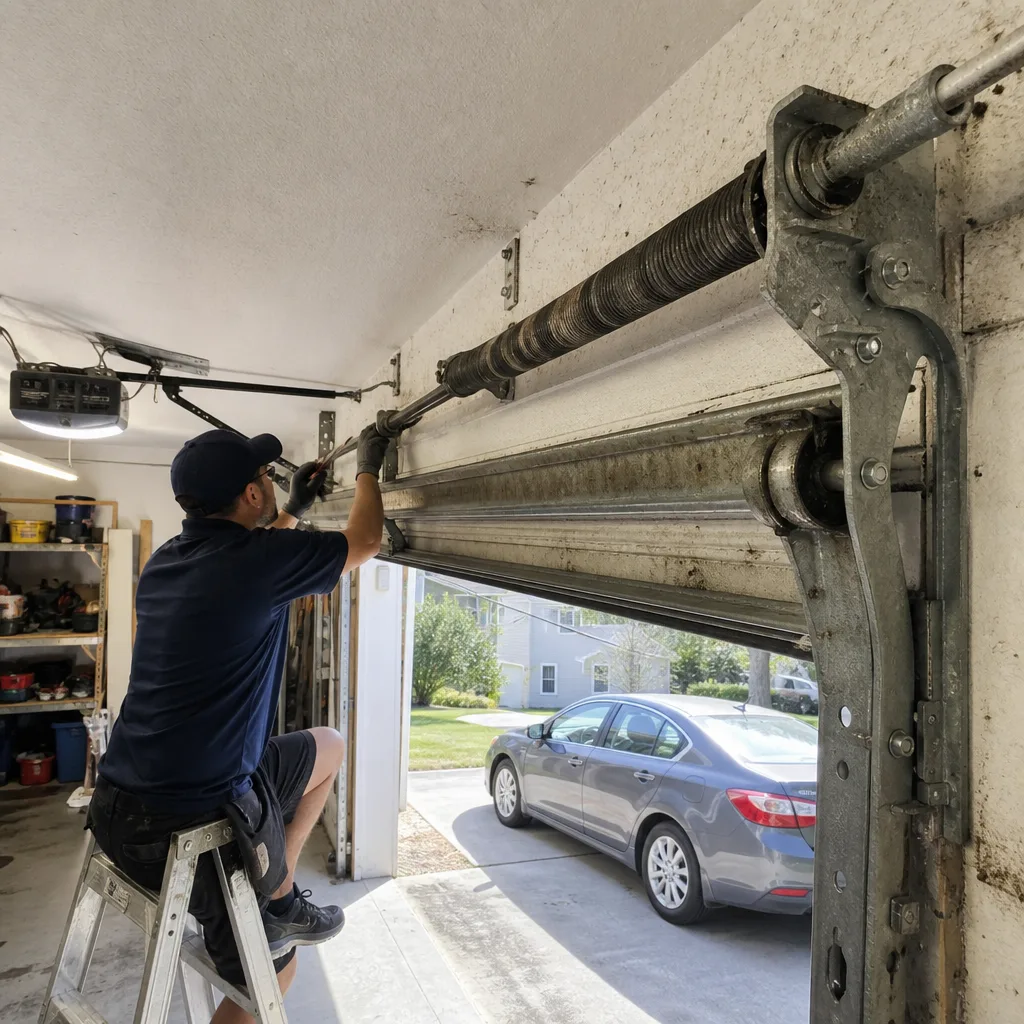 Before
 After
After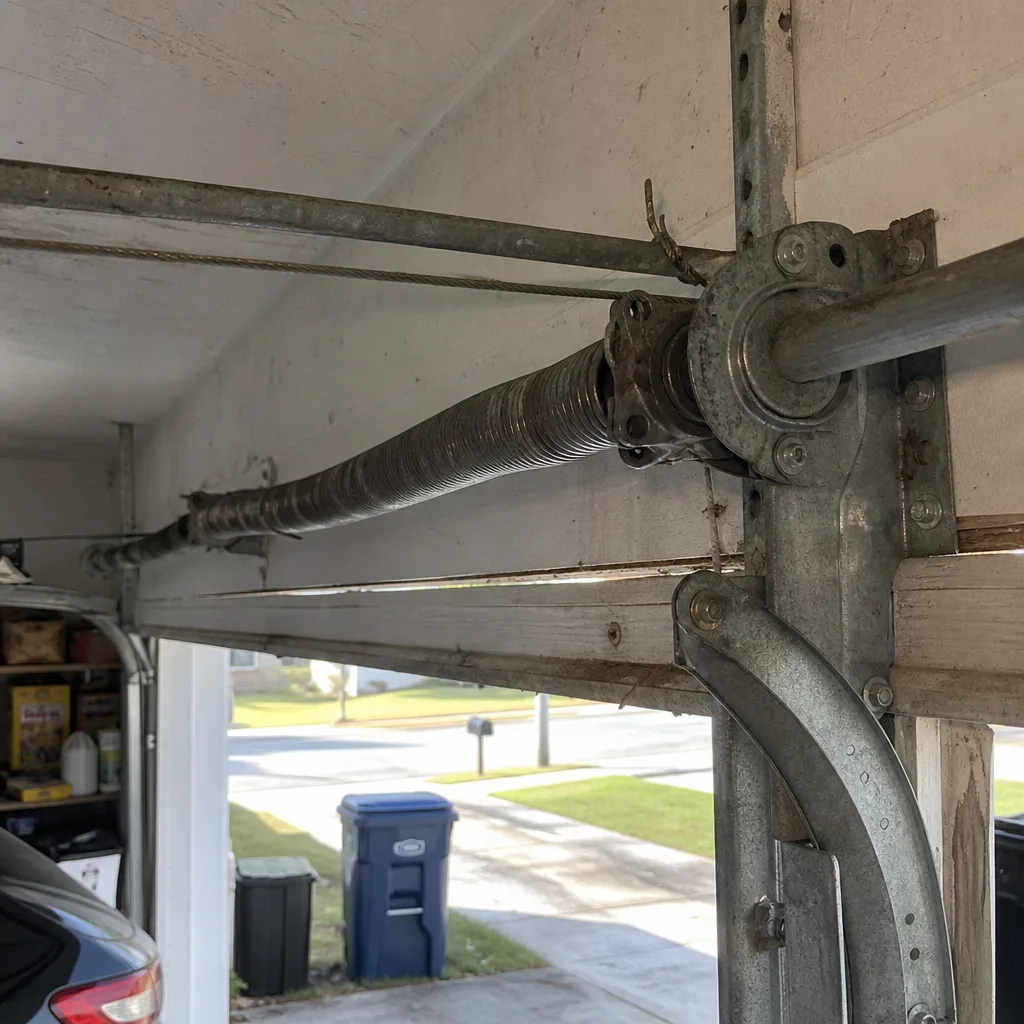 Before
 After
After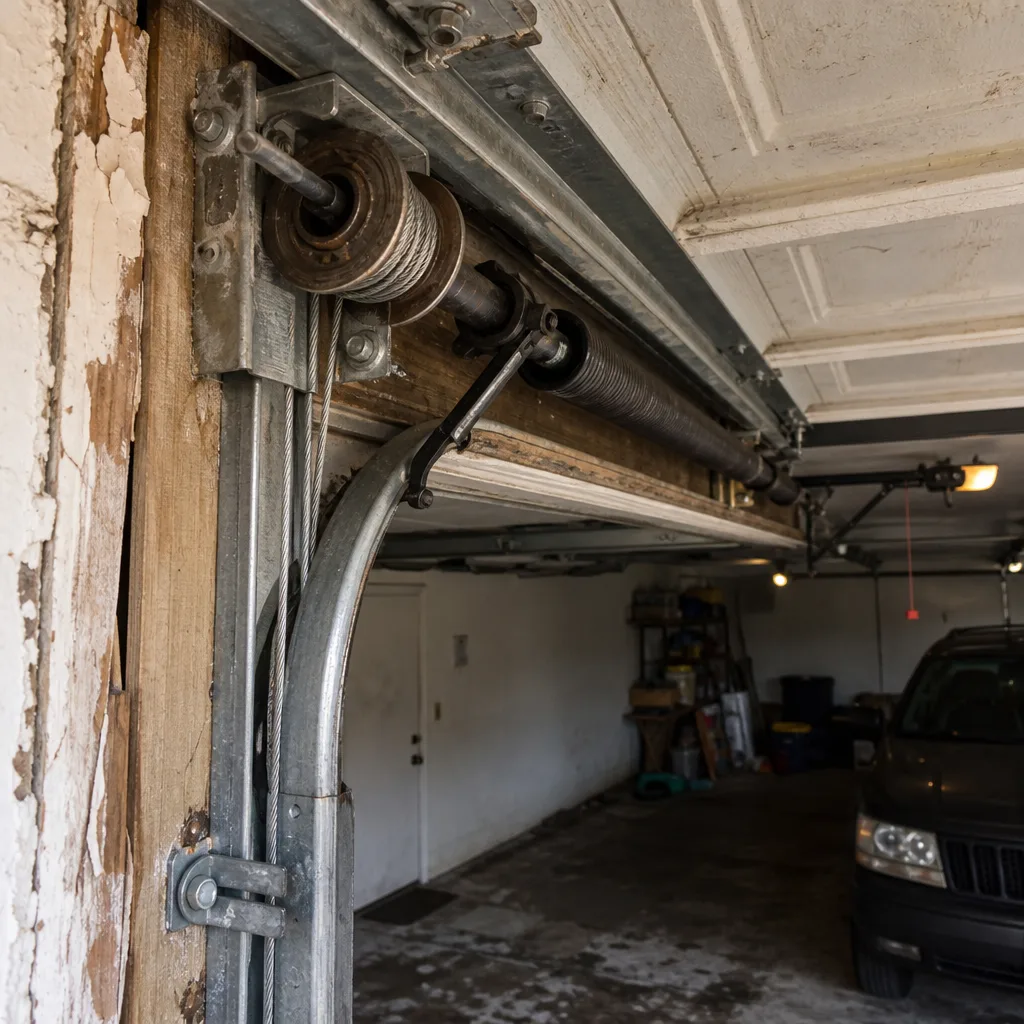 Before
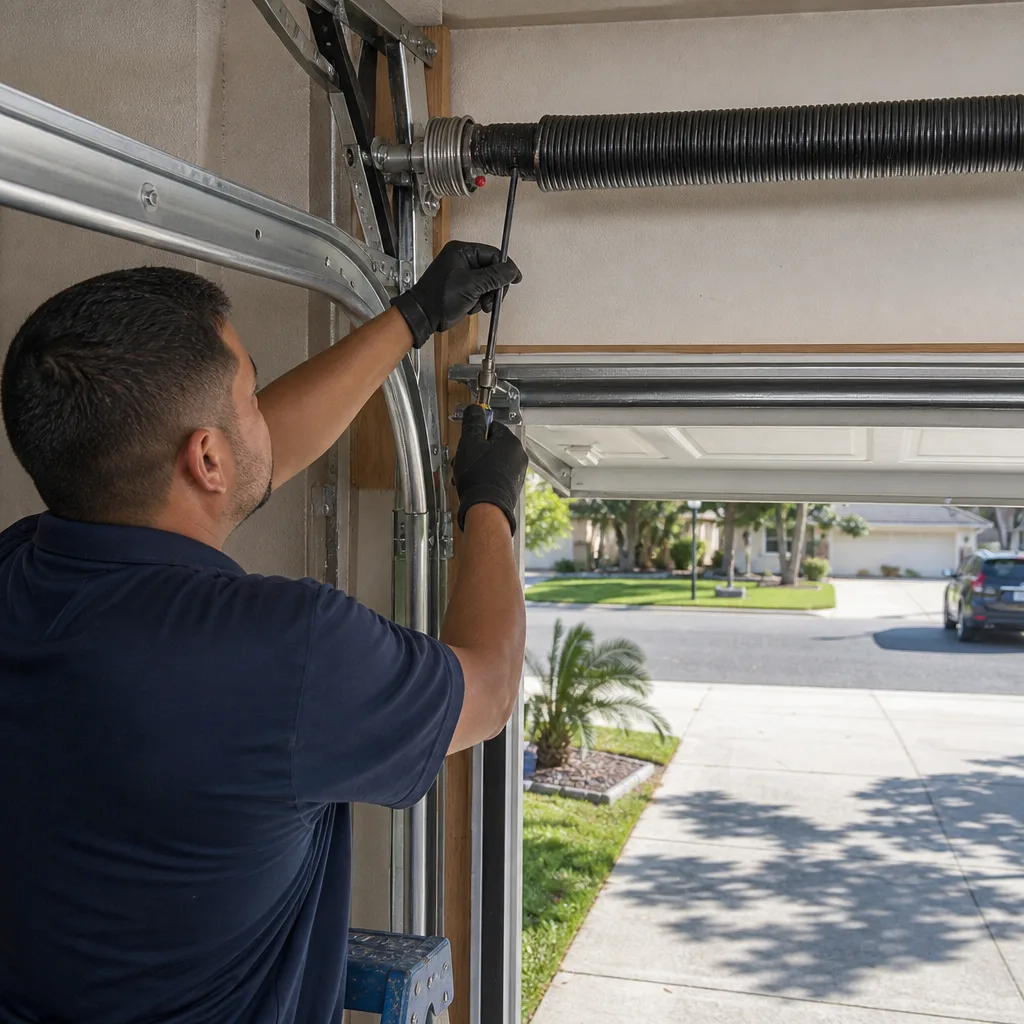 After
AfterThe Complete Guide to Garage Door in Kissimmee
Kissimmee averages 233 days a year with humidity above 70%. That single number disqualifies most of the garage door advice published for national audiences. A steel door with a standard polystyrene core, a set of non-galvanized hinges, and a track system rated for Michigan winters will look fine for eighteen months in Osceola County. Then the rust blooms at the hardware points, the door sags half an inch at the latch side, and the warranty claim gets denied because nobody mentioned the climate exclusion buried in the fine print. This guide is written from Kissimmee, for Kissimmee, and it maps every decision - material, insulation, hardware, wind rating, opener type, budget - to the specific conditions your door will actually face. For more guides & resources, explore our full library. You will finish with a working knowledge of how to read a quote line by line and what compliance means under Florida’s building code.
Quick Answer
A garage door in Kissimmee needs to meet Florida Building Code Section 1609 wind-load requirements for Osceola County, handle sustained humidity above 70% for most of the year, and survive direct afternoon UV on west-facing elevations. The practical result is that galvanized hardware, a wind-rated door model, and an opener with a properly calibrated force setting are not upgrades here - they are the baseline. Expect to budget $1,450 to $3,100 for a code-compliant single door installed in Kissimmee, depending on material and wind rating. See our Garage Door Cost Breakdown: The Kissimmee Homeowner’s Reference for 2026 for a detailed line-item breakdown.
Table of Contents
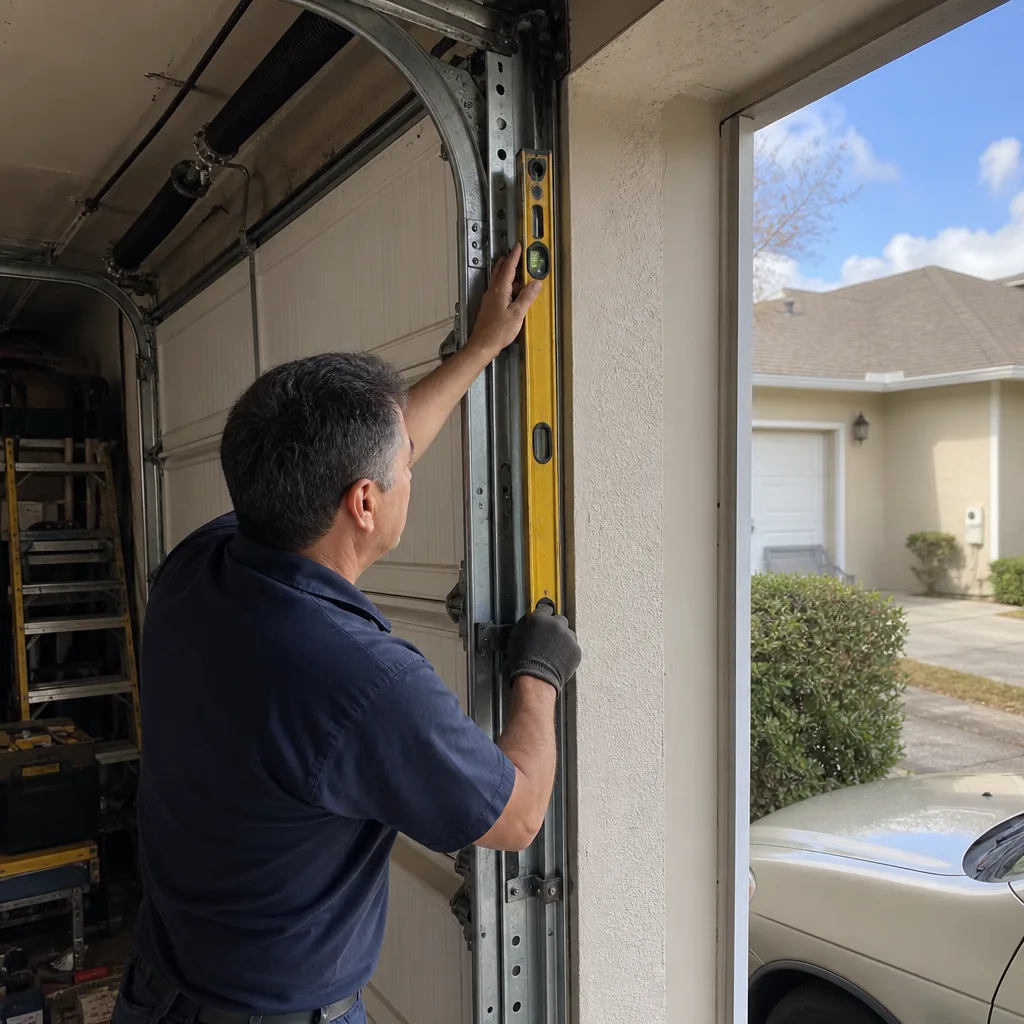
- Kissimmee’s Climate: What Your Door Is Actually Up Against
- Florida Wind-Load Requirements and What They Mean for You
- Door Materials Ranked for Central Florida Durability
- R-Value vs. Real Thermal Performance in a Florida Garage
- Hardware: The Line-Item Decision Most Quotes Get Wrong
- Garage Door Openers: What Matters in Kissimmee
- How to Read a Kissimmee Installation Quote Line by Line
- Common Mistakes to Avoid
- When to Call a Professional
- Frequently Asked Questions
BeforeAfterKissimmee’s Climate: What Your Door Is Actually Up Against
Kissimmee sits at roughly 28 degrees north latitude, about 20 miles inland from the Atlantic but still squarely inside the Central Florida humidity band. The door on your garage is not just a moving wall. It is the largest single opening in your home’s envelope, and in Kissimmee it is exposed to three forces that northern door advice ignores.
First, sustained humidity above 70% for most of the year means exposed steel, uncoated fasteners, and standard zinc-plated hardware corrode at a measurable rate. Second, afternoon thunderstorms roll through Osceola County from late May through September with wind gusts that routinely reach 40 to 55 mph, putting continuous dynamic pressure on every hinge point, roller, and track bracket. Third, the summer sun angle means a west-facing garage door can reach surface temperatures of 140 to 160 degrees Fahrenheit, which degrades painted finishes, warps non-insulated aluminum panels, and softens epoxy-coated torsion springs faster than any winter freeze ever would.
These are not hypotheticals. In our service area around Kissimmee - from Poinciana to Celebration to the older neighborhoods off John Young Parkway - we see the same failure patterns repeat: rust at the bottom bracket where water pools after a storm, cracked end bearing plates from wind sway on doors over 10 feet wide, and paint failure on west-facing panels within three to four years. A door that is not selected for these conditions will not fail on the same timeline as a door in Ohio. It will fail faster, and the failure will be visible sooner.
Florida Wind-Load Requirements and What They Mean for You
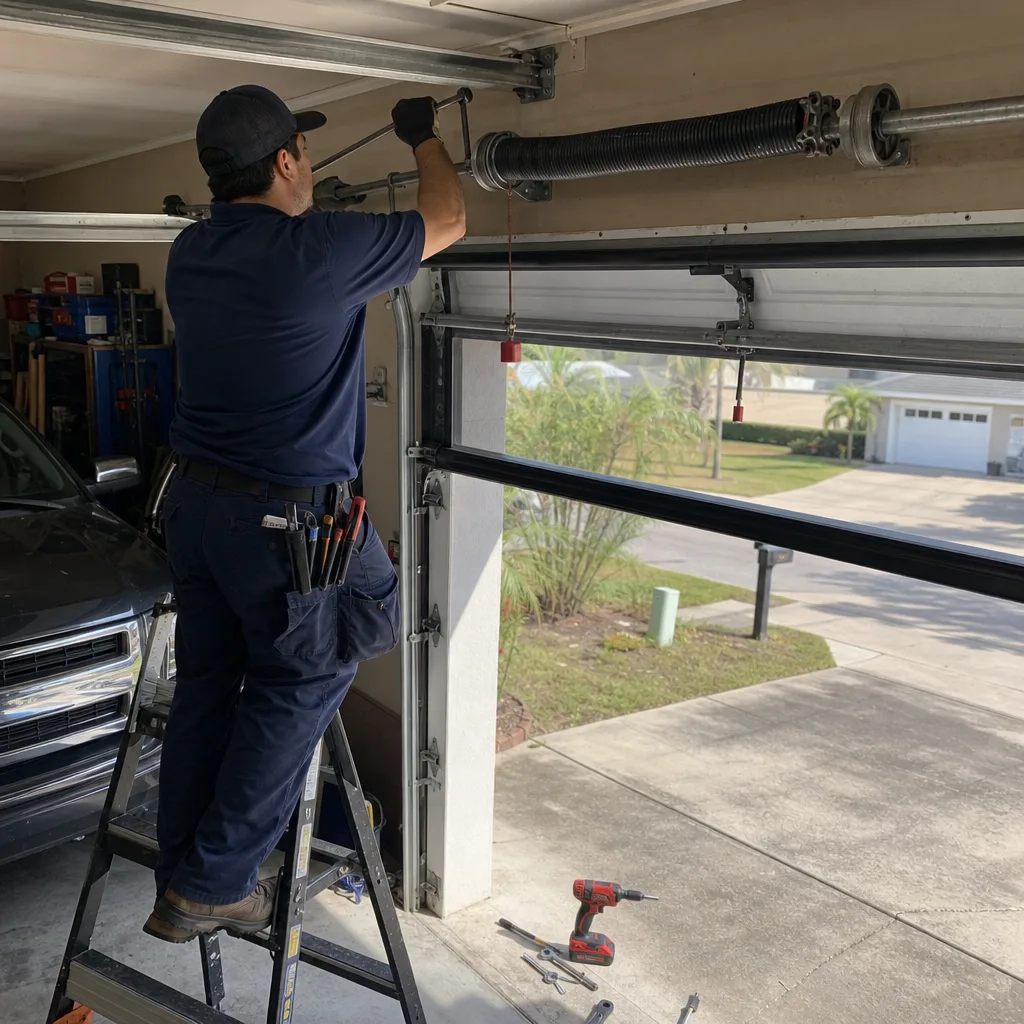
Florida Building Code Section 1609 sets minimum wind-load design requirements for every exterior opening, including garage doors. For a complete overview of permitting, see Garage Door Permits, Codes & Inspections in FL: What You Need to Know. Osceola County is in a wind-borne debris region, which means the door itself and its anchoring system must resist a specific design pressure - measured in pounds per square foot - that varies by location within the county and by the door’s size and exposure.
A garage door in Kissimmee is not just a panel that goes up and down. From a code perspective, it is a structural element of the wind-resisting envelope. That is why installation permits exist, and why an inspector will check the product approval number on the door’s label against the design pressure listed on the permit application. If the door does not carry a Florida Product Approval (often called an FL number), it cannot be legally installed in Osceola County.
What this means for a homeowner is narrower than most people expect. Within any given manufacturer lineup - Amarr, Clopay, Wayne Dalton, and others - only certain models are tested and approved for the design pressures typical of Kissimmee neighborhoods. A door that is perfectly serviceable in Tennessee may not carry an FL approval at all. The practical effect is that you cannot simply pick any model from a catalog and assume it passes. You need a door that appears on the Florida product approval database with a rating that meets or exceeds the design pressure for your specific home.
Here is the step-by-step sequence for checking compliance in Kissimmee:
- Determine your home’s wind speed design category. Most single-family homes in Osceola County fall into the 140 to 150 mph ultimate wind speed range, but the exact figure depends on the parcel’s location and exposure category.
- Look up the design pressure (DP) requirement for your specific door size and garage configuration. A 16-foot-wide door on a house with an open exposure needs a substantially higher DP rating than an 8-foot door tucked between two neighboring homes.
- Verify the door model carries a current Florida Product Approval listing. This is a public database maintained by the Florida Department of Business and Professional Regulation. Any contractor quoting a door should be able to provide the FL number on request.
- Confirm that the installation method - including the specific track type, jamb brackets, and fastener schedule - matches the product approval’s conditions. A door can carry an FL number but become non-compliant if it is installed differently from the tested assembly.
We have been asked to take over more than a few Kissimmee installations where the original door was installed without a permit, and the homeowner discovered it only when a resale inspection or an insurance review flagged it. Compliance is not a paperwork formality. It is the difference between a door that holds during a named storm and one that becomes a projectile.
Door Materials Ranked for Central Florida Durability
The material choice matters more in Kissimmee than in most markets, because the climate punishes certain options quickly and predictably. Here is how the four main garage door materials perform in Osceola County, based on failure patterns we have documented since 2015.
Steel
Steel remains the most common garage door material, and for good reason. A quality steel door with a baked-on polyester or polyurethane finish, a galvanized steel substrate, and a rust-through warranty is a solid Central Florida choice. The key words there are galvanized substrate. Lower-tier steel doors use a thinner gauge with a less durable rust-preventive coating, and those doors develop rust at the panel edges, the stile seams, and anywhere a fastener penetrates the skin within five to seven years in Kissimmee’s humidity. Clopay and Amarr both manufacture steel lines with galvanized substrates and finish warranties that hold up under Florida conditions. The problem is rarely the concept of steel. It is the grade of steel sold at the bottom of the price sheet.
Aluminum
Aluminum doors are popular in coastal settings because they do not rust, and they are a legitimate option for some Kissimmee homes, particularly for full-view or glass-panel designs. But aluminum has a documented failure pattern in Central Florida: heat distortion. A west-facing aluminum door without adequate internal reinforcement can warp visibly under summer sun, causing the door to bind in the tracks. Aluminum also dents more easily than steel, which matters in households with active kids and bicycles. If aluminum is the choice, it needs to be a reinforced model, and the installation should include thermal breaks at the panel joints.
Fiberglass
Fiberglass doors solve some of the corrosion concern, but they introduce their own problem in the Florida sun: gel coat degradation. The exterior finish on a fiberglass door breaks down under sustained UV exposure, dulling and eventually chalking. We have replaced fiberglass doors in Kissimmee where the panels were structurally sound but the surface looked fifteen years older than the door actually was. Fiberglass can work in shaded installations or for homeowners prepared to refinish the surface on a regular schedule, but it is not the set-and-forget material some national guides suggest.
Wood Composite
Wood composite doors are the category most likely to fail early in Kissimmee. Even products marketed as moisture-resistant absorb humidity through the exposed bottom edge and around the frame, leading to swelling, delamination, and eventual rot. The maintenance burden is real: repaint or reseal every 18 to 24 months, more often on west-facing exposures. For an Osceola County homeowner looking for a door that looks like wood, the more durable path is usually a steel door with a wood-grain embossed finish, which delivers the appearance without the moisture-absorption problem.
Material decision summary for Kissimmee:
- Steel with galvanized substrate: Best all-around value; confirms to wind-load testing most easily; watch for bottom-of-line coated products.
- Reinforced aluminum: Viable for full-view modern designs; requires careful heat-reinforcement selection.
- Fiberglass: Acceptable in shaded installations; budget for finish maintenance.
- Wood composite: Highest maintenance burden; shortest realistic service life in Central Florida humidity.
R-Value vs. Real Thermal Performance in a Florida Garage
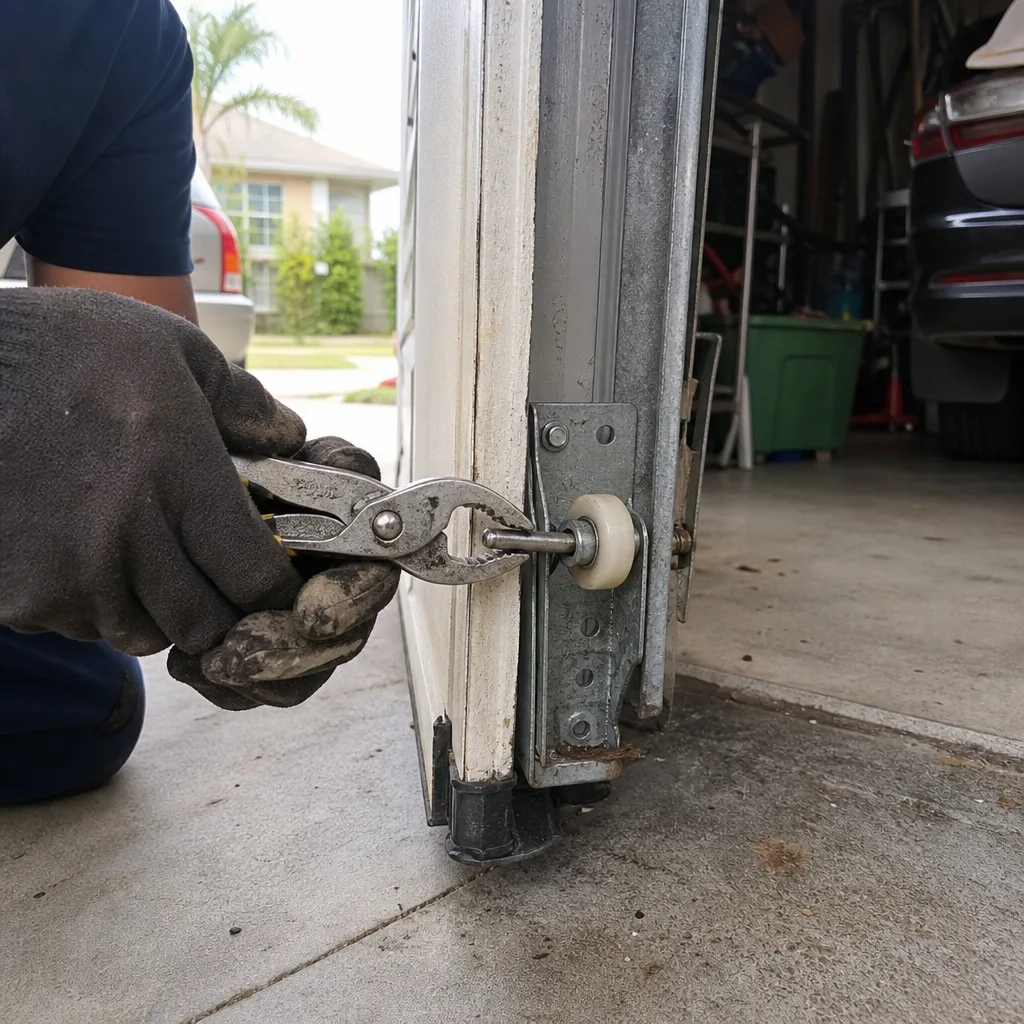
The insulation conversation in Kissimmee is almost always framed wrong. Builders and manufacturers quote R-value - a laboratory measure of thermal resistance calculated under controlled conditions - as if it translates directly to comfort and efficiency. In practice, the R-value printed on a garage door panel matters less than the door’s seal condition, its color, and its orientation.
A door advertised as R-18 will not make your garage cool in August if the weatherstripping along the bottom is cracked, the side jambs leak air, and the door faces west with no shade. The effective thermal performance of a garage door in Central Florida is the result of the whole assembly, not the foam core. A dark-colored door facing west will radiate heat into the garage regardless of what the R-value sticker says, because the exterior surface heats up dramatically and that radiant energy transfers through the door and into the air behind it.
What actually moves the needle in Kissimmee:
- Light exterior color: A sand, white, or light gray door reflects more solar radiation than a dark brown or black door, reducing surface temperature and therefore heat transfer.
- Intact weatherstripping: The lip seal at the bottom, the jamb seals on the sides, and the top seal matter more for both temperature and pest control than the foam in the panels.
- Thermal breaks: On steel doors, the panel construction either includes a break between the outer and inner skins or it does not. Doors without thermal breaks transmit heat through the metal itself.
- Proper panel fit: A door that is square in the opening with even gaps will leak less air than a door installed slightly out of plumb, even if both carry the same insulation rating.
If the garage is used as a workshop, home gym, or storage area for temperature-sensitive items, insulation matters more. But the specification should start with the assembly - light color, good seals, thermal-break construction - not with the biggest R-number on the spec sheet. A door with an R-9 polyurethane core, light exterior color, and tight weatherstripping will often perform better in Kissimmee than an R-18 door with black paint, cracked seals, and no thermal break.
Hardware: The Line-Item Decision Most Quotes Get Wrong
Hardware is the quiet line item that determines whether your garage door lasts twelve years or twenty. In Kissimmee’s humidity, standard zinc-plated hinges, brackets, and fasteners rust at the exposed points, and once a hinge binds, the panel alignment drifts. That puts uneven load on the rollers, which then wear the track, and the door starts making the grinding sound that eventually becomes a service call.
The correct hardware specification for Osceola County is galvanized hardware as the baseline, with stainless steel at the high-humidity contact points. Galvanized steel is coated with a layer of zinc that corrodes preferentially, protecting the underlying steel. Stainless steel contains chromium, which forms a passive oxide layer that resists rust entirely. There is a real difference in cost - stainless hinges and fasteners typically add $75 to $150 to a full door assembly - but it is not an upsell. It is the difference between hardware that begins corroding in year four and hardware that still operates smoothly in year twelve.
The second hardware decision is the torsion spring. Springs are rated by cycle life - the number of open-and-close cycles the spring is engineered to withstand before failing. Standard springs are rated at 10,000 cycles, which translates to roughly six to seven years of normal use in a Kissimmee household where the garage door opens three to four times per day. High-cycle springs are rated at 25,000 to 50,000 cycles and cost more, but they correspond to twelve to twenty years of the same usage pattern. In Central Florida, where the heat and humidity accelerate spring fatigue, the high-cycle spring is the more honest baseline recommendation for a door you intend to keep.
One more hardware note specific to Kissimmee: the bottom bracket is the highest-moisture point on the entire door assembly. Water pools at the door’s bottom edge after every afternoon storm, and that water sits against the bottom bracket and the cable retention. Cheap brackets with mild-steel construction fail here first. When we document failures at the bottom bracket - and we photograph every one before quoting, per Clause 4 of The Haven Standard - the photo consistently shows rust at the exact point where standing water contacted the bracket.
Garage Door Openers: What Matters in Kissimmee
Garage door opener selection in Kissimmee involves three decisions that matter more than the horsepower number on the box: drive type, safety sensor performance in high-glare conditions, and battery backup capability.
Drive type is the first decision. Chain-drive openers are the least expensive and the loudest. Belt-drive openers cost $60 to $120 more and operate significantly quieter, which matters if the garage is attached to a bedroom or living space. Screw-drive openers are offered by some brands, but they require more maintenance and are less common in new installations. Our recommendation for most Kissimmee homes is a belt-drive Chamberlain or Genie unit with a DC motor, which offers the smoothest operation and longest service life relative to cost.
The safety sensor issue is uniquely relevant in Florida. Modern openers use an infrared beam across the door opening to detect obstructions; if the beam is blocked, the door will not close. Direct afternoon sun hitting a west-facing garage can saturate the receiver sensor, triggering false obstructions and preventing the door from closing. The fix is a sensor pair designed for direct sun exposure, or careful sensor placement with hoods that shield the receiver. This is not a theoretical problem - we have troubleshooted it repeatedly in Kissimmee neighborhoods where the garage faces west and the afternoon sun angle aligns directly with the sensor.
Battery backup is a Florida-specific recommendation. Kissimmee loses power during summer storm season with enough regularity that a garage door opener without battery backup leaves your car either trapped inside or locked out. A battery backup unit adds roughly $80 to $120 to the opener cost and holds enough charge for a dozen or more open-and-close cycles during an outage. It is one of the most practical investments a Central Florida homeowner can make, and it is often the line item missing from cheap installation quotes.
How to Read a Kissimmee Installation Quote Line by Line
A written quote is a document, and like any document, what it omits is as informative as what it includes. Here is how to read a Kissimmee garage door installation quote, line by line, so you know exactly what you are being sold.
The door model and FL product approval number. The quote should identify the specific manufacturer and model, plus the Florida Product Approval number that confirms wind-load compliance for Osceola County. If the quote lists only a generic description - “16×7 steel door, white” - with no model number, you cannot verify compliance. Ask for the model and the FL number in writing.
Spring specification. The quote should state whether the door includes standard or high-cycle springs. Many quotes omit this entirely, and the installer supplies whatever the distributor had on the shelf. You want this line item written: spring wire gauge, inside diameter, length, and cycle rating.
Hardware grade. Look for the word “galvanized” or “stainless” next to the hardware line. If the quote simply says “hardware included,” assume it is standard zinc-plate and ask for the upgrade in writing. This is a $75 to $150 line item that determines the door’s second decade of service.
Track and bracket gauge. A code-compliant Kissimmee installation requires the gauge of track and brackets specified in the product approval. Thin-gauge track from a budget distributor will not meet the wind-load conditions for larger doors. The quote should state the gauge.
Weatherstripping and seals. Bottom seal, jamb seals, and header seal should appear as line items. They are consumables - they will be replaced during the door’s life - but the first set should be part of the installation, and they should be checked at installation rather than assumed from the factory. In Kissimmee, these seals deter water intrusion during the rainy season and keep pests out during the dry months.
Removal and disposal. The quote should state whether the old door is being hauled away, and whether that is included or billed separately. A missing removal line often becomes a surprise $75 to $150 at the end of the job.
Opener and accessories. If an opener is part of the scope, the quote should list the model, the drive type, whether battery backup is included, and whether safety sensors are being replaced or reused. If the quote bundles the opener into a single price with no breakdown, ask for the breakdown in writing before you sign.
The through-line here is simple: every line item should be written, specific, and verifiable. At Servo Garage Doors Kissimmee, Clause 1 of The Haven Standard requires a flat written price and written scope before any work starts - no exceptions. That is not a marketing phrase. It is the operating rule we have worked under since 2015, and it exists because a vague quote is the mechanism by which a $1,200 job becomes a $2,400 invoice. The page you are reading is the documentation you should expect from any contractor before you give them a deposit.
Common Mistakes to Avoid
- Choosing a door without verifying Florida Product Approval. In Kissimmee, that door is non-compliant even if it fits the opening. The insurance and resale consequences surface later.
- Accepting a quote without hardware grades specified. Standard zinc-plate hardware in Osceola County’s humidity begins rusting within a few years. Insist on galvanized minimum.
- Paying extra for high R-value in the wrong conditions. A dark west-facing door radiates heat regardless of the foam inside. Spend the money on color, seals, and thermal breaks instead.
- Skipping battery backup on the opener. Storm season in Kissimmee makes this a practical necessity, not a convenience.
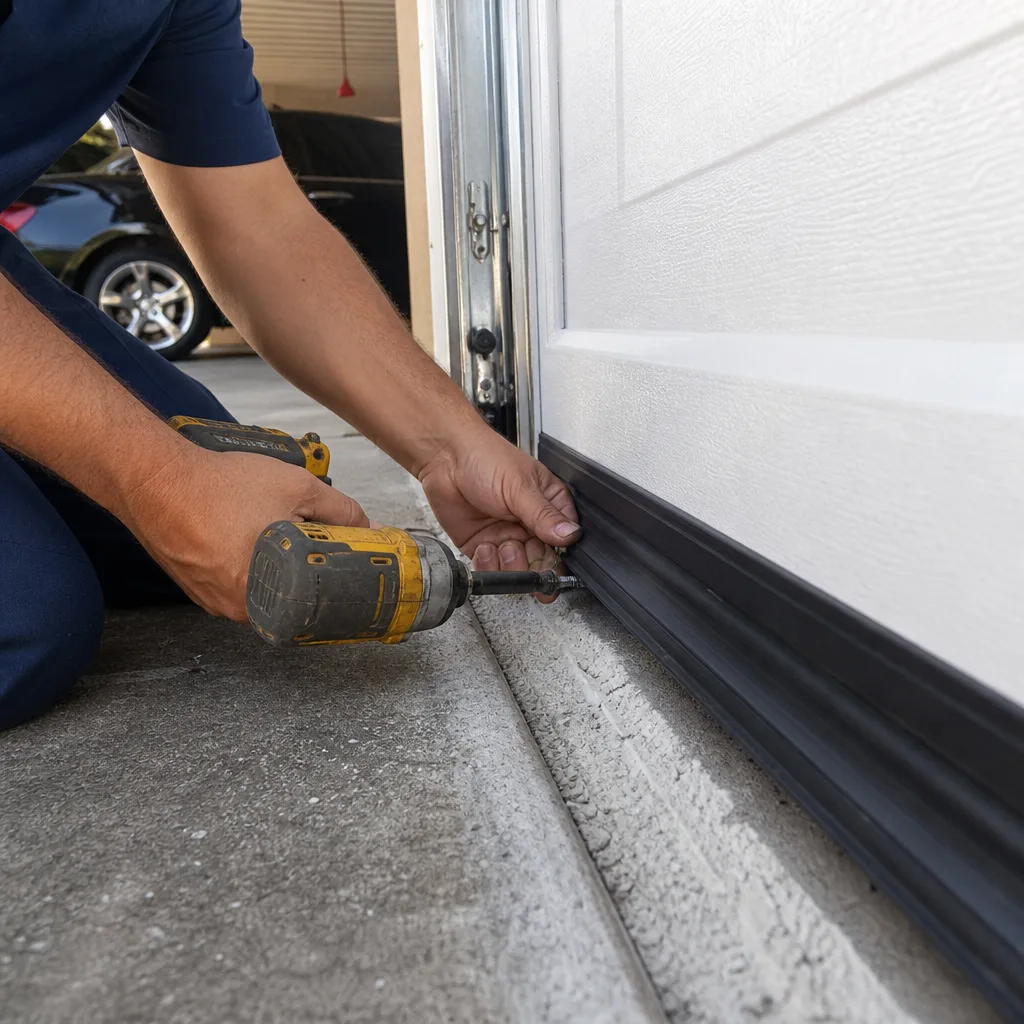
- Ignoring the weatherstripping at installation. Cracked or missing seals let in water, pests, and heat. This is the cheapest high-impact line item on the whole door.
- Accepting a quote that does not itemize removal, hardware, spring type, and opener breakdown. A missing line item is a future surprise charge. Demand the written scope.
- Reusing old track with a new door. Track gauge and condition are part of the wind-load assembly. Mixing new panels with old track voids the product approval and compromises the system.
When to Call a Professional
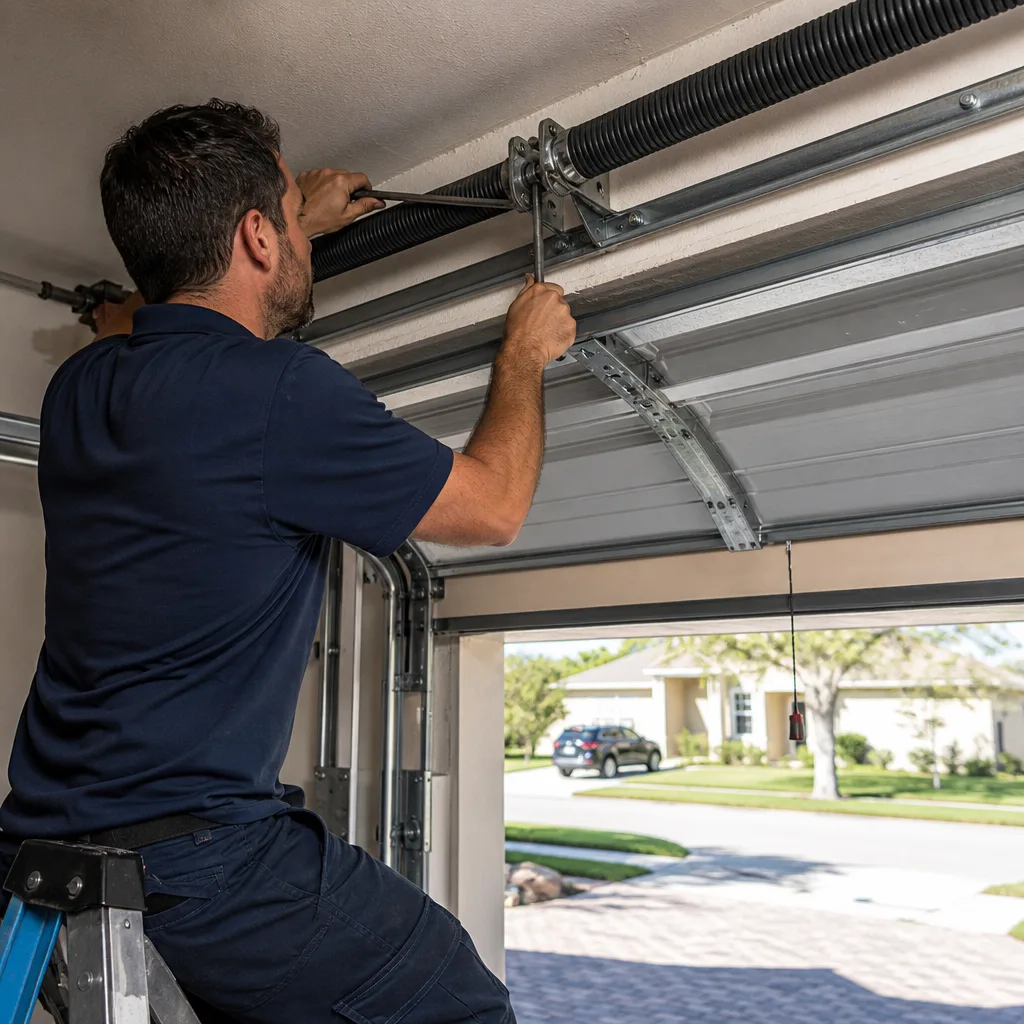
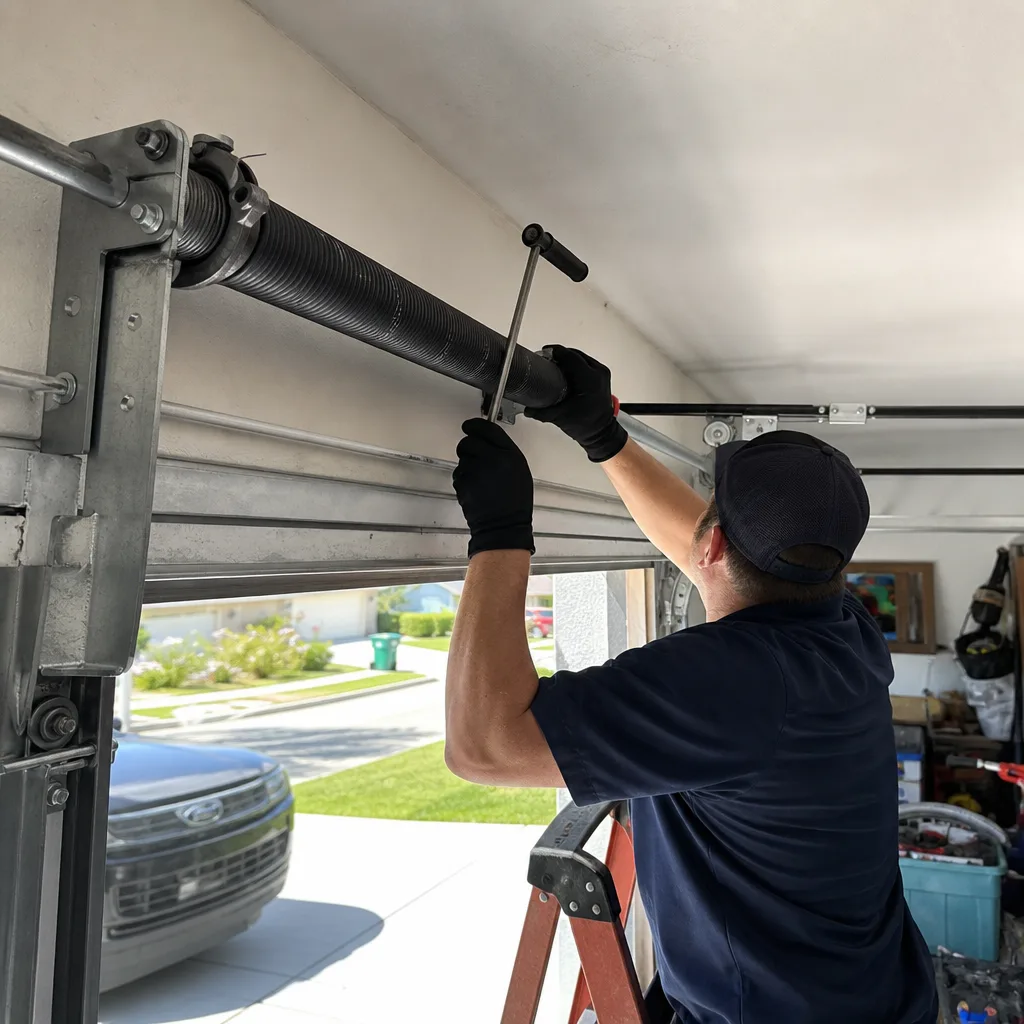
A garage door is a moving system under spring tension, and two specific components - the torsion spring and the lift cables - carry enough stored energy to cause serious injury if they release unexpectedly. If your door has a broken spring, a frayed cable, a bent track, or panels that have come out of alignment, stop using the door and call a trained technician. These are not repairs to attempt with a YouTube video and a socket set. The tension in a torsion spring is calibrated to the door’s weight and balanced across the shaft; getting it wrong means a spring that fires a cone across the garage or a door that drops suddenly.
Servo Garage Doors Kissimmee offers free estimates in Kissimmee - call (689) 210-6506. Our technicians arrive in uniform, document what they find with photographs, and quote a flat written price before any work starts, per Clause 1 of The Haven Standard. You see the failed part before you are quoted a replacement. That is how we have operated since 2015.
Frequently Asked Questions
Expect to budget $1,450 to $3,100 for a code-compliant single garage door installed in Kissimmee, including wind-load rated track, galvanized hardware, high-cycle springs, and weatherstripping. The range is driven by material choice, insulation type, and door size. Call (689) 210-6506 for a flat written quote with a line-by-line breakdown before any work starts.
Yes. Garage door replacement in Osceola County requires a permit, and the door must carry a Florida Product Approval number that meets the wind-load design pressure for your parcel. An unpermitted installation can create problems at resale and with insurance claims after a storm.
The required design pressure varies by the door’s size, the home’s location, and the exposure category. Most single-family homes in Kissimmee fall into a band that requires doors tested and approved for 140 to 150 mph ultimate wind speeds. A reputable contractor will verify this against your specific address before quoting.
Insulation helps, but only as part of a complete assembly. A light-colored door with tight weatherstripping and thermal breaks will perform better in Kissimmee than a dark insulated door with cracked seals. Prioritize the assembly before paying extra for a high R-value number.
No. Torsion springs and lift cables are under enough tension to cause serious injury or death if handled incorrectly. A trained technician with the right winding bars and a torque-calibrated procedure is the only safe option. Call (689) 210-6506 for repair from a uniformed technician who documents the work before and after.
Only if it is a wind-load rated door installed according to the Florida Product Approval’s conditions. A door without an FL approval number - or one installed with the wrong track and brackets - can fail under the wind pressures common in Kissimmee’s summer storm season. Verify compliance in writing before you buy.
The Bottom Line
A garage door in Kissimmee is a climate-specific engineering decision. The humidity above 70%, the wind-load requirements under FBC Section 1609, and the UV intensity on west-facing elevations eliminate shortcuts that work in other markets. Galvanized hardware is baseline, not optional. High-cycle springs are the honest default for a door you plan to keep. Battery backup is practical storm insurance. And a written quote with line-item specificity is the basic document any reputable contractor should produce without being asked. If you want a garage door that performs in this climate - and documentation that proves what was installed and why - Garage Door Installation in Kissimmee is where the process starts. For repairs and emergency service, see Garage Door Repair in Kissimmee. For openers, visit Garage Door Opener Repair & Installation in Kissimmee. And for the foundation of how we work - the documented, written-price-first system - start at the Servo Garage Doors Kissimmee home page.
Written by Marcus Deller, Owner at Servo Garage Doors Kissimmee, serving Kissimmee since 2015.